Curated ECE Physical Play · Rainy Day Resource

20 Rainy Day Indoor Gross Motor Activities for Preschoolers: Active Play & Soft Balloon Games

Keep preschoolers active, joyful, and focused during rainy days or indoor recess. Explore 10 zero-equipment body movements and 10 soft balloon games with low-noise classroom safety guidelines.

ADVERTISEMENT

Quick Teacher Guide: Rainy Day Safety & Indoor Setup

Latex Balloon Screening & Anti-Choking

Adults inflate and tie all balloons. Uninflated balloons or broken fragments pose severe choking hazards and must be cleared immediately. Screen all children for latex allergies before play.

Corner Cushioning & Center Clearance

Move classroom desks and chairs to room perimeters and cover sharp furniture corners with foam guards to create a wide, obstacle-free central movement arena.

One-Way Movement Circuits

Establish clear one-way perimeter routes for crawling and animal walks to prevent accidental head-on collisions in enclosed indoor spaces.

Vibration Control & Calming Balances

Prioritize low-impact locomotion (crawling, slow-motion walking, seated balloon volleys) over heavy running to reduce noise impact on neighboring classrooms.

Part 1 · 10 Curated Activities (From Chapter 16)

No-Equipment Active Play & Animal Locomotion

Zero-gear body movements including toe walks, strongman strides, penguin waddles, crab walking, monkey bounds, puppy crawls, caterpillar creeping, and partner tunnels.
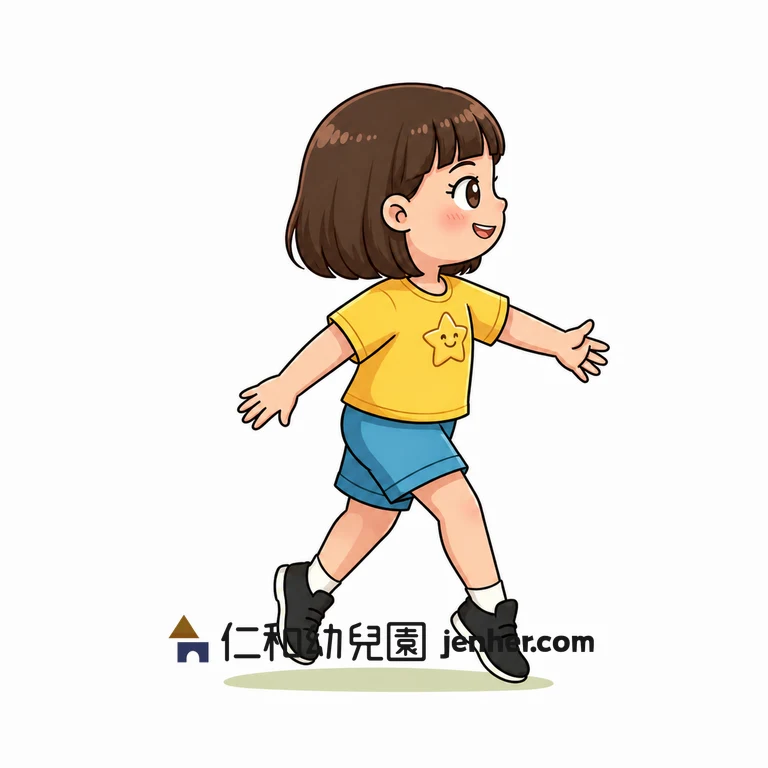
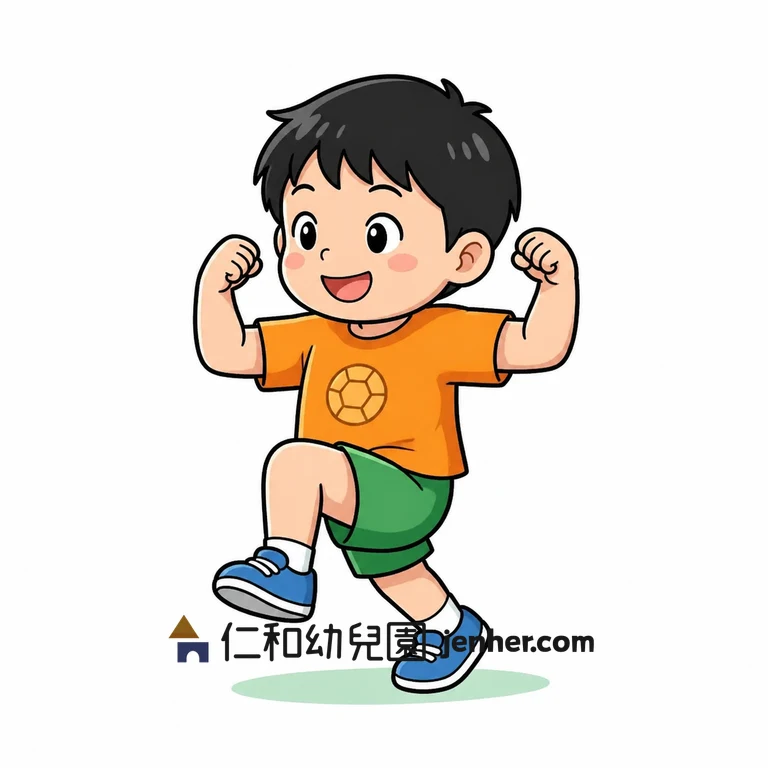
Activity 16-1: Tiptoe Walk

Tiptoe Walk

Rise onto your toes for a few small steps, then return to a regular flat-footed walk whenever balance becomes difficult.

Teacher Notes: Setup, Safety & Variations
Equipment: No specialized equipment; use normal footwear policy
Setup: Clear, obstacle-free floor path.
Safety: Keep distance short and return to regular walk if child wobbles.
Make It Easier: Rise onto toes in place while holding teacher hand.
Make It Harder: Take 4–6 controlled tiptoe steps along a floor line.
Teacher Cue: "Grow tall for a few tiny steps, then put your whole foot down again."
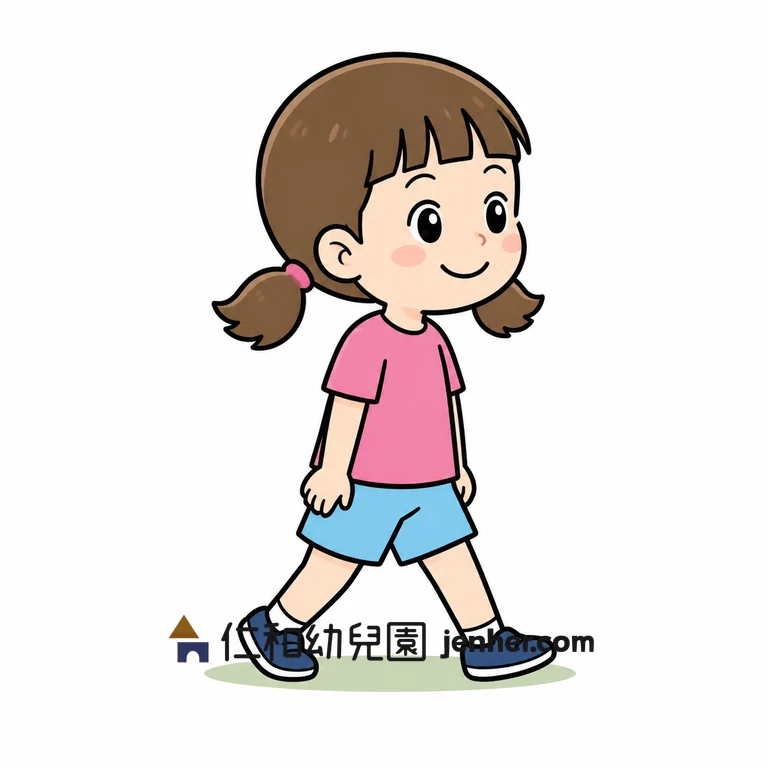
Activity 16-2: Strong-Pose March

Strong-Pose March

Make a pretend strong-person pose with bent elbows and march forward using a comfortable step size.

Teacher Notes: Setup, Safety & Variations
Equipment: None required
Setup: Open activity room or gym area.
Safety: Use a normal, controlled footfall rather than hard stomping.
Make It Easier: March in place to a slow beat.
Make It Harder: March to a floor marker, freeze, turn, and march back.
Teacher Cue: "Show your strong pose and march with steady steps."
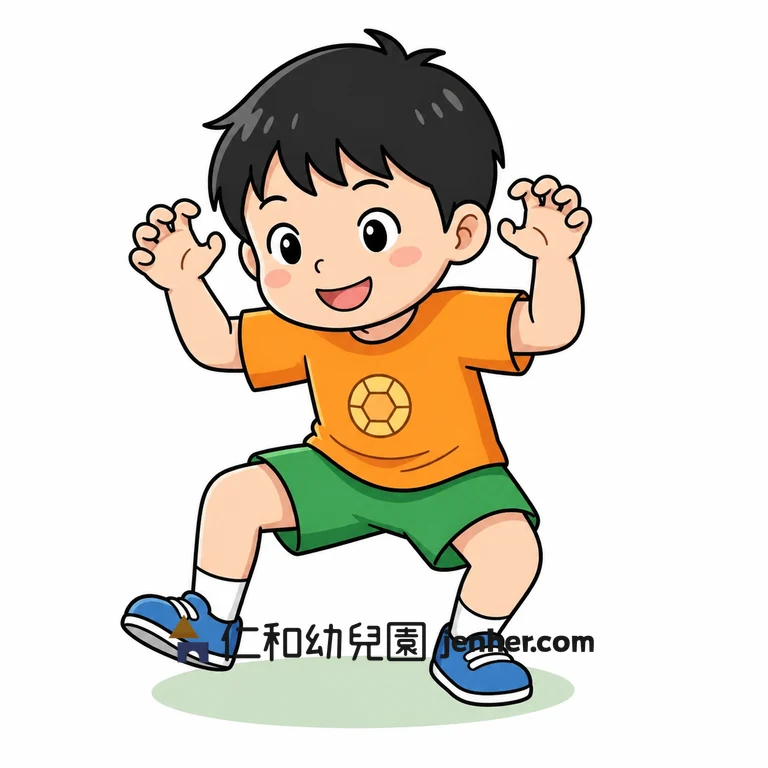
Activity 16-3: Penguin Waddle

Penguin Waddle

Keep your feet in a comfortable position and take small side-to-side waddle steps like a penguin.

Teacher Notes: Setup, Safety & Variations
Equipment: None required
Setup: Clear carpet or gym floor with a short travel path.
Safety: Keep the steps small and let children use a comfortable foot position.
Make It Easier: Waddle in place or take 3–4 steps.
Make It Harder: Follow one wide curve while keeping the same slow pace.
Teacher Cue: "Tiny penguin steps—side to side and nice and slow."
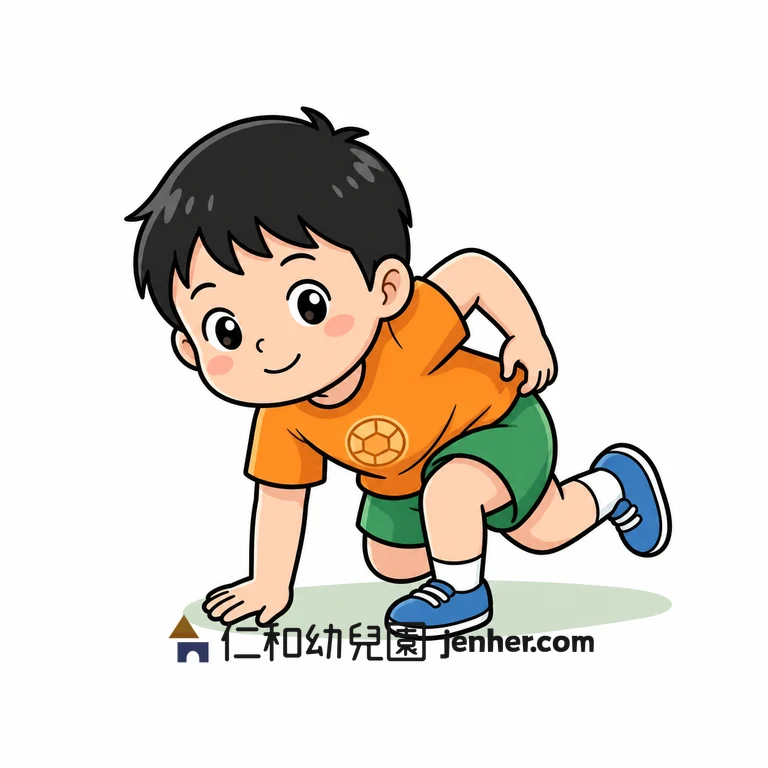
Activity 16-4: Crab Side-Step

Crab Side-Step

Bend your knees a little, make pretend crab claws with your hands, and take small side steps without crossing your feet.

Teacher Notes: Setup, Safety & Variations
Equipment: Optional floor spots or tape
Setup: Wide side-to-side movement lane with clear space between children.
Safety: Keep knee bend comfortable and return upright if balance changes.
Make It Easier: Side-step upright with hands on hips.
Make It Harder: Take three steps left, freeze, then three steps right.
Teacher Cue: "Crab steps to the side—small steps and steady feet."
Activity 16-5: Playful Monkey Movement

Playful Monkey Movement

Bend your knees comfortably and move like a monkey using small steps, gentle bounces, or low hops only if those movements are controlled.

Teacher Notes: Setup, Safety & Variations
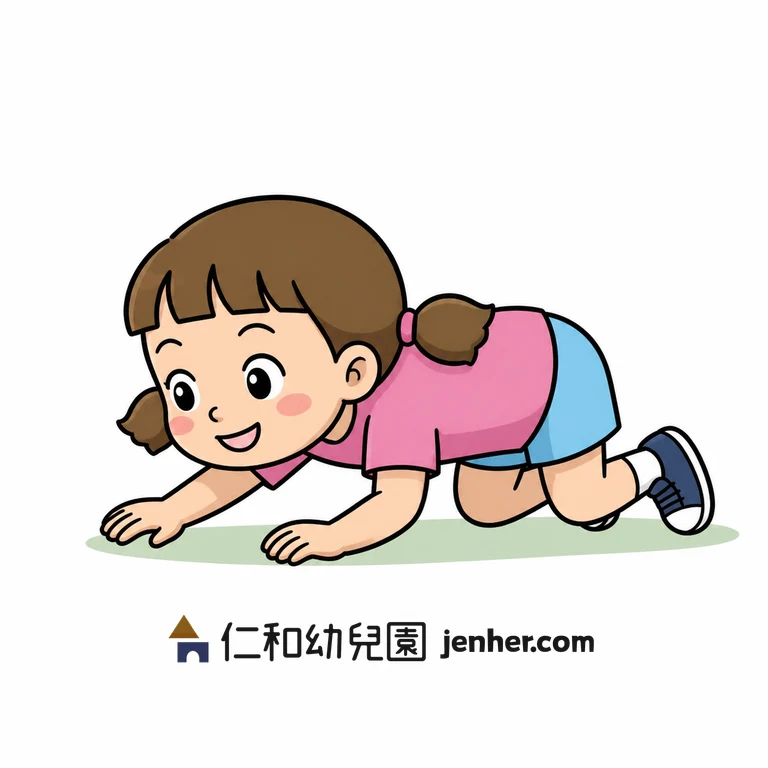
Equipment: None required
Setup: Padded or clear floor area.
Safety: Keep movements low and controlled; stepping is always acceptable.
Make It Easier: Use a crouched monkey walk without leaving the floor.
Make It Harder: Add one small two-foot hop between walking steps.
Teacher Cue: "Choose your monkey move—walk, bounce, or make one soft hop."
Activity 16-8: Puppy Crawl

Puppy Crawl

Move forward on hands and knees with smooth, alternating steps, looking ahead and staying in your own space.

Teacher Notes: Setup, Safety & Variations
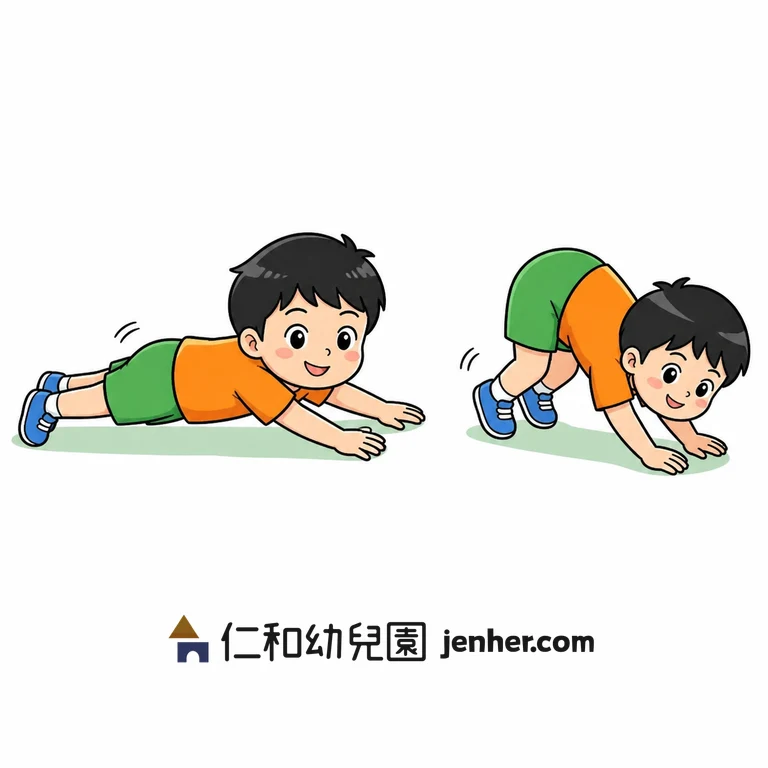
Equipment: Gym mats or clean carpet
Setup: Dedicated crawl lane.
Safety: Use flat hands, watch for other children, and stop for knee discomfort.
Make It Easier: Crawl a very short path to one floor spot.
Make It Harder: Crawl around two widely spaced cones and return.
Teacher Cue: "Hands and knees on the floor—gentle puppy steps forward."
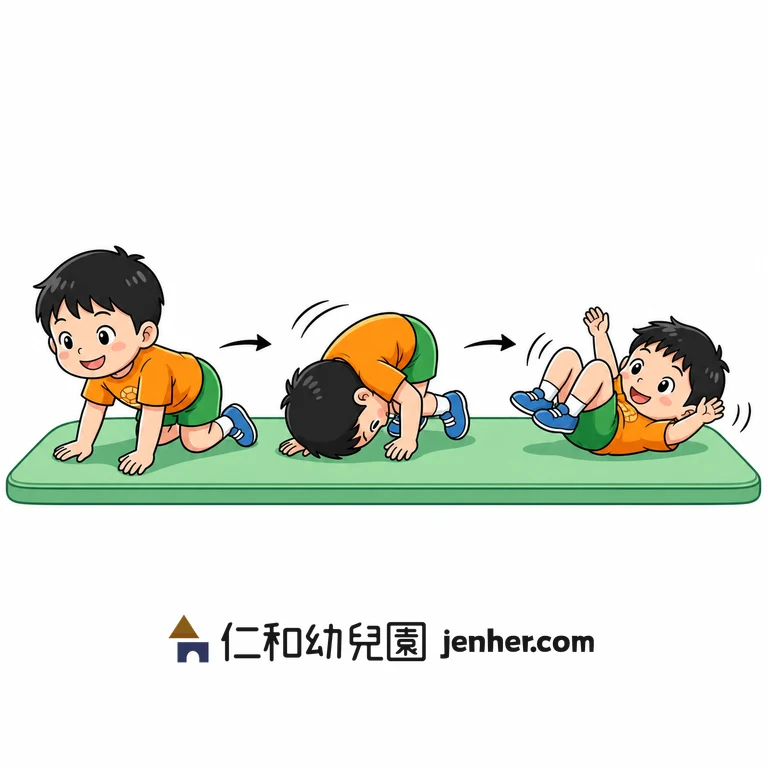
Activity 16-9: Caterpillar Creep

Caterpillar Creep

From hands and feet, walk your hands forward a few small steps, then walk your feet in to meet them, moving like an inchworm.

Teacher Notes: Setup, Safety & Variations
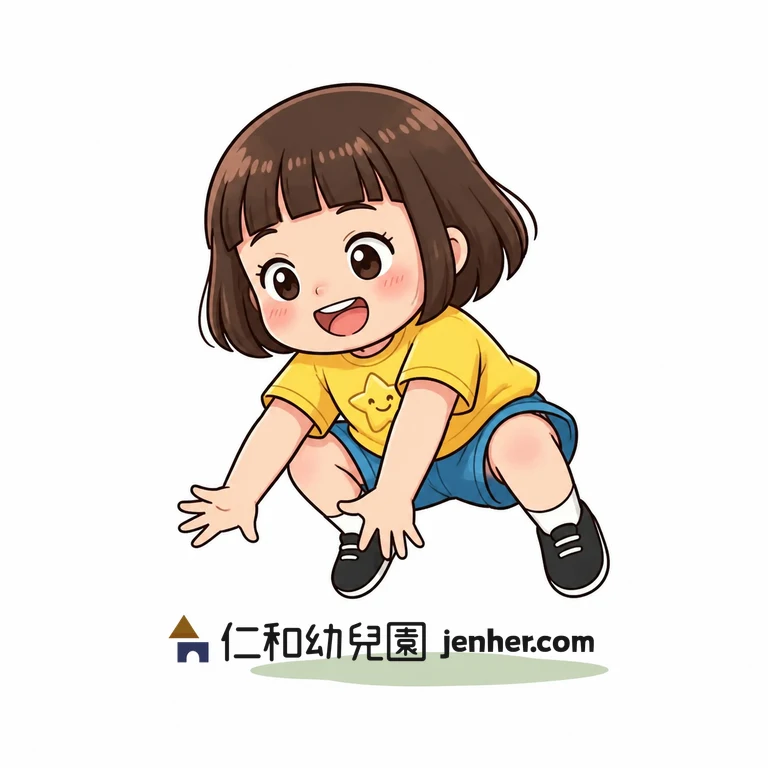
Equipment: Gym mats
Setup: Clear mat lanes.
Safety: Take only small hand steps; do not let children walk hands out so far they slip.
Make It Easier: Walk hands out 1–2 steps and step knees in instead of feet.
Make It Harder: Complete 3–4 caterpillar repetitions smoothly along the mat.
Teacher Cue: "Hands walk forward... freeze... feet walk in like an inchworm."
Activity 16-10: Frog Jump

Frog Jump

Lower into a comfortable crouch, make one small forward two-foot jump, and land with knees bent before resetting.

Teacher Notes: Setup, Safety & Variations
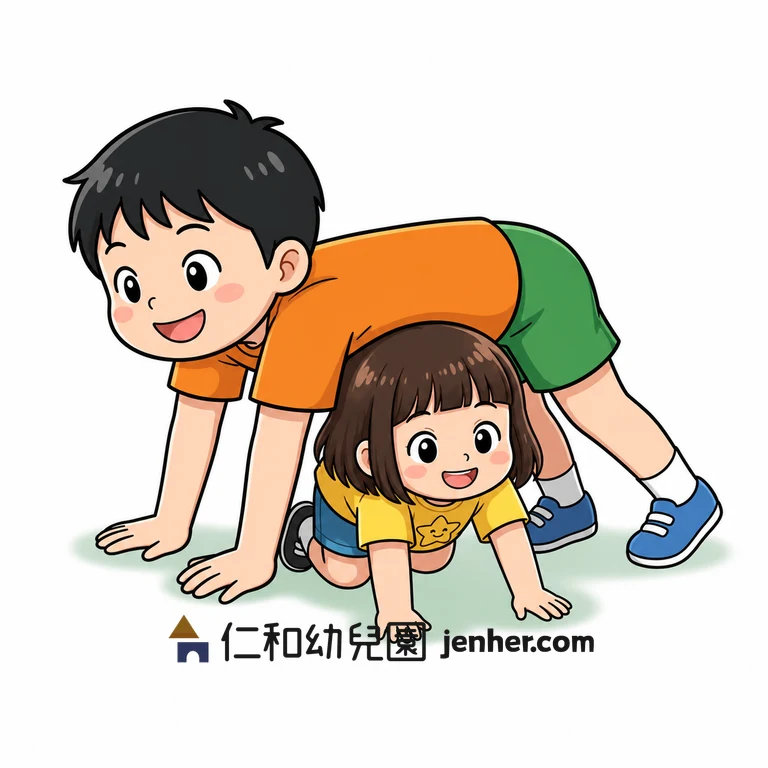
Equipment: Foam mats or soft floor spots
Setup: Short forward lane with clear landing spaces.
Safety: Use one jump at a time; switch to frog steps if child cannot land softly.
Make It Easier: Make a frog crouch and stand tall without jumping.
Make It Harder: Make two small jumps with a full stop between them.
Teacher Cue: "Crouch, one soft frog jump, land, and freeze."
Activity 16-15: Small Tunnel Arch

Small Tunnel Arch

One child or adult creates a gentle hands-and-knees arch while a partner crawls safely underneath without bumping.

Teacher Notes: Setup, Safety & Variations
Equipment: Soft tumbling mats
Setup: Open mat area with clear clearance on both sides of the arch.
Safety: Never collapse onto the crawler; crawler keeps head low.
Make It Easier: Teacher forms the tunnel arch for the child.
Make It Harder: Children alternate roles after each successful pass.
Teacher Cue: "Arch up strong like a bridge, crawl under quiet like a kitten!"
Activity 16-19: Foot-to-Foot Push & Pull Rowing

Foot-to-Foot Push & Pull Rowing

Two children sit facing each other with feet touching and hands joined, taking turns leaning forward and back like rowing a boat.

Teacher Notes: Setup, Safety & Variations
Equipment: Foam floor mats or carpet
Setup: Low-distraction seated circle.
Safety: Use gentle push-pull tension; never jerk or pull partner abruptly.
Make It Easier: Sing 'Row Row Row Your Boat' to establish slow, steady tempo.
Make It Harder: Coordinate smooth continuous motion for 10 unbroken cycles.
Teacher Cue: "Feet touch, hands hold, row the boat together smooth and slow!"

Looking for more preschool gross motor games?

Explore the complete 500 Movement Games curriculum hub, covering balance beams, soft gymnastics mats, parachutes, and obstacle circuits.

Explore All 500 Movement Games
Part 2 · 10 Curated Activities (From Chapter 15)

Soft Balloon Movement & Hand-Eye Coordination

Low-impact indoor aerial tracking, solo taps, partner passes, alternating hand coordination, instep kicks, hoop racket volleys, open-hand float taps, sequential mat rolls, and seated-to-stand catches.
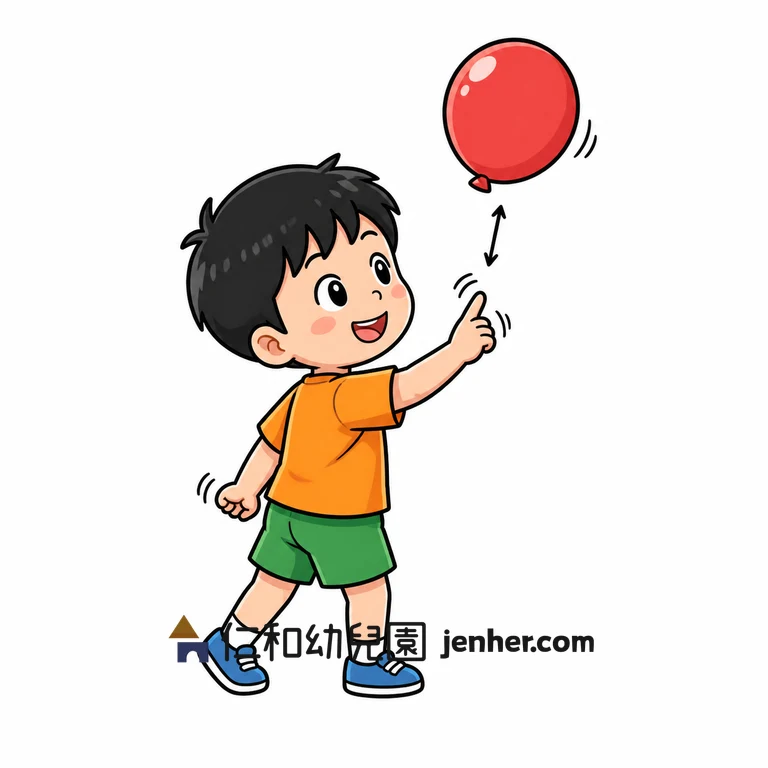
Activity 15-1: Solo Continuous Balloon Taps

Solo Continuous Balloon Taps

The child taps a lightweight balloon continuously upward using one or both hands, learning to modulate touch force while keeping the floating object aloft.

Teacher Notes: Setup, Safety & Variations
Equipment: 1 standard round balloon (adult-inflated; latex-screened) or cloth-covered balloon
Setup: Indoor classroom or activity room free of sharp corners or low overhead light fixtures.
Safety: Ensure children look around their personal movement space. Adults inflate balloons; immediately discard any popped fragments. Never put balloons in mouths.
Make It Easier: Allow the balloon to be caught with two hands after every 2 taps before re-tossing.
Make It Harder: Challenge child to keep the balloon aloft using only their non-dominant hand.
Teacher Cue: "Soft hands like butterfly wings, tap it gently toward the ceiling!"
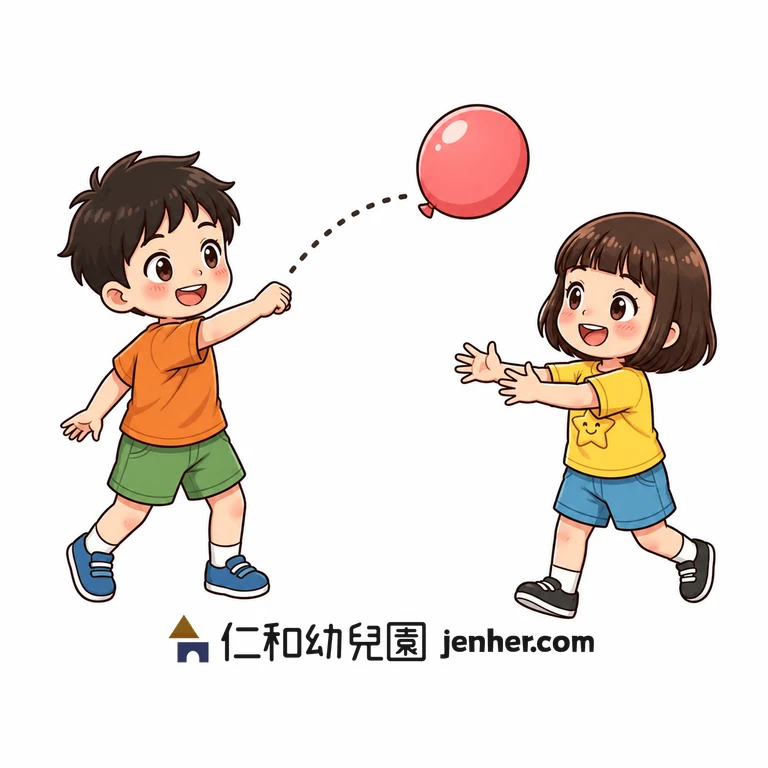
Activity 15-2: Two-Player Balloon Pass

Two-Player Balloon Pass

Standing a comfortable distance apart on designated floor spots, two children cooperatively bat a floating balloon back and forth, matching their partner's rhythm and reach.

Teacher Notes: Setup, Safety & Variations
Equipment: 1 bright balloon per pair (adult-inflated)
Setup: Mark two floor spots with room-appropriate spacing to give each child a clear home base.
Safety: Encourage cooperative upward passes rather than downward spikes toward a partner's face.
Make It Easier: Reduce the distance between partners so passes float comfortably within arm's reach.
Make It Harder: Count aloud together to see how many successful passes can be completed without a drop.
Teacher Cue: "Push the balloon up and across to your friend's hands softly!"
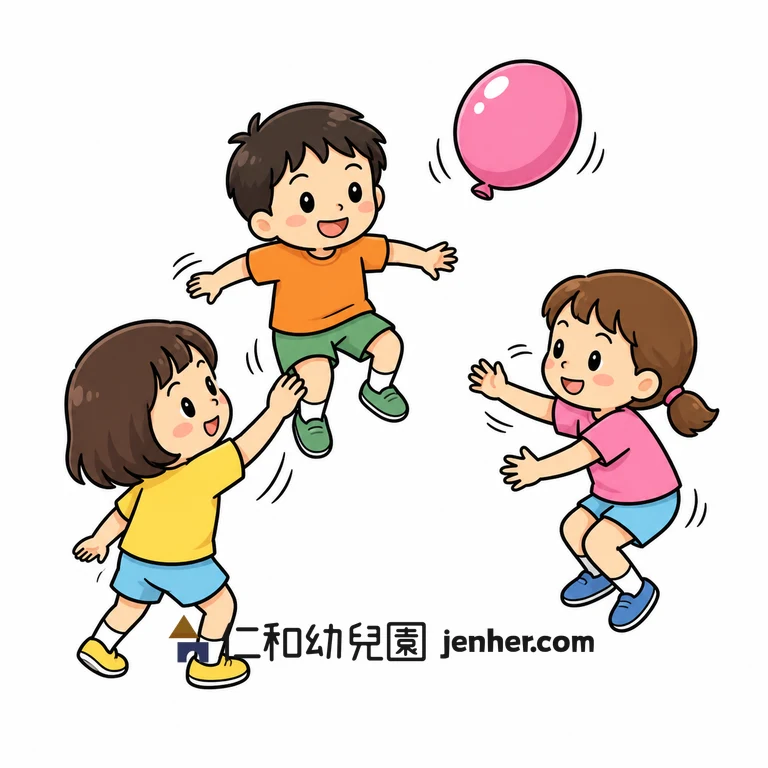
Activity 15-3: Three-Player Rotation Taps

Three-Player Rotation Taps

Three children stand in a triangle formation and take turns tapping a shared balloon upward in sequence, building social awareness, turn-taking, and peripheral tracking.

Teacher Notes: Setup, Safety & Variations
Equipment: 1 lightweight balloon per group of 3
Setup: Spacious circular station marked with 3 colored floor poly spots.
Safety: Teach children to call names before tapping to prevent head-to-head collisions.
Make It Easier: Designate a fixed clockwise tapping order before starting.
Make It Harder: Add a rhythm chant where children say the name of the next receiver before tapping.
Teacher Cue: "Call your friend's name, look up, and tap it to the next spot!"
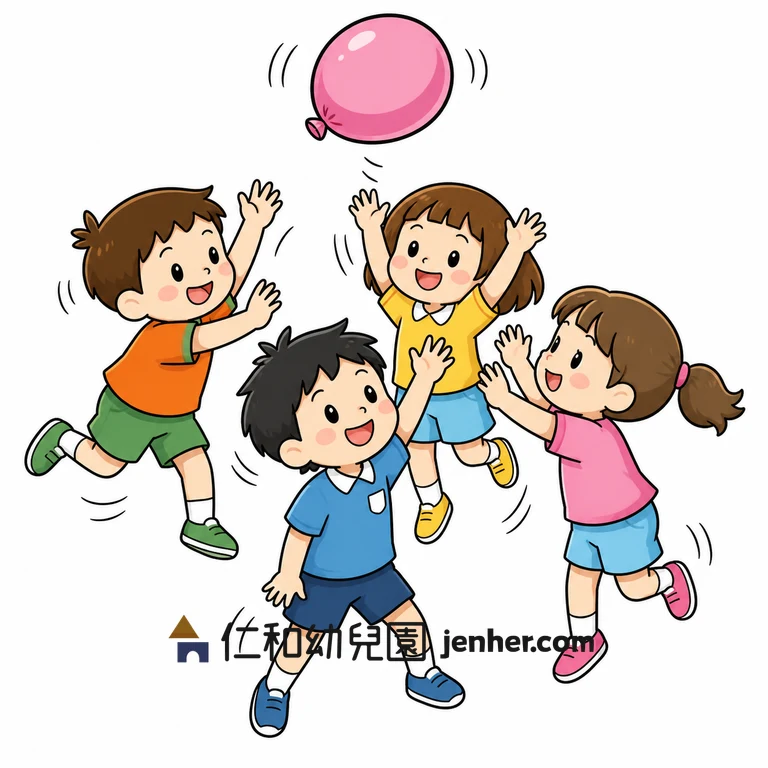
Activity 15-4: Four-Player Keep-Up Challenge

Four-Player Keep-Up Challenge

A four-child circle team collaborates to keep one balloon floating in the air, practicing collective team problem-solving and cooperative multi-directional tracking.

Teacher Notes: Setup, Safety & Variations
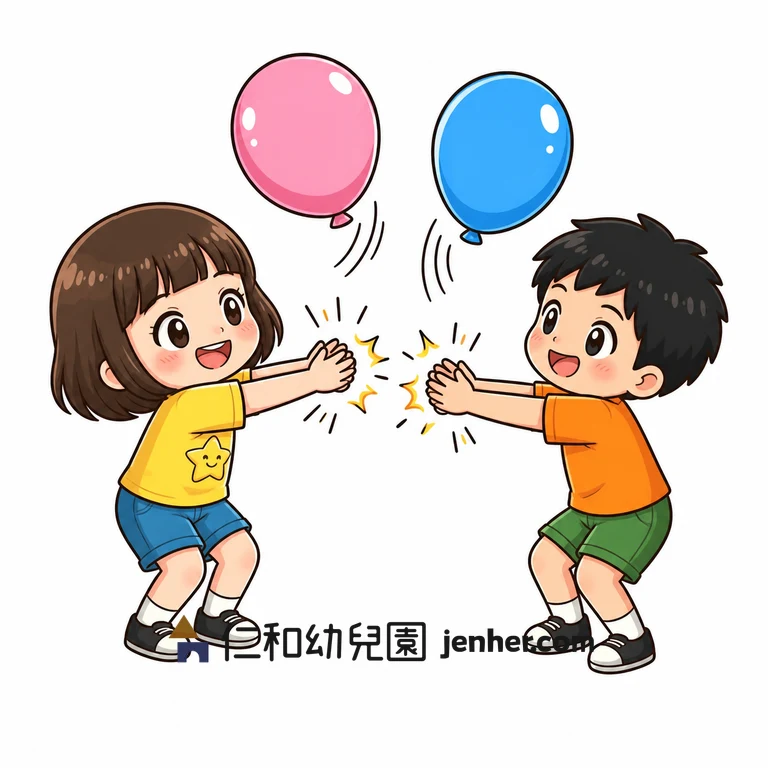
Equipment: 1 standard balloon (bright contrasting color; adult-inflated)
Setup: Open circle with comfortable personal space between all participants.
Safety: Remind children to stay in their general zone and avoid diving onto the floor aggressively.
Make It Easier: Allow any player to catch and re-launch the balloon if it drops below knee height.
Make It Harder: Introduce a rule where no child may touch the balloon twice in a row.
Teacher Cue: "Work as a team! Keep your eyes on the balloon and help your teammates!"
Activity 15-5: Alternating Two-Hand Taps

Alternating Two-Hand Taps

The child taps the balloon upward strictly alternating between the left and right hand, fostering bilateral coordination, hand-dominance balance, and rhythm.

Teacher Notes: Setup, Safety & Variations
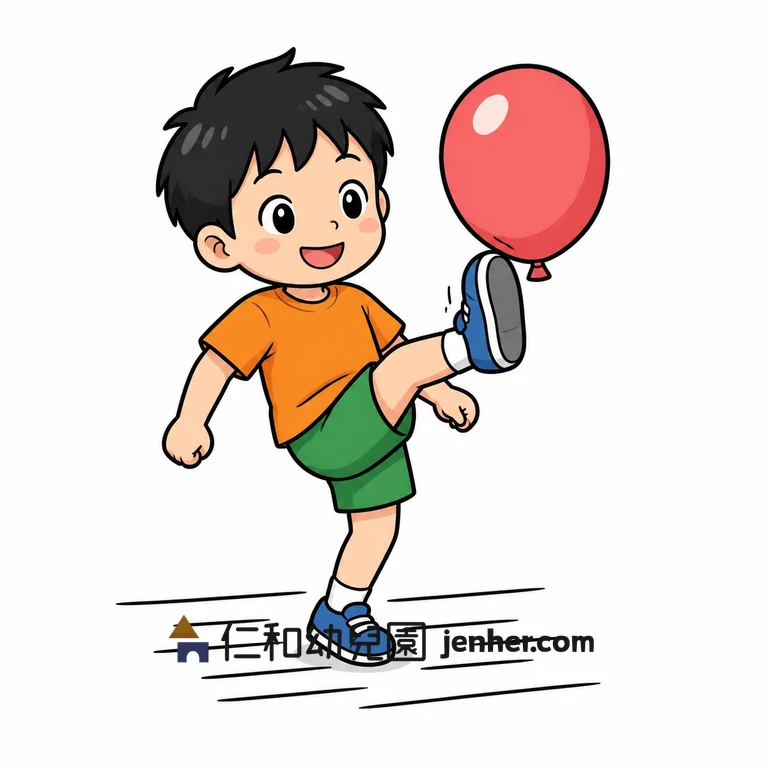
Equipment: 1 round balloon (adult-inflated)
Setup: Flat indoor floor with ample ceiling clearance.
Safety: Ensure the child keeps feet firmly planted in a balanced, shoulder-width stance.
Make It Easier: Tap with right hand, catch with two hands, then tap with left hand and catch.
Make It Harder: Chant 'Left, Right, Left, Right' in rhythm while maintaining 10 continuous alternating taps.
Teacher Cue: "Left hand tap, right hand tap, keep the steady beat alive!"
Activity 15-6: Instep Balloon Kicking

Instep Balloon Kicking

Balancing on one foot on a firm mat, the child gently kicks a descending balloon upward with the top/instep of the other foot, practicing controlled soccer volley mechanics.

Teacher Notes: Setup, Safety & Variations
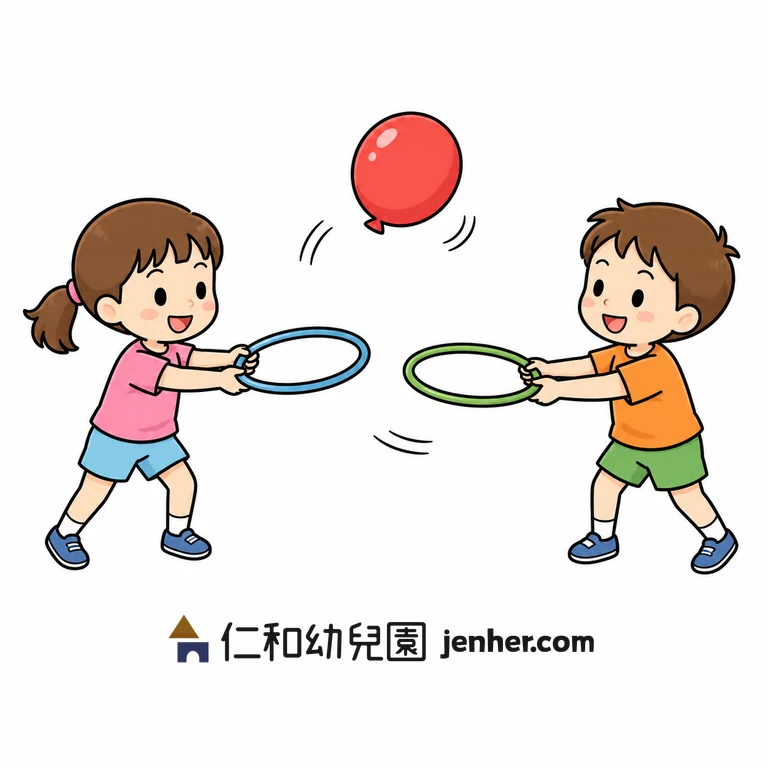
Equipment: 1 durable balloon per child · Gym safety floor mats
Setup: Carpeted area or padded mats to prevent slipping during single-leg balance.
Safety: Children must perform gentle, controlled foot lifts rather than hard wild swings that compromise balance.
Make It Easier: Drop the balloon from waist height and kick once into teacher's hands.
Make It Harder: Alternate kicking with left foot and right foot continuously.
Teacher Cue: "Point your toes flat, balance strong like a tree, and tap it up with your shoe laces!"
Activity 15-7: Hula Hoop Racket Volley

Hula Hoop Racket Volley

Holding a small, lightweight hula hoop with both hands like an oversized racket frame, children volley a balloon back and forth across a soft floor boundary, extending their reach.

Teacher Notes: Setup, Safety & Variations
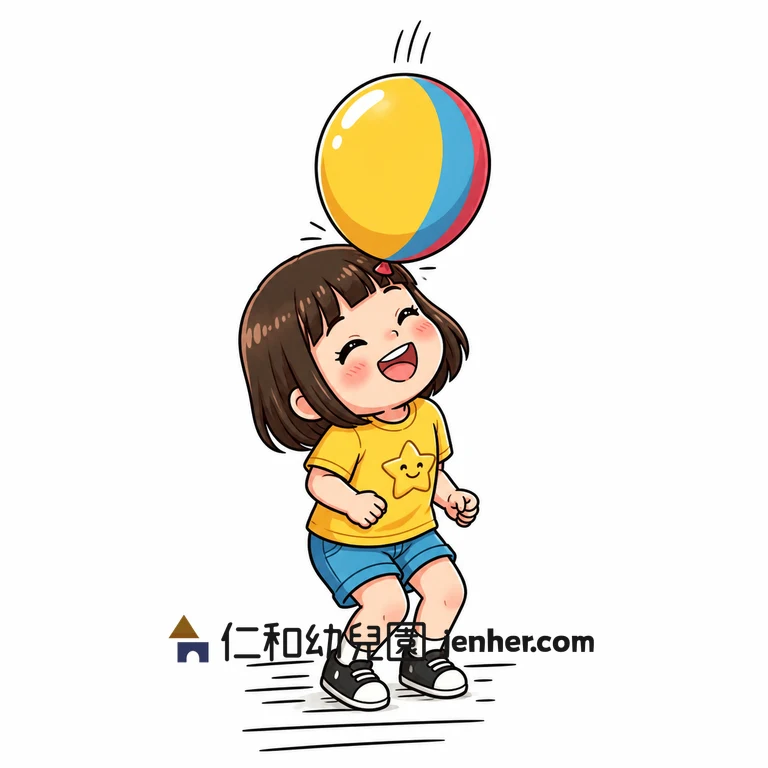
Equipment: 2 small lightweight hula hoops (~20–24 in.) · 1 bright balloon · Floor tape line
Setup: Clear open floor divided by a flat tape line; adjust court size to room dimensions.
Safety: Ensure children hold hoops firmly and maintain room-appropriate clearance across the center line to avoid clashing. Use soft breakaway tape boundaries.
Make It Easier: Child holds hoop horizontally like a basket to catch the floating balloon.
Make It Harder: Volley the balloon over a low, soft breakaway ribbon line.
Teacher Cue: "Hold your hoop with two hands, swing smooth, and guide the balloon over the line!"
Activity 15-8: Upward Open-Hand & Forearm Float Tap

Upward Open-Hand & Forearm Float Tap

Tracking the slow-falling balloon from above, the child flexes knees and gently extends upward using open palms or forearms to tap the balloon aloft, building upward tracking without neck strain.

Teacher Notes: Setup, Safety & Variations
Equipment: 1 standard soft balloon (adult-inflated; latex-screened) · Soft floor mat
Setup: Padded floor area with clear overhead clearance and ample personal space.
Safety: Do not teach or use head contact as a preschool progression. Children use gentle open-hand and forearm taps with upward vision and knees flexed.
Make It Easier: Teacher holds the balloon steady at shoulder height for gentle palm tap practice.
Make It Harder: Perform 1 forearm tap followed immediately by 1 two-hand catch.
Teacher Cue: "Bend your knees, look up with open eyes, and tap softly upward with your hands!"
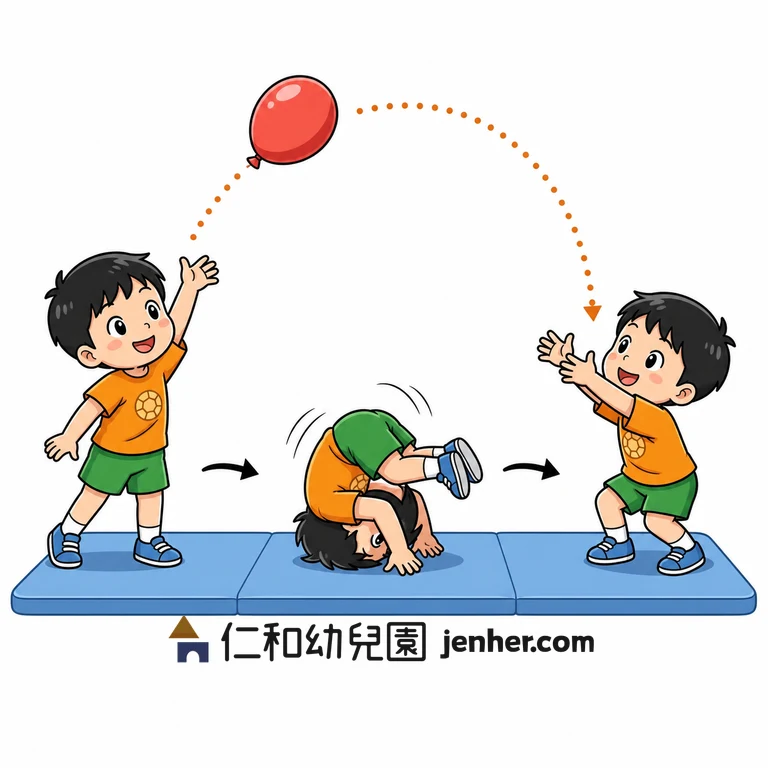
Activity 15-9: Mat Roll & Sequential Catch Practice

Mat Roll & Sequential Catch Practice

In a structured station, the child performs a smooth, controlled gymnastics forward roll on a padded mat, stands up in balance, and then catches a gentle balloon tossed by the teacher.

Teacher Notes: Setup, Safety & Variations
Equipment: 1 high-density tumbling mat · 1 lightweight balloon (held by teacher)
Setup: Dedicated tumbling lane with clear approach and landing zones.
Safety: Do not combine high toss, roll, and rapid scramble into a single rapid task. Teach the forward roll and balloon catching separately before linking them sequentially.
Make It Easier: Child performs a squat-and-stand on the mat, then catches the teacher's tossed balloon.
Make It Harder: After completing a smooth mat roll, child stands tall and catches the balloon in two hands.
Teacher Cue: "Tuck your chin like a turtle, roll smooth, stand tall, and catch with soft hands!"
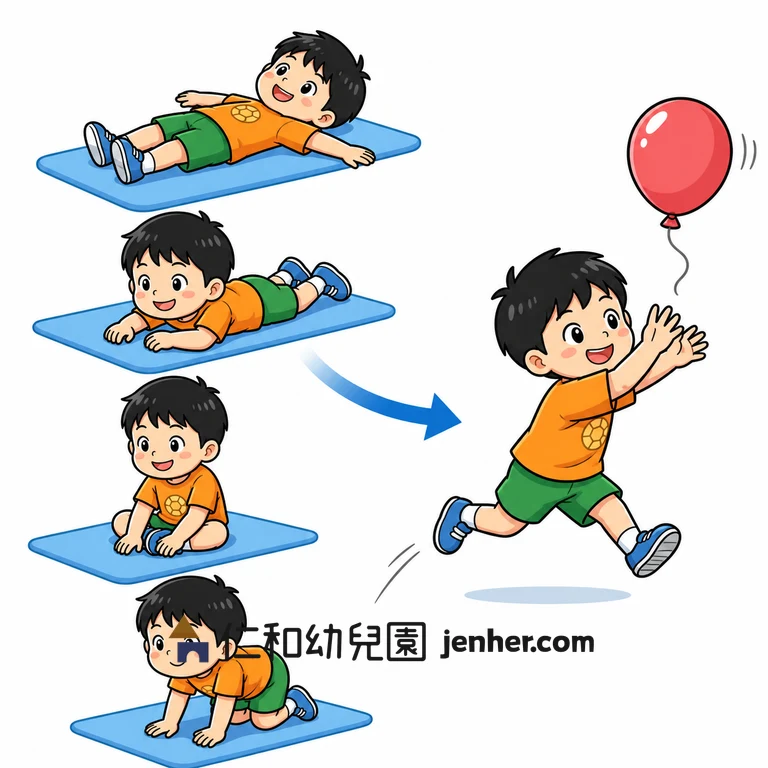
Activity 15-10: Seated-to-Stand Controlled Catch

Seated-to-Stand Controlled Catch

Starting seated cross-legged on a floor spot, the child listens for a gentle cue, stands up smoothly with balance, and takes a controlled step forward to catch a slow-floating balloon.

Teacher Notes: Setup, Safety & Variations
Equipment: 1–2 balloons per station (adult-managed) · Padded floor spots
Setup: Wide indoor room with designated starting floor spots tailored to room dimensions.
Safety: Ensure adequate personal space between spots so children stand and step without sprinting, diving, or colliding with peers.
Make It Easier: Start from a low bench or chair position before practicing from the floor.
Make It Harder: Start kneeling, stand on the chime cue, and make a two-hand catch without moving off the spot.
Teacher Cue: "Listen for the chime, stand up tall with strong balance, and catch the floating balloon!"

Looking for the full balloon physical curriculum?

Discover all 12 illustrated balloon drills in Chapter 15, complete with latex allergy screening checklists and step-by-step coaching cues.

Explore All 12 Chapter 15 Balloon Games
Extend Your Rainy Day Curriculum

More Indoor Gross Motor Chapters

Browse our full collection of illustrated preschool movement-play chapters designed for indoor playrooms, multipurpose spaces, and rainy-day gross motor activities.
Frequently Asked Questions

Preschool Rainy Day Movement FAQ

Teacher guidance on managing indoor energy, noise suppression, balloon anti-choking safety, and daily schedule integration.

How can teachers manage high preschool energy on rainy days without causing noise disturbances?
Focus on grounded, whole-body movement play such as bear crawls, caterpillar creeping, and slow-motion balance walks rather than continuous heavy stomping or sprinting. Balloon games also provide high engagement, visual tracking, and active movement play with low impact noise.
What safety protocols are required for indoor balloon gross motor games?
Ensure adult-only balloon inflation and inspection. Screen for latex allergies beforehand. In the event of a popped balloon, pause activity immediately and discard all rubber fragments to eliminate choking hazards. Maintain adequate floor space around each child.
How do educators structure a 30-minute indoor rainy-day movement session?
A balanced 30-minute movement-play session includes: (1) 5-min Warm-Up: Toe/heel walking and slow animal imitations; (2) 15-min Main Activity: 2–3 balloon volley and partner passing games; (3) 5-min Cooperative Challenge: Body tunnel crawl or group keep-up circle; (4) 5-min Cool-Down: Seated stretching and quiet finger rhymes.
Can these rainy day activities be adapted for small living rooms or compact classrooms?
Yes. All 20 curated activities can be modified for small spaces by using seated positions, one-child-at-a-time turn taking, or stationary balance holds without requiring large open running tracks.
Which Head Start Early Learning Outcomes Framework (ELOF) domains do these activities support?
These activities can offer practice related to the Head Start ELOF Perceptual, Motor, and Physical Development domain (specifically P-PMP 1: large-muscle control, strength, and coordination and P-PMP 2: using perceptual information to guide movement), as well as Approaches to Learning (P-ATL 4: managing actions, words, and behavior with increasing independence). Alignment describes learning opportunities, not a guaranteed outcome.
ADVERTISEMENT