ECE Movement Curriculum · Chapter 17 Guide

11 Finger & Hand Games for Preschoolers: Finger Play & Fine-Motor Practice

Develop thumb opposability, finger isolation, and bilateral coordination through 11 zero-equipment finger and hand games. Ideal for circle time, calming transitions, and foundational pre-writing hand dexterity.

ADVERTISEMENT

Quick Teacher Guide: Fine-Motor Setup & Progression

Comfortable Posture & Supported Forearms

Ensure children are comfortably seated with elbows and forearms supported on a table or thighs to isolate finger movements without neck or shoulder tension.

No Forced Joint Hyperextension

Never force children's fingers into extreme stretches or unnatural positions. Celebrate individual mobility and allow natural co-flexion in ring and pinky fingers.

Playful Tempo & Error-Free Atmosphere

Bilateral switching (like right pointing / left waving) is developmentally challenging. Keep the mood light, celebrate funny mix-ups, and avoid speed pressure.

Progress from Mirror Symmetry to Asymmetry

Begin with both hands performing matching shapes (mirror symmetry) before introducing opposing shapes or dual-speed rhythmic patterns.

Chapter 17 Blueprint · 11 Illustrated Activities

11 Finger & Hand Games

Step-by-step illustrated activities progressing from thumb opposability and roll-call taps to asymmetric switching, clapping rhythms, and imaginative storytelling.
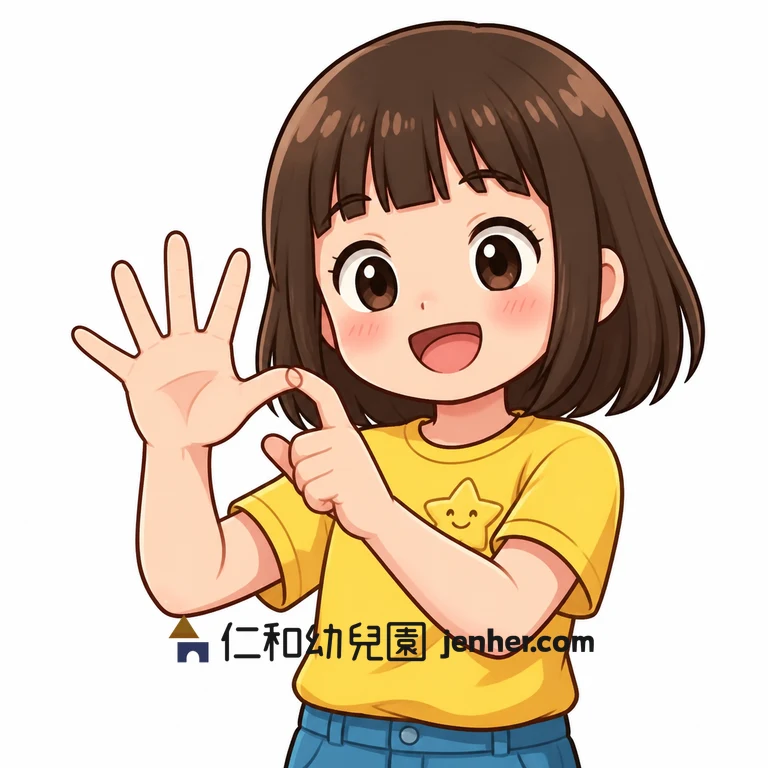
Activity 17-1: Thumb-to-Four-Finger Opposability

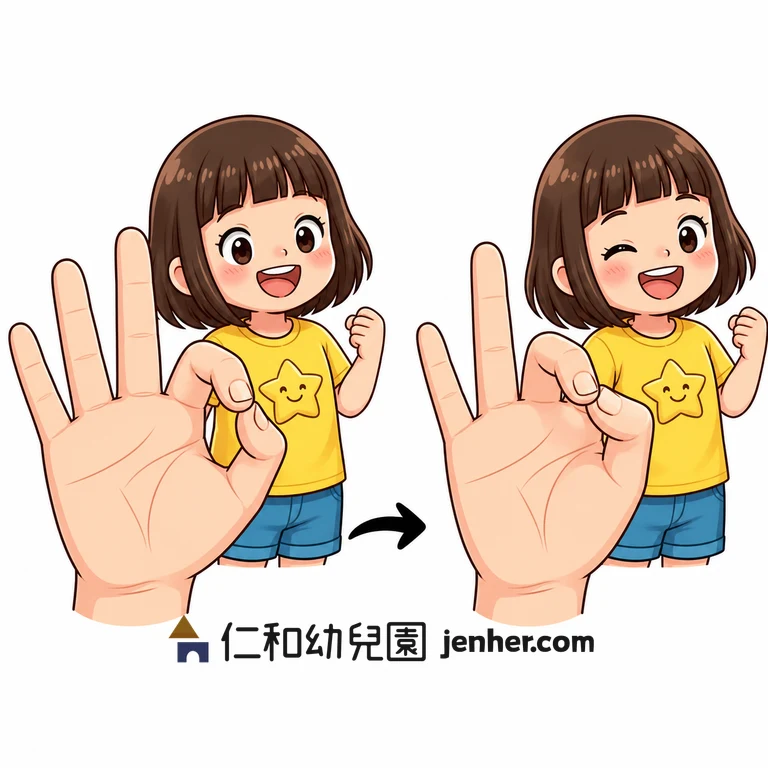
Thumb-to-Four-Finger Opposability

The child observes and practices moving the thumb to face each of the other four fingers, exploring opposable thumb range of motion and joint control.

Teacher Notes: Setup, Safety & Variations
Equipment: No equipment required (optional: colorful fingertip stickers)
Setup: Comfortable seated position with forearms resting gently on table or thighs.
Safety: Never force finger stretching; allow children to explore natural joint mobility at their own pace.
Make It Easier: Practice with dominant hand first before trying non-dominant hand.
Make It Harder: Perform simultaneously with both hands in mirror symmetry.
Teacher Cue: "Wiggle your thumb, say hello to your four friend fingers across the palm!"
Activity 17-2: Fingertip Roll-Call Touch

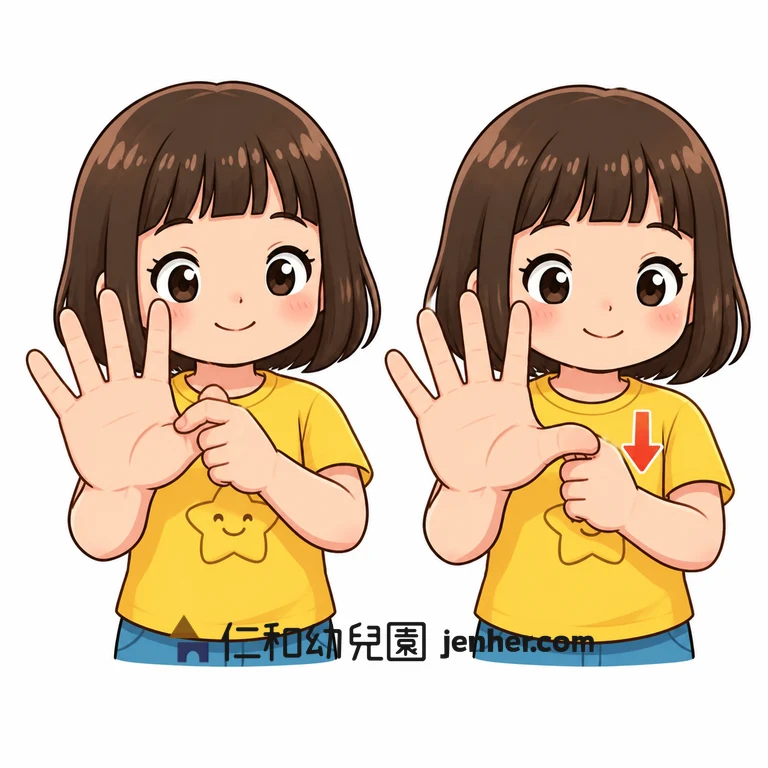
Fingertip Roll-Call Touch

The thumb sequentially taps the tip of the index, middle, ring, and pinky fingers in a rhythmic 'roll call', building tactile discrimination and finger isolation.

Teacher Notes: Setup, Safety & Variations
Equipment: No equipment required
Setup: Quiet circle time or calming transition routine.
Safety: Ensure gentle, relaxed touch pressure; prevent tight joint clenching.
Make It Easier: Slow down the pace and count aloud '1, 2, 3, 4' on each fingertip contact.
Make It Harder: Reverse the sequence from pinky back to index (4-3-2-1), then repeat continuously.
Teacher Cue: "Tap index, tap middle, tap ring, tap pinky—every finger says here!"
Activity 17-3: Independent Thumb Press

Independent Thumb Press

Resting the hand flat with four fingers still, the child practices pressing and lifting only the thumb against the surface, isolating the first metacarpal joint.

Teacher Notes: Setup, Safety & Variations
Equipment: Flat tabletop or firm desk mat
Setup: Seated posture with elbows and wrists supported on the surface.
Safety: Ensure the wrist stays in a neutral, relaxed alignment without tension.
Make It Easier: Place four fingers on a soft beanbag while thumb presses the tabletop.
Make It Harder: Press thumb to a 3-count rhythm (press-hold-release) while maintaining relaxed fingers.
Teacher Cue: "Rest four fingers quiet like sleeping kittens, press only your strong thumb down!"
Activity 17-4: Isolated Single-Finger Flexion

Isolated Single-Finger Flexion

Without using the other hand to assist, the child lifts and bends a single designated finger (index, middle, ring, or pinky) while keeping adjacent fingers resting quietly.

Teacher Notes: Setup, Safety & Variations
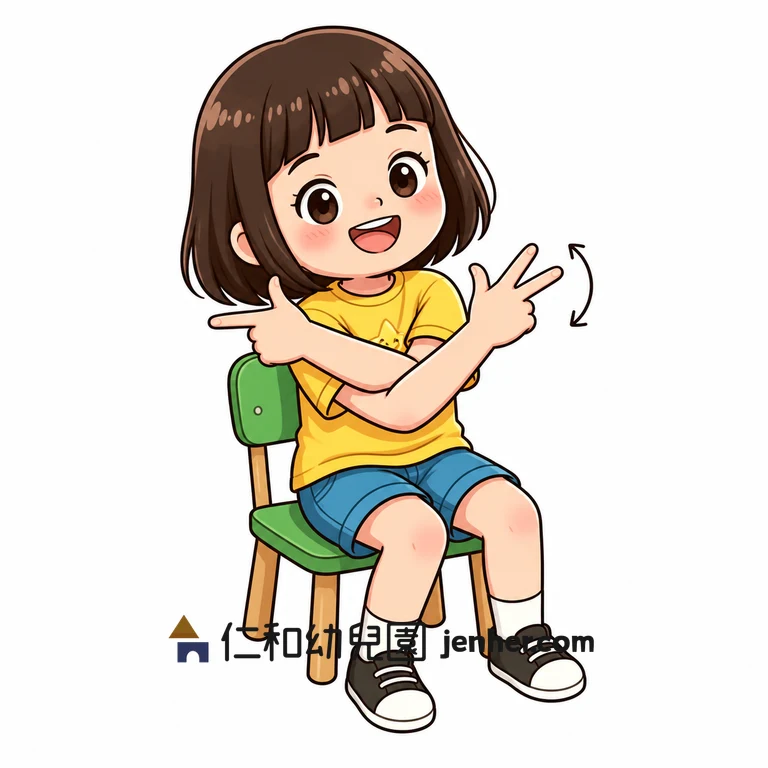
Equipment: Table surface or lap desk
Setup: Low-distraction environment to facilitate motor concentration.
Safety: Acknowledge that the ring finger naturally moves with adjacent fingers; never force absolute separation.
Make It Easier: Start with the index finger, which is developmentally easiest to isolate.
Make It Harder: Call out random finger names for responsive single-finger taps on the table.
Teacher Cue: "Wake up only your pointer finger, tap-tap-tap, while other fingers stay asleep!"
Activity 17-5: Asymmetric Hand Challenge (Part 1)

Asymmetric Hand Challenge (Part 1)

Children perform two distinct gestures simultaneously—such as a finger 'pointer gun' on the left hand and an 'open palm' or 'number eight' on the right—demanding bilateral brain coordination.

Teacher Notes: Setup, Safety & Variations
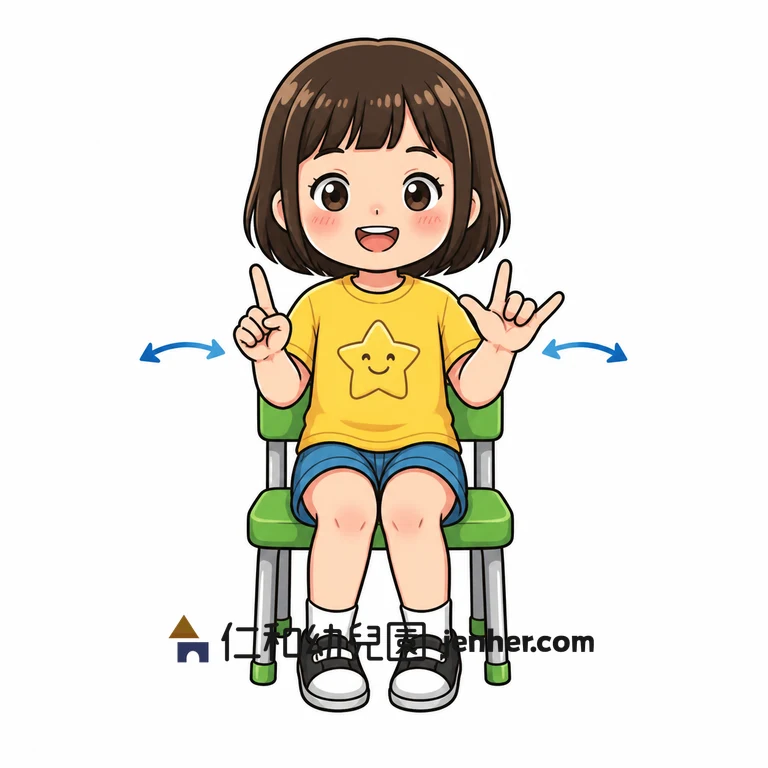
Equipment: No equipment required
Setup: Whole-group morning meeting or brain break.
Safety: Emphasize playful attempt over perfection; laughing at mistakes builds low-stress resilience.
Make It Easier: Form gestures slowly with one hand, then add the second hand after pausing.
Make It Harder: Switch hand gestures back and forth continuously to a teacher hand-clap tempo.
Teacher Cue: "Left hand points, right hand waves... switch! Left waves, right points!"
Activity 17-6: Asymmetric Hand Challenge (Part 2)

Asymmetric Hand Challenge (Part 2)

An advanced dual-hand coordination drill where one hand extends the index finger (pointing) while the other extends thumb and pinky (phone/surf gesture), switching on audio cue.

Teacher Notes: Setup, Safety & Variations
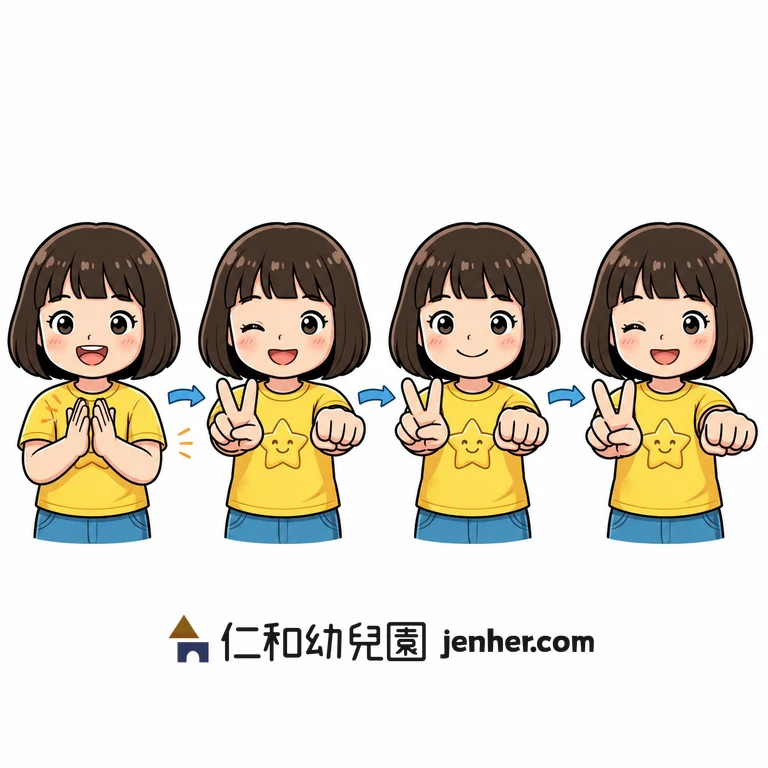
Equipment: No equipment required
Setup: Calm seated group setting.
Safety: No speed pressure; encourage children to self-correct at their own pace.
Make It Easier: Practice each hand shape separately before combining both hands.
Make It Harder: Add a mid-switch hand clap: Shape A → Clap → Shape B → Clap.
Teacher Cue: "One finger points high, two horns open wide... ready, steady, switch hands!"
Activity 17-7: Clap-and-Switch Finger Pattern (Part 1)

Clap-and-Switch Finger Pattern (Part 1)

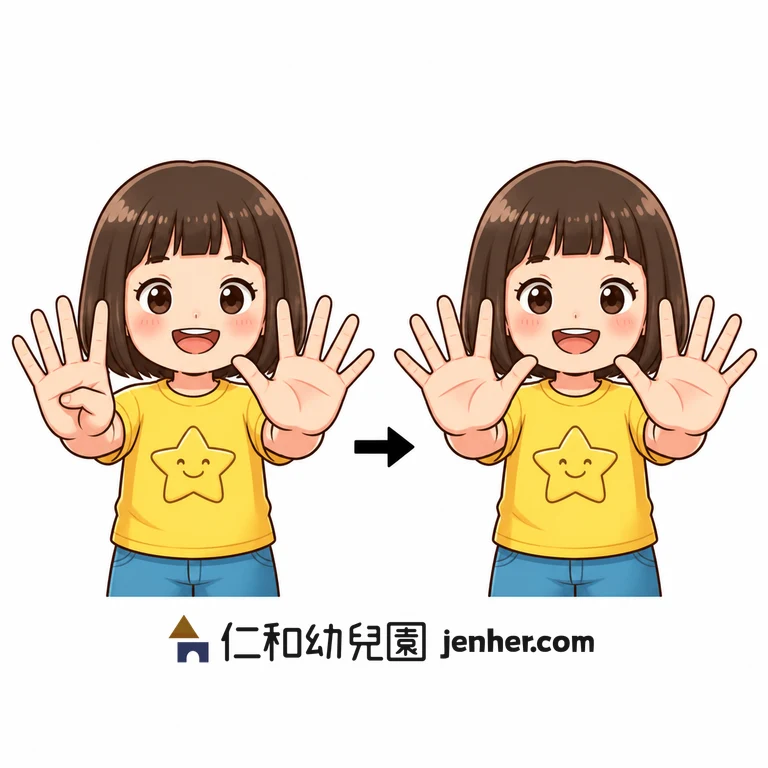
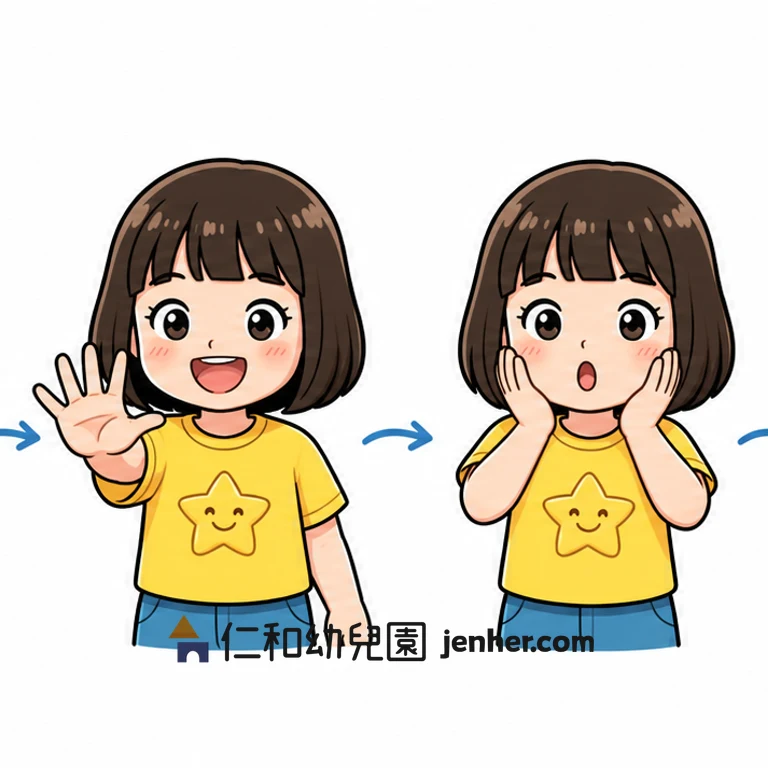
Children clap hands together once on count one, then instantly separate into opposite finger shapes (e.g., fist on left, open five on right) on count two in steady rhythm.

Teacher Notes: Setup, Safety & Variations
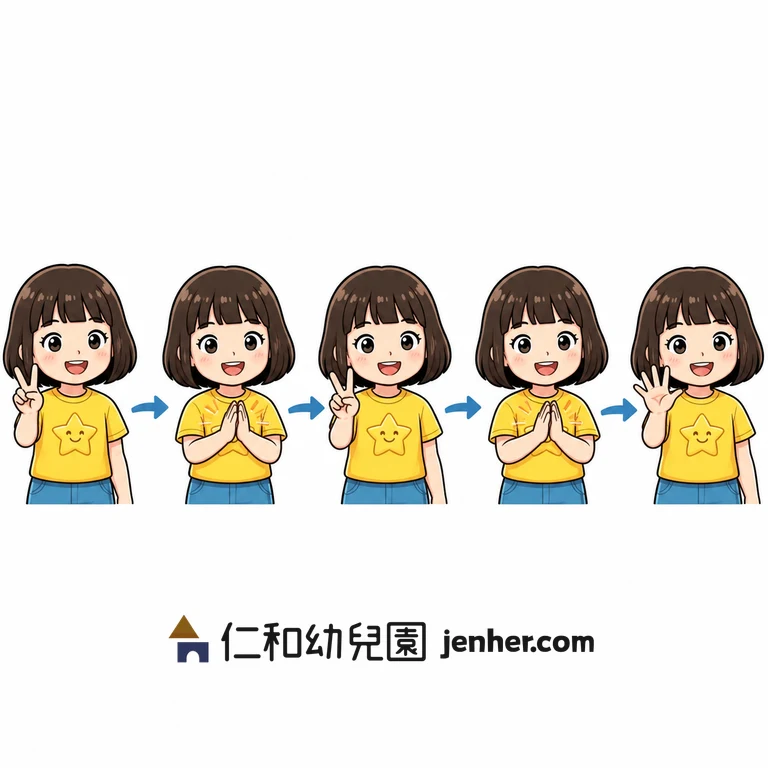
Equipment: Rhythm drum, tambourine, or teacher clapping count
Setup: Seated circle or stand-in-place transition area.
Safety: Maintain moderate clapping force; protect sensitive palms from hard impact.
Make It Easier: Perform clap followed by both hands showing the same gesture before introducing opposing shapes.
Make It Harder: Speed up the metronome tempo gradually across 8 continuous cycles.
Teacher Cue: "Clap together, snap apart! Rock on the left, paper on the right!"
Activity 17-8: Clap-and-Switch Finger Pattern (Part 2)

Clap-and-Switch Finger Pattern (Part 2)

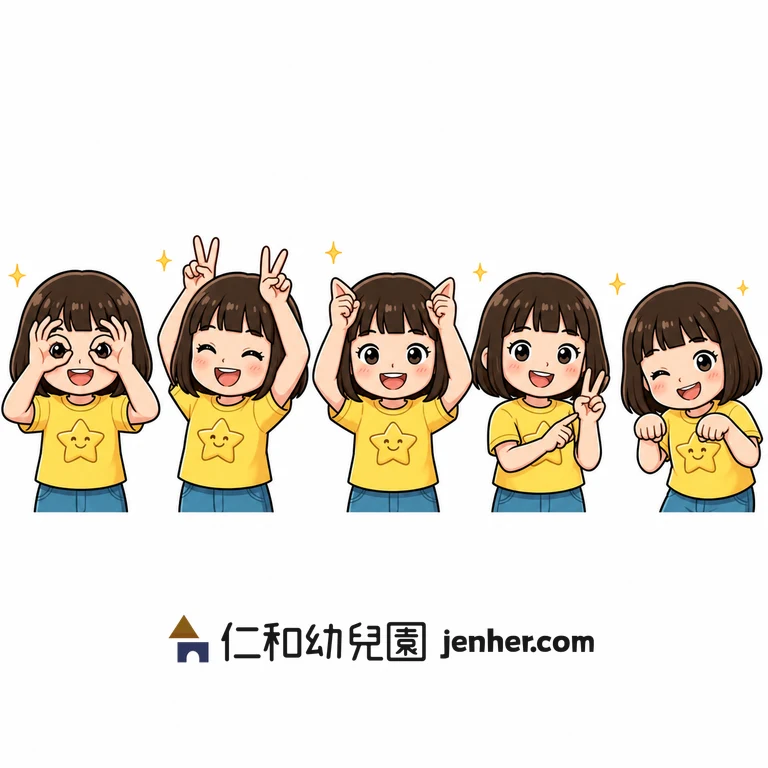
Integrating nursery songs with rhythmic clapping, children transition through a dynamic sequence of finger symbols (numbers, peace signs, shapes) synced to melodic beats.

Teacher Notes: Setup, Safety & Variations
Equipment: Preschool rhyme playlist or teacher-led singing
Setup: Circle carpet with all children able to see teacher hand modeling.
Safety: Ensure children have adequate elbow room around the circle.
Make It Easier: Count 1 to 5 with both hands matching the spoken number on each beat.
Make It Harder: One hand counts upward (1-2-3-4-5) while the other hand counts downward (5-4-3-2-1).
Teacher Cue: "Sing the song, clap the beat, show number one, show number two!"
Activity 17-9: Symbolic Finger Expression (Part 1)

Symbolic Finger Expression (Part 1)

Children use two hands to create imaginative shapes and characters: eyeglasses, bunny ears, little kittens, or scissors, bridging finger dexterity with creative pretend play.

Teacher Notes: Setup, Safety & Variations
Equipment: Storybook or character puppets to inspire shapes
Setup: Carpet circle with clear sightlines for peer demonstration.
Safety: Remind children not to poke eyes or faces when holding finger glasses.
Make It Easier: Make single-hand shapes (bunny ears with index and middle finger) first.
Make It Harder: Combine two hands into complex interlocked shapes (spider, butterfly, or turtle).
Teacher Cue: "Make two circles with thumb and pointer, put on your magic finger eyeglasses!"
Activity 17-10: Symbolic Finger Expression (Part 2)

Symbolic Finger Expression (Part 2)

Children weave finger gestures into miniature tabletop story theater, enacting narrative dialogues, animal movements, and environmental sounds using hands as actors.

Teacher Notes: Setup, Safety & Variations
Equipment: Tabletop puppet theater frame or open floor mat
Setup: Cozy story nook or language arts corner.
Safety: Ensure gentle peer hand interactions during shared finger scenes.
Make It Easier: Teacher narrations guide children step-by-step through simple animal actions.
Make It Harder: Children take turns improvising their own 2-character finger dialogue for the class.
Teacher Cue: "Two little birds sitting on a hill... one flies away, one stays still!"
Activity 17-11: Two-Hand Dialogue & Singing Rhyme

Two-Hand Dialogue & Singing Rhyme

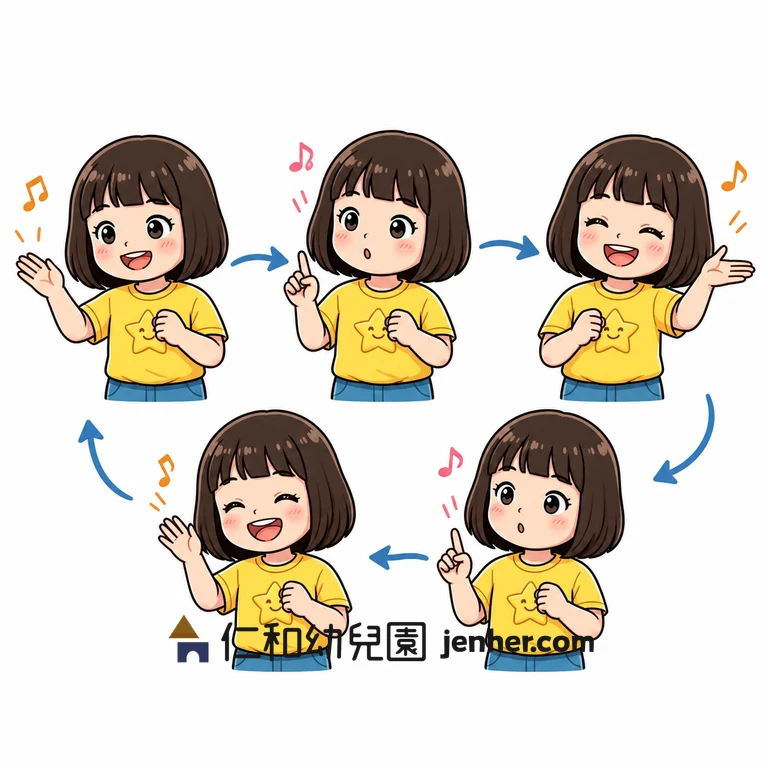
Left hand and right hand take on distinct character roles, interacting, 'talking', and singing to each other in rhythm to foster self-regulation, empathy, and bilateral control.

Teacher Notes: Setup, Safety & Variations
Equipment: No equipment required
Setup: Calm circle time or post-active relaxation period.
Safety: Promote relaxed breathing and joyful vocal participation.
Make It Easier: Sing a call-and-response song where teacher hand calls and child's hand responds.
Make It Harder: Each hand speaks with a different pitch voice (high squeaky bird vs. low friendly bear).
Teacher Cue: "Left hand says 'Good morning!', right hand sings 'Hello friend!' together in harmony."
Frequently Asked Questions

Preschool Finger & Hand Games FAQ

Practical teacher guidance on fine-motor foundations, differentiation strategies, opposable thumb mechanics, and Head Start ELOF alignment.

Why is finger play essential for preschool fine motor development?
Finger games strengthen intrinsic hand muscles, refine thumb opposability, and practice individual finger isolation without pencil-and-paper fatigue. These skills lay the foundational biomechanics needed for scissor cutting, handwriting grip, buttoning clothes, and using cutlery.
How do educators accommodate children who struggle with finger isolation?
Educators can reduce cognitive load by working on one hand at a time, placing gentle fingertip stickers as visual cues, using physical props (like beanbags or tabletops) to rest non-moving fingers, and slowing down the rhythm.
What is the developmental significance of opposable thumb exercises (Activity 17-1)?
The human thumb accounts for nearly 40% of manual dexterity through its unique circumduction and opposition mechanics. Isolating thumb-to-fingertip contact develops pincer grasp precision and arches of the hand essential for daily independence.
Are finger games effective for calming routines and classroom transitions?
Yes, rhythmic finger plays and bilateral clapping sequences engage children's focused attention, channel restless energy, and provide sensory-motor reset between high-energy physical activities and seated learning tasks.
Which Head Start Early Learning Outcomes Framework (ELOF) domains do these activities support?
These activities align directly with Perceptual, Motor, and Physical Development (specifically P-PMP 3: Small muscle control, hand-eye coordination, and manipulation) and Cognitive Development (P-MATH 1: Counting and 1-to-1 correspondence).
ADVERTISEMENT