ECE Movement Curriculum · Chapter 15 Guide

12 Balloon Games for Preschoolers: Indoor Movement & Coordination Play

Explore 12 low-noise, high-engagement balloon movement games designed for early childhood classrooms and rainy-day indoor gross motor play. From solo hand taps and partner volleys to foot kicking, hula hoop rackets, and roll-and-catch sequences.

ADVERTISEMENT

Quick Teacher Guide: Balloon Safety, Allergies & Setup

Latex Allergy Screening & Alternatives

Always check child health records for latex allergies before balloon activities. Substitute foil/Mylar balloons, punch balloons, silk juggling scarves, or lightweight foam balls where needed.

Immediate Popped Fragment Cleanup

Maintain strict adult supervision to immediately collect and dispose of any popped or deflated balloon pieces to prevent accidental choking or oral hazards.

Slow-Motion Visual Tracking Advantage

Balloons fall slowly, giving preschoolers 3–5 times longer to track trajectory, adjust footwork, and position hands compared to standard heavy balls.

Personal Movement Space Bubbles

Define clear floor boundaries or poly spots so children focus on upward flight paths without colliding with furniture or classmates.

Chapter 15 Blueprint · 12 Illustrated Activities

12 Balloon Games & Activities

Step-by-step illustrated games progressing from individual hand taps and partner volleys to foot kicking, racket swings, and dynamic roll-and-catch sequences.

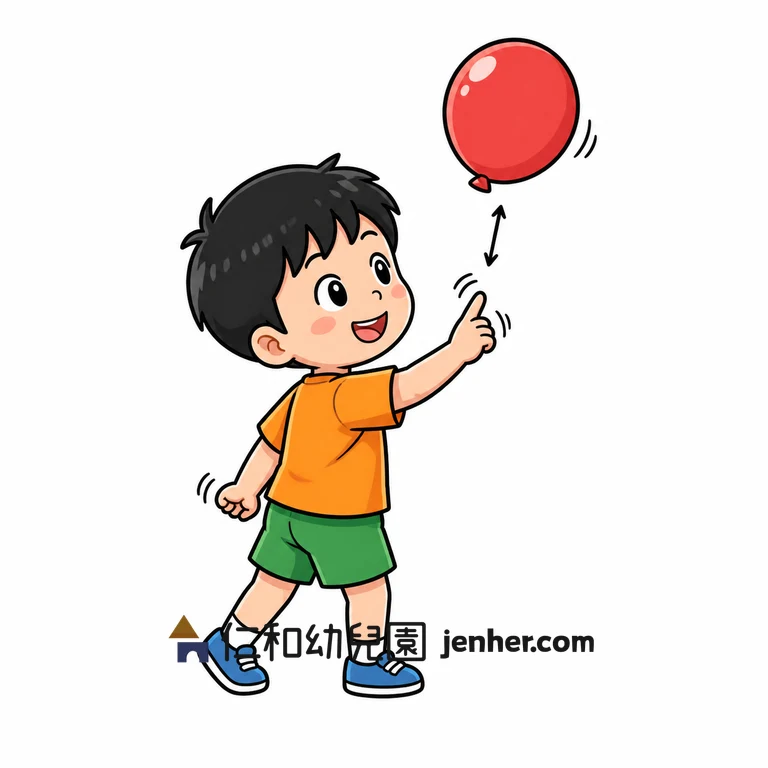
Activity 15-1: Solo Continuous Balloon Taps

Solo Continuous Balloon Taps

The child taps a lightweight balloon continuously upward using one or both hands, learning to modulate touch force while keeping the floating object aloft.

Teacher Notes: Setup, Safety & Variations
Equipment: 1 standard round balloon (or punch balloon with rubber band tucked in)
Setup: Indoor classroom or activity room free of sharp corners or low overhead light fixtures.
Safety: Ensure children look around their movement bubble to avoid bumping into walls or peers while looking up.
Make It Easier: Allow the balloon to be caught with two hands after every 2 taps before re-tossing.
Make It Harder: Challenge child to keep the balloon aloft using only their non-dominant hand.
Teacher Cue: "Soft hands like butterfly wings, tap it gently toward the ceiling!"
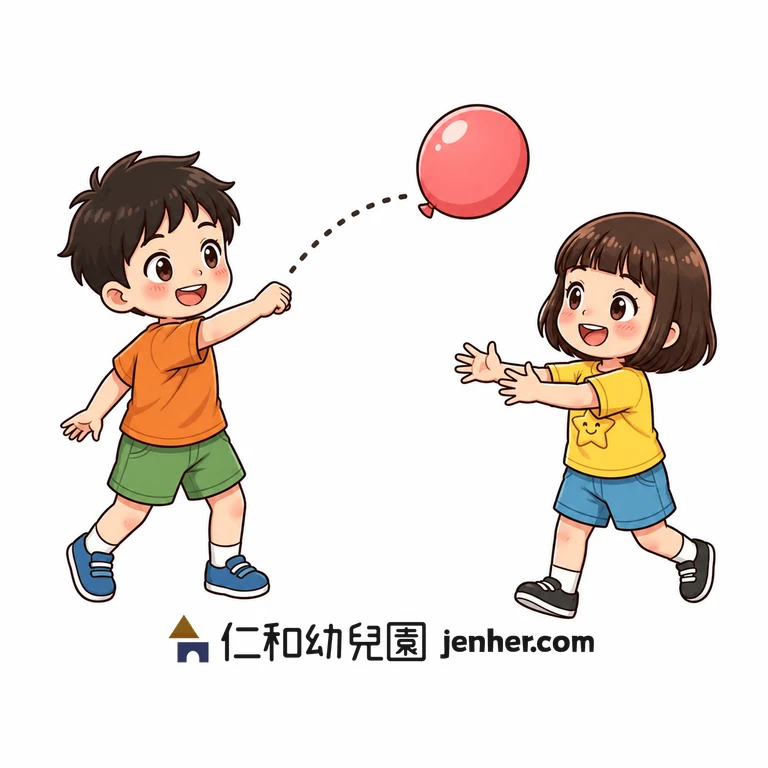
Activity 15-2: Two-Player Balloon Pass

Two-Player Balloon Pass

Standing a comfortable distance apart, two children cooperatively bat a floating balloon back and forth, matching their partner's rhythm and spatial reach.

Teacher Notes: Setup, Safety & Variations
Equipment: 1 bright balloon per pair
Setup: Mark two floor spots 4 to 6 feet apart to give each child a clear home base.
Safety: Encourage cooperative passes rather than aggressive downward spikes toward partner's face.
Make It Easier: Reduce the distance between partners to 3 feet so passes float within arm's reach.
Make It Harder: Count aloud together to see how many successful passes can be completed without a drop.
Teacher Cue: "Push the balloon up and across to your friend's hands softly!"
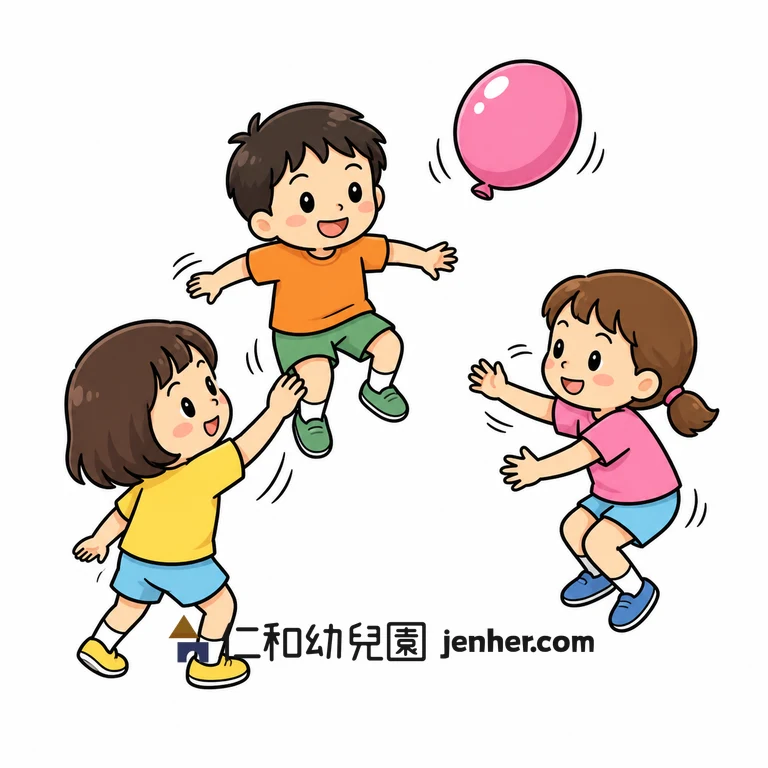
Activity 15-3: Three-Player Rotation Taps

Three-Player Rotation Taps

Three children stand in a triangle formation and take turns tapping a shared balloon upward in sequence, building social awareness, turn-taking, and peripheral tracking.

Teacher Notes: Setup, Safety & Variations
Equipment: 1 lightweight balloon per group of 3
Setup: Spacious circular station marked with 3 colored floor poly spots.
Safety: Teach children to call names or 'Mine!' before tapping to prevent head-to-head collisions.
Make It Easier: Designate a fixed clockwise tapping order before starting.
Make It Harder: Add a rhythm chant where children say the name of the next receiver before tapping.
Teacher Cue: "Call your friend's name, look up, and tap it to the next spot!"
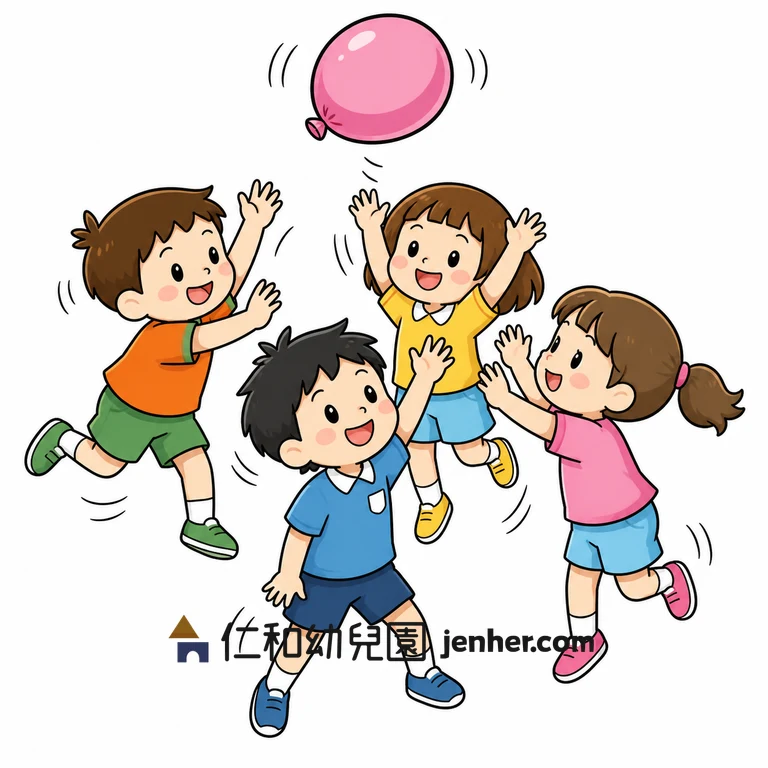
Activity 15-4: Four-Player Keep-Up Challenge

Four-Player Keep-Up Challenge

A four-child circle team collaborates to keep one balloon floating in the air, practicing collective team problem-solving and rapid multi-directional reaction.

Teacher Notes: Setup, Safety & Variations
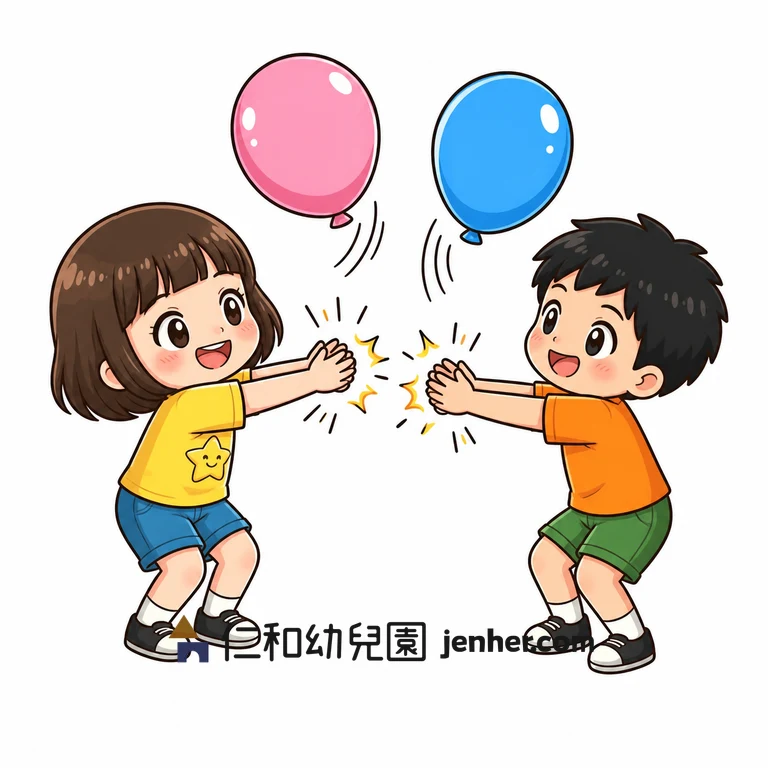
Equipment: 1 standard balloon (bright contrasting color)
Setup: Open circle with at least 8 feet diameter clearance.
Safety: Remind children to stay in their general zone and avoid diving onto the floor aggressively.
Make It Easier: Allow any player to catch and re-launch the balloon if it drops below knee height.
Make It Harder: Introduce a rule where no child may touch the balloon twice in a row.
Teacher Cue: "Work as a team! Keep your eyes on the balloon and help your teammates!"
Activity 15-5: Alternating Two-Hand Taps

Alternating Two-Hand Taps

The child taps the balloon upward strictly alternating between the left and right hand, fostering bilateral brain integration, hand-dominance balance, and rhythm.

Teacher Notes: Setup, Safety & Variations
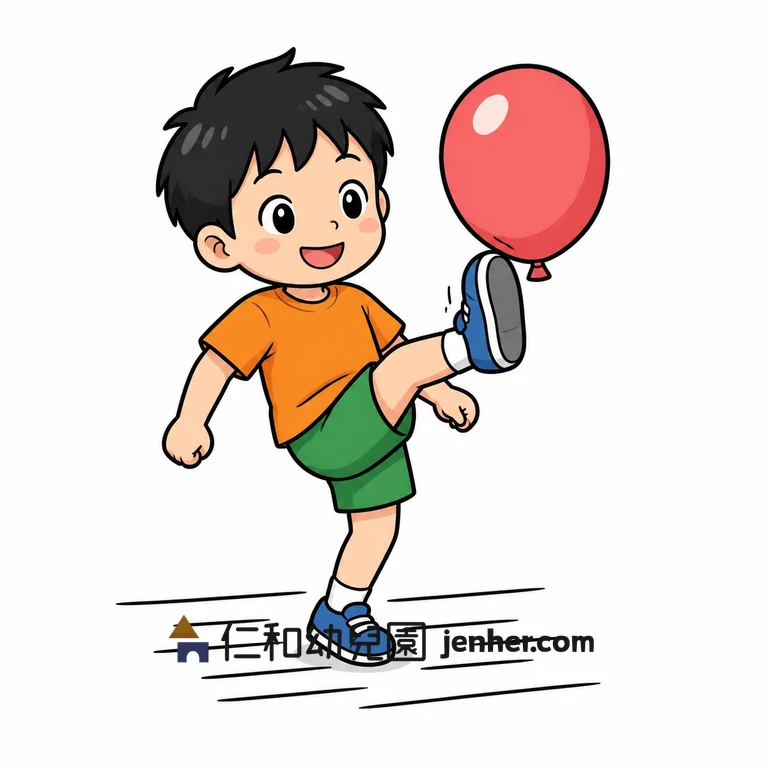
Equipment: 1 round balloon
Setup: Flat indoor floor with ample ceiling clearance.
Safety: Ensure the child keeps feet firmly planted in a shoulder-width balanced athletic stance.
Make It Easier: Tap with right hand, catch with two hands, then tap with left hand and catch.
Make It Harder: Chant 'Left, Right, Left, Right' in rhythm while maintaining 10 continuous alternating taps.
Teacher Cue: "Left hand tap, right hand tap, keep the steady beat alive!"
Activity 15-6: Instep Balloon Kicking

Instep Balloon Kicking

Balancing on one foot, the child gently kicks a descending balloon upward with the top/instep of the other foot, introducing safe soccer volley mechanics.

Teacher Notes: Setup, Safety & Variations
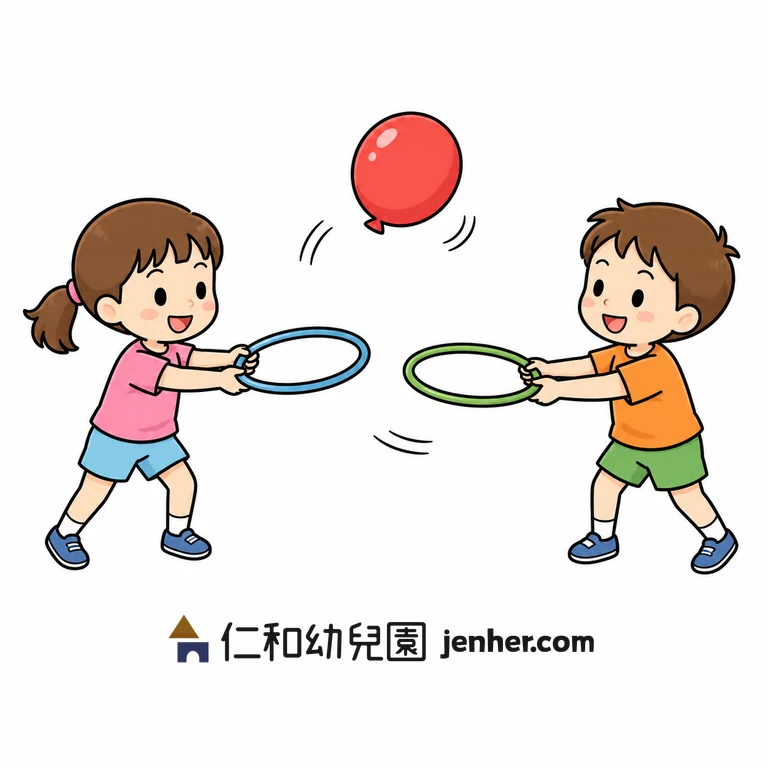
Equipment: 1 durable balloon per child · Gym safety floor mats
Setup: Carpeted area or padded mats to prevent slipping during single-leg balance.
Safety: Children must perform gentle, controlled foot lifts rather than hard wild swings that compromise balance.
Make It Easier: Drop the balloon from waist height and kick once into teacher's hands.
Make It Harder: Alternate kicking with left foot and right foot continuously.
Teacher Cue: "Point your toes flat, balance strong like a tree, and tap it up with your shoe laces!"
Activity 15-7: Hula Hoop Racket Volley

Hula Hoop Racket Volley

Holding a small, lightweight hula hoop with both hands like an oversized racket frame, children volley a balloon back and forth, extending their reach and tool-use skills.

Teacher Notes: Setup, Safety & Variations
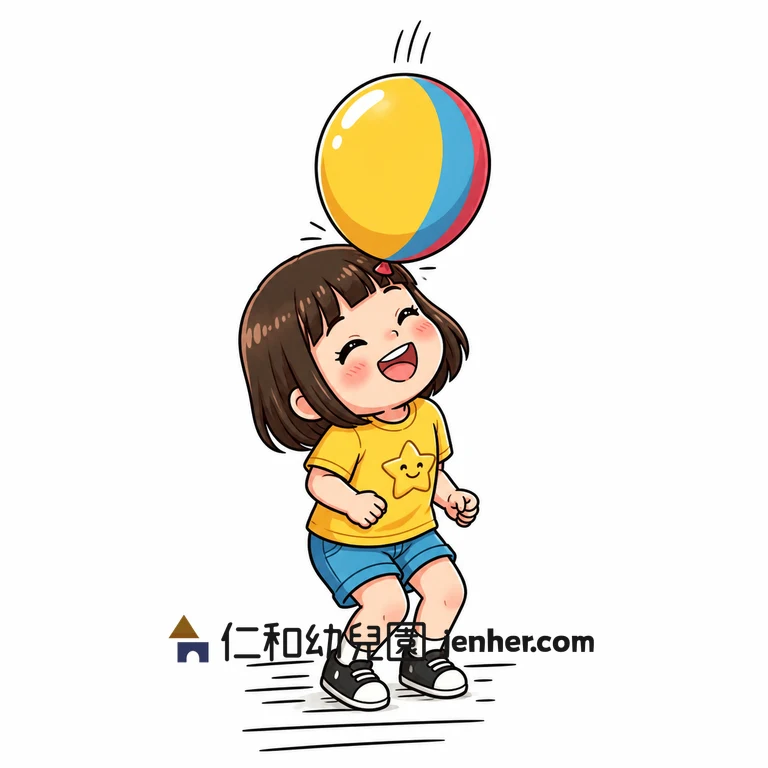
Equipment: 2 small lightweight hula hoops (diameter ~20–24 inches) · 1 bright balloon
Setup: Clear open floor divided by a floor tape line representing a badminton net.
Safety: Ensure children hold hoops firmly and maintain at least 4 feet distance across the center line to avoid hoop clashing.
Make It Easier: Child holds hoop horizontally like a basket to catch the floating balloon.
Make It Harder: Volley the balloon over a low ribbon barrier set at chest height.
Teacher Cue: "Hold your hoop with two hands, swing smooth and guide the balloon over the line!"
Activity 15-8: Forehead Balloon Bumping

Forehead Balloon Bumping

Tracking the slow-falling balloon from above, the child flexes their knees and gently extends upward to bump the balloon with their forehead, learning safe header technique.

Teacher Notes: Setup, Safety & Variations
Equipment: 1 standard soft balloon (never use heavy or rigid balls for headers)
Setup: Padded floor area with clear space around each child.
Safety: Coach contact strictly on the hairline / upper forehead with eyes open; prohibit head-to-peer contact.
Make It Easier: Teacher holds the balloon steady at child's head height for gentle touch practice.
Make It Harder: Perform 1 forehead bump followed immediately by 1 two-hand catch.
Teacher Cue: "Eyes open looking up, bend your knees, and give the balloon a gentle forehead nod!"
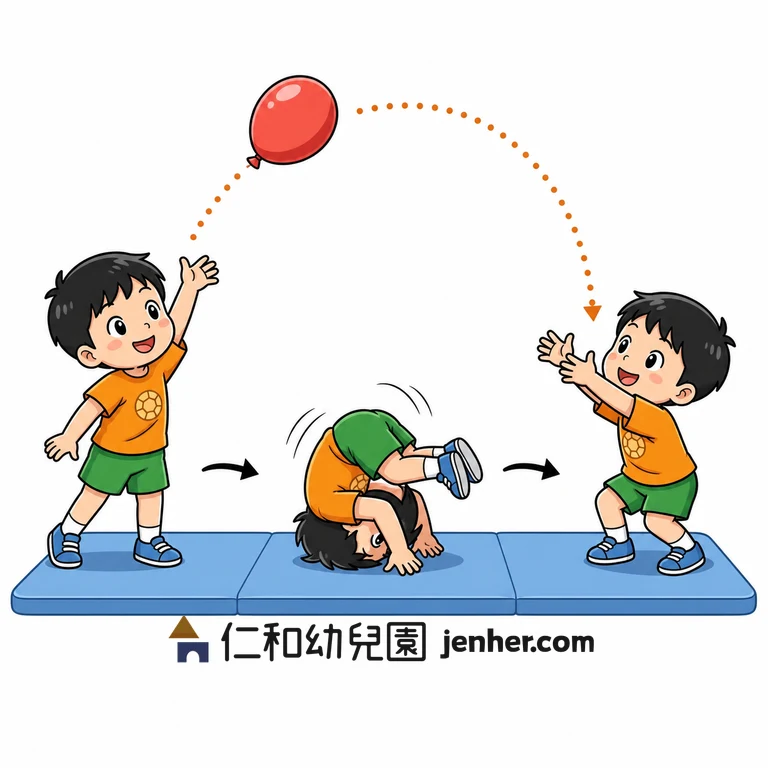
Activity 15-9: Forward Roll & Catch

Forward Roll & Catch

The child lofts a balloon high toward the ceiling, executes a controlled gymnastics forward roll on a padded mat, stands up swiftly, and catches the balloon before it touches the ground.

Teacher Notes: Setup, Safety & Variations
Equipment: 1 high-density tumbling mat (2-inch thickness) · 1 lightweight balloon
Setup: Dedicated tumbling lane with clear approach and landing zones.
Safety: Ensure the child has mastered basic forward roll chin-tuck mechanics on a flat mat before adding the balloon toss.
Make It Easier: Child throws balloon, does a quick squat-and-stand, then catches the balloon.
Make It Harder: Challenge child to catch the balloon with two hands while standing fully balanced.
Teacher Cue: "Toss it high, tuck your chin like a turtle, roll smooth, and pop up to catch!"
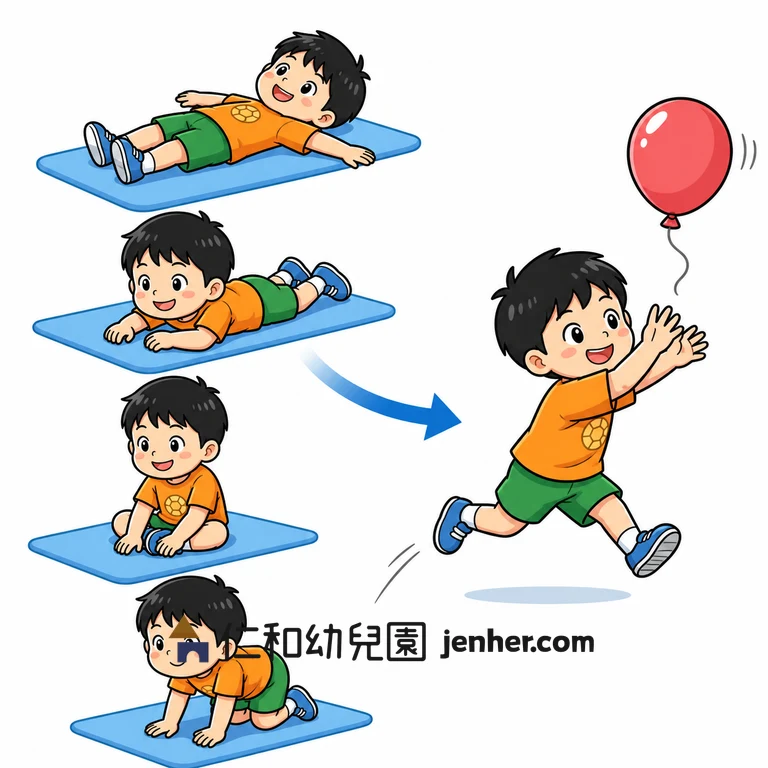
Activity 15-10: Posture-Change Reaction Catch

Posture-Change Reaction Catch

Starting in varied positions (sitting cross-legged, lying prone, or squatting), children listen for an audio cue, jump up rapidly, and run to catch a descending balloon tossed by the teacher.

Teacher Notes: Setup, Safety & Variations
Equipment: 1–2 balloons per station · Soft padded floor carpet or foam tiles
Setup: Wide indoor room with designated starting floor spots.
Safety: Provide adequate spacing (at least 6 feet) between starting spots so children do not collide when standing up.
Make It Easier: Start from a seated chair position rather than the floor.
Make It Harder: Start lying face down (prone position) and get up on a whistle sound.
Teacher Cue: "Ready in your position... Listen for the beep... Jump up and grab the floating balloon!"
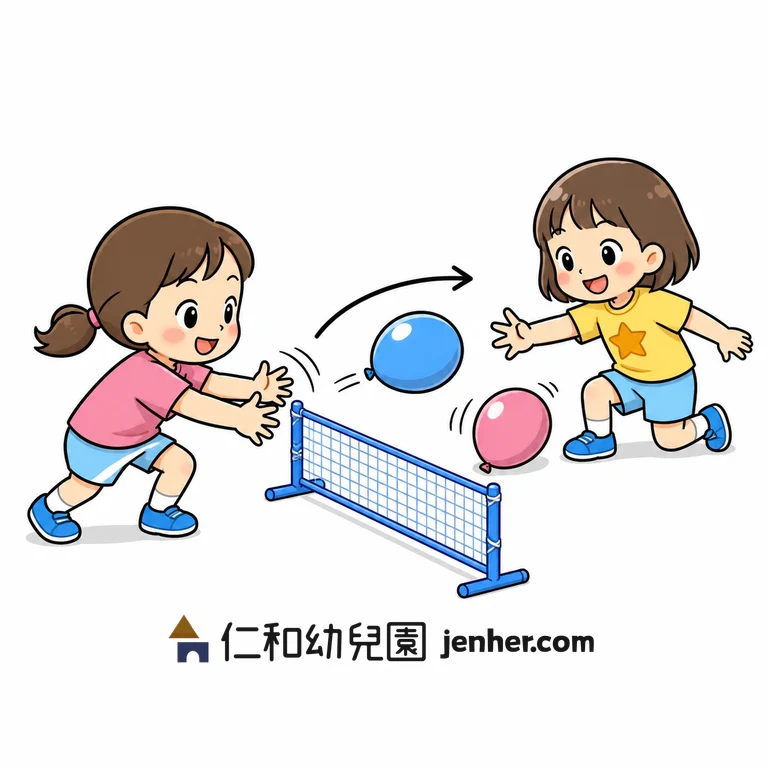
Activity 15-11: Low Net Balloon Scramble

Low Net Balloon Scramble

Two children position themselves on opposite sides of a low ribbon or bench net, batting, scooping, and pushing a floating balloon back and forth in a dynamic mini-volleyball match.

Teacher Notes: Setup, Safety & Variations
Equipment: Low ribbon, elastic rope, or gym bench net (height ~2.5–3 feet) · 1 balloon
Setup: Marked rectangular mini-court with a clear center line.
Safety: Ensure the net barrier is soft and collapsible (elastic ribbon) so tripping hazards are eliminated.
Make It Easier: Allow up to 2 bounces on the floor per side before returning over the net.
Make It Harder: Play with one-touch return rules to challenge quick reaction time.
Teacher Cue: "Watch the net line! Scoop from low to high and send it floating across!"
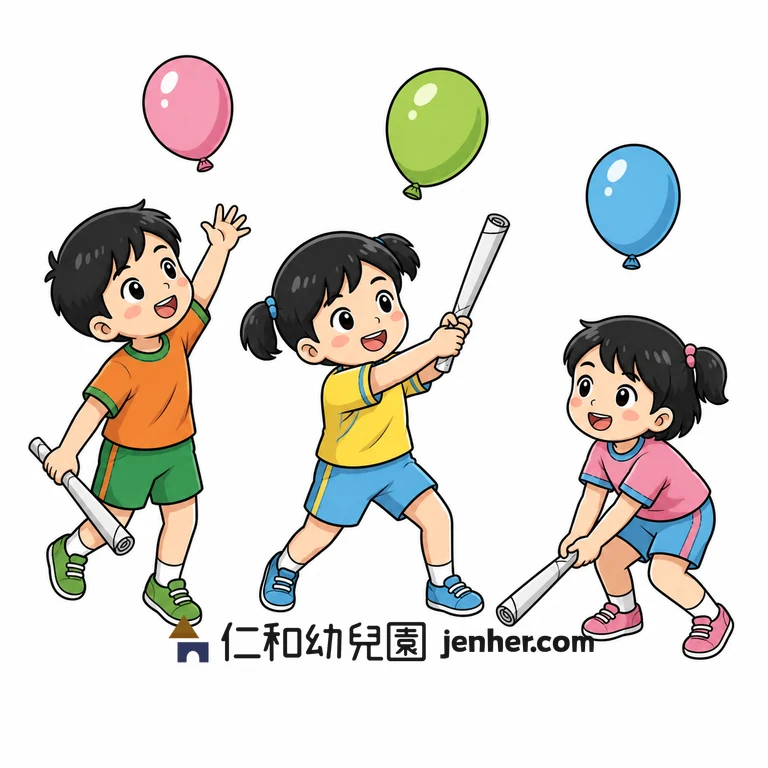
Activity 15-12: Rolled Newspaper Bat Hitting

Rolled Newspaper Bat Hitting

Using a safe, tightly rolled newspaper bat or soft foam pool noodle bat, children practice swinging mechanics and contact timing by batting floating balloons across the room.

Teacher Notes: Setup, Safety & Variations
Equipment: Tightly rolled and taped newspaper sticks (or soft foam noodle bats) · Standard balloons
Setup: Enforce a designated batting box with a 6-foot safety radius around the swinging child.
Safety: Enforce strict 'No swinging when anyone is in the batting circle' safety rule; bats point down when waiting.
Make It Easier: Teacher holds the balloon on a string at chest height for stationary tee batting.
Make It Harder: Toss the balloon in the air, track the flight path, and strike it at peak height toward a target zone.
Teacher Cue: "Two hands on the bat, step toward the balloon, and swing smooth through the middle!"
Frequently Asked Questions

Preschool Balloon Movement Games FAQ

Expert teacher guidance on allergy management, popping prevention, multi-ability scaling, and Head Start ELOF alignment.

Why are balloons ideal for preschool indoor gross motor activities?
Balloons provide a slow-motion aerodynamic flight that bridges the gap between early reflexes and mature hand-eye coordination. Their lightweight impact is gentle and non-threatening, allowing hesitant children to explore striking, heading, and volleying without fear of pain or property damage.
How do teachers ensure safety regarding balloon popping and choking risks?
Teachers enforce a strict 'hands-only, no mouths' rule, keep uninflated balloons completely out of children's reach, inspect balloons before class, and immediately stop play to discard any broken rubber fragments if a pop occurs.
What alternatives can be used for children with latex allergies or sensory sensitivity to loud pops?
Educators can use punch balloons (which feature thicker latex and slow deflation), reusable nylon balloon skins (cloth covers that prevent loud pops and contain fragments), silk juggling scarves, or 7-inch soft foam sensory balls.
How can balloon games be adapted for mixed-age or multi-ability preschool groups?
For younger toddlers (ages 2–3), focus on simple two-hand catches, floor pushing, and low-toss reaches. For older preschoolers (ages 4–5), introduce dynamic challenges like alternating hands (Activity 15-5), forward roll catches (Activity 15-9), and racket volleys (Activity 15-7).
Which Head Start Early Learning Outcomes Framework (ELOF) domains do these games support?
These activities directly address Perceptual, Motor, and Physical Development (specifically P-PMP 1: Gross motor control and coordination and P-PMP 3: Hand-eye manipulation and spatial awareness), as well as Social and Emotional Development (P-SE 4: Cooperative play and turn-taking).
ADVERTISEMENT