ECE Resource Guide · Toddler Physical Development (Ages 1–3)

16 Gross Motor Activities for Toddlers: Simple, Low-Prep Games

Support toddlers' walking balance, body awareness, and joyful active play with 16 gentle, low-prep gross motor activities adapted from Jenher's early childhood movement practice.

ADVERTISEMENT

Quick Teacher Guide: Toddler Movement & Safety

Keep these four golden principles in mind when facilitating physical play for toddlers (12–36 months):

Developmental Readiness

Toddlers (12–36 months / Ages 1–3). Focus on joyful repetition, postural control, and low-pressure, child-led play adapted to each child's current movement abilities.

Active Supervision

Provide active, close supervision. Stay within arm's reach during climbing or stepping, following your program's required staffing ratios.

Safe & Soft Props

Use soft foam/vinyl balls (8+ inches), tumbling mats, firm foam blocks, and painter’s tape. Avoid latex balloons or small choking hazards.

Responsive Pacing

Keep instructions short, offer repetition, and change activities when interest or safe engagement begins to fade naturally.

Illustrated Activity Cards

16 Toddler Gross Motor Activities

Browse the illustrated activities below. Each one includes concise instructions, a source chapter link, and expandable Teacher & Caregiver Notes with ways to simplify the activity or add a challenge based on each child's current abilities.
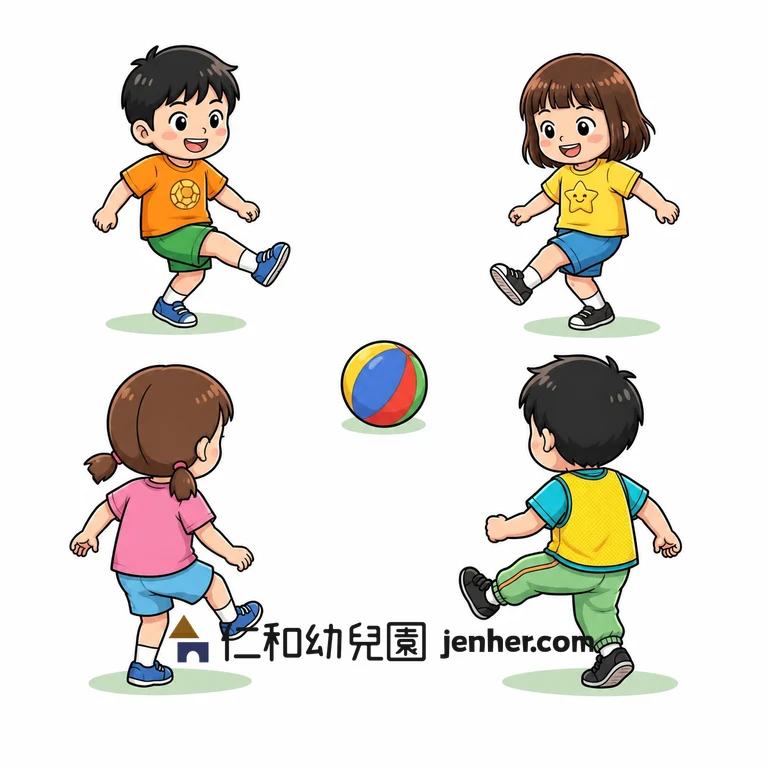
Activity T-1: Big Floor Ball Roll
Activity T-1 Manipulative · Visual Tracking
Ch. 4 Ball Activities ›

Big Floor Ball Roll

Sit facing your toddler with legs wide, gently roll a soft 8-inch playground ball across the carpet, and prompt them to trap it with both open palms.

Teacher & Caregiver Notes: Setup, Safety & Variations
Equipment: 1 lightweight soft vinyl playground ball (8–10 in)
Setup: Sit 3–4 feet apart on a comfortable padded floor.
Toddler Safety & Spotting: Use ultra-light vinyl or foam balls; keep rolling velocity gentle.
Simplify It / More Support: Sit closer (2 feet) and roll ball directly into toddler's lap.
Add a Challenge / More Independence: Toddler pushes the ball back using one deliberate forward roll.
Caregiver Cue: "Open your hands wide... roll, roll, roll—BEEP! Catch the friendly ball!"
Activity T-2: Two-Hand Lap Catch
Activity T-2 Hand-Eye Coordination · Grasp
Ch. 4 Ball Activities ›

Two-Hand Lap Catch

Cue the toddler to make a "big basket" with curved arms against their chest as you gently drop a soft plush ball into their lap from 6 inches above.

Teacher & Caregiver Notes: Setup, Safety & Variations
Equipment: 1 textured foam or plush sensory ball (6–8 in)
Setup: Toddler sits upright on floor mat with legs cross-legged or straddled.
Toddler Safety & Spotting: Never toss ball at face level; always drop gently downward into chest basket.
Simplify It / More Support: Place the ball directly in their hands and celebrate holding it.
Add a Challenge / More Independence: Gently toss ball underhand from 2 feet away for an active hug-catch.
Caregiver Cue: "Make a big circle basket with your arms... hug the soft ball tight!"
Activity T-3: Seated Straddle Pass
Activity T-3 Bilateral Coordination · Social Pass
Ch. 4 Ball Activities ›

Seated Straddle Pass

Sit in a wide V-sit with your feet touching your toddler's feet, creating a natural boundary lane for rolling the ball back and forth smoothly.

Teacher & Caregiver Notes: Setup, Safety & Variations
Equipment: 1 large textured rubber ball (8–10 in)
Setup: Feet touch partner's feet to form an enclosed rolling track.
Toddler Safety & Spotting: Ensures ball stays between partners without rolling under furniture.
Simplify It / More Support: Roll a slow-moving textured sensory ball with ringing chime inside.
Add a Challenge / More Independence: Count "1, 2, PUSH!" together before releasing the ball.
Caregiver Cue: "Feet touch to make a train track—roll the ball down the tracks to Mama!"
Activity T-4: Laundry Hamper Target Drop
Activity T-4 Object Release · Spatial Aim
Ch. 4 Ball Activities ›

Laundry Hamper Target Drop

Place an open laundry hamper on the floor, hand soft foam balls to the toddler, and encourage them to walk over and drop each ball inside with a big celebration.

Teacher & Caregiver Notes: Setup, Safety & Variations
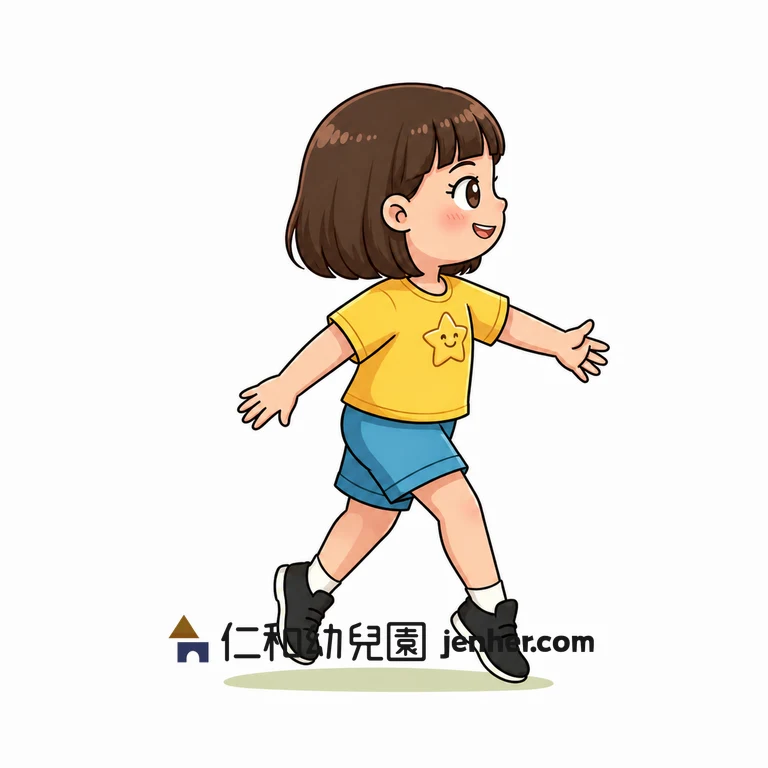
Equipment: 1 standard plastic laundry basket · 5 soft ball pit balls
Setup: Place hamper in center of room; scatter balls 3–5 feet away.
Toddler Safety & Spotting: Ensure basket has smooth edges and won't tip over when leaned on.
Simplify It / More Support: Toddler stands directly over the basket and drops balls straight down.
Add a Challenge / More Independence: Mark a throwing line 2 feet back for a gentle underhand toss.
Caregiver Cue: "Pick up the red ball, walk to the big basket, and DROP! Yay, in it goes!"
Activity T-5: Tiptoe Sneak Walk
Activity T-5 Balance · Ankle Strength
Ch. 16 No-Equipment Games ›

Tiptoe Sneak Walk

Encourage your toddler to lift their heels up high and take tiny, quiet steps across the rug like a little kitten tiptoeing past a sleeping bear.

Teacher & Caregiver Notes: Setup, Safety & Variations
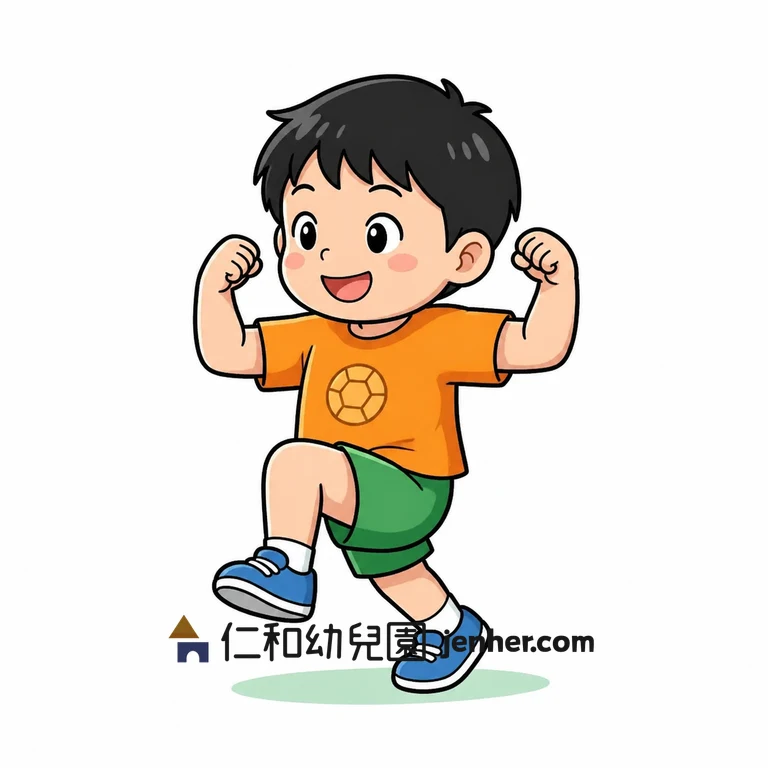
Equipment: None (Zero Equipment)
Setup: Clear open rug space free of obstacles.
Toddler Safety & Spotting: Perform on carpeted floors with bare feet or non-slip grip socks.
For Emerging Movers / More Support: Reach up tall, then return to flat feet; try gentle heel lifts while holding an adult's hands.
For Confident Movers / Add a Challenge: For confident walkers: try a few playful, quiet tiptoe steps across the rug to whisper a secret in the teacher's ear.
Caregiver Cue: "Shhh... heels up high, tiptoe quietly like a tiny mouse!"
ADVERTISEMENT
Activity T-6: Mighty Giant Stomp
Activity T-6 Body Awareness · Confidence
Ch. 16 No-Equipment Games ›

Mighty Giant Stomp

March forward with heavy, deliberate footsteps, lifting knees high and swinging arms like a friendly giant walking through the forest.

Teacher & Caregiver Notes: Setup, Safety & Variations
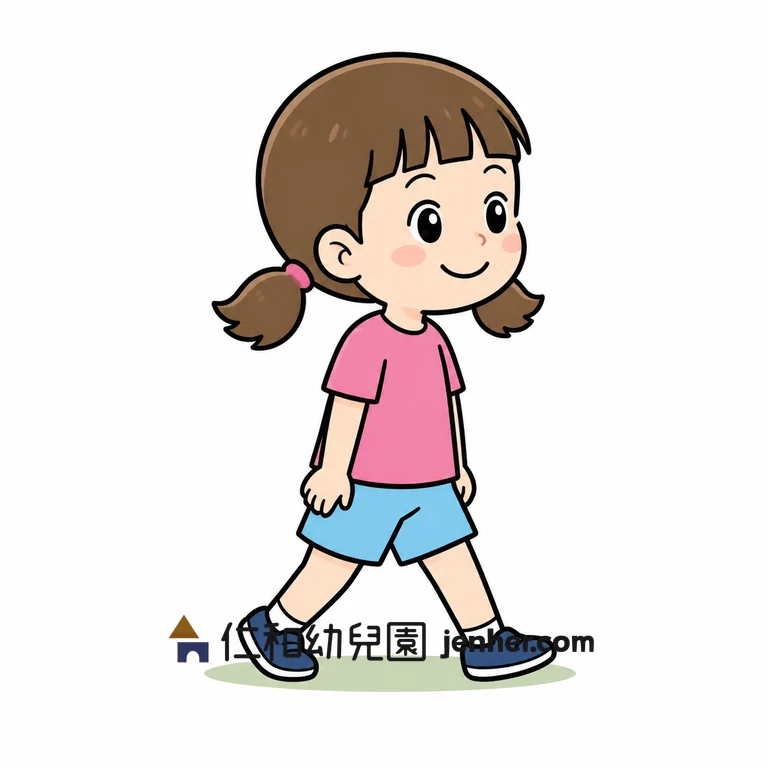
Equipment: None (Zero Equipment)
Setup: Open walking circle on padded carpet.
Toddler Safety & Spotting: March with flat feet; avoid jumping from heights.
Simplify It / More Support: Stomp in place while holding onto a low couch or adult hands.
Add a Challenge / More Independence: Stomp loudly 3 times, then freeze completely still like a statue.
Caregiver Cue: "Big giant steps... STOMP, STOMP, STOMP through the woods!"
Activity T-7: Penguin Waddle Rock
Activity T-7 Dynamic Balance · Lateral Weight Shift
Ch. 16 No-Equipment Games ›

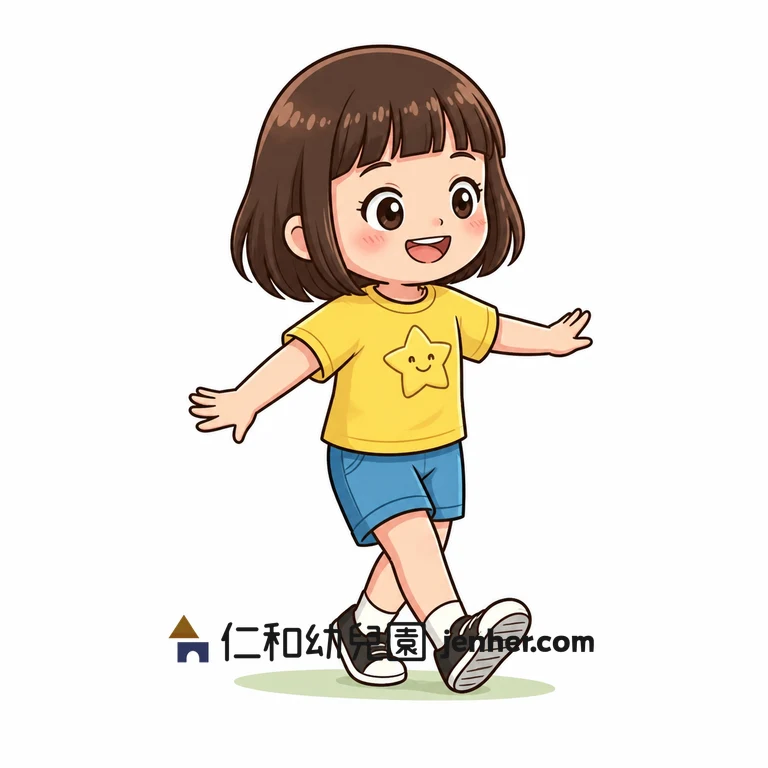
Penguin Waddle Rock

Hold arms down by sides with hands flapped out like penguin flippers, taking gentle side-to-side waddling steps forward in a comfortable natural stance.

Teacher & Caregiver Notes: Setup, Safety & Variations
Equipment: None (Zero Equipment)
Setup: 10-foot open carpet lane.
Toddler Safety & Spotting: Allow toddler to keep feet at natural comfortable angle; do not force toes outward. Keep footsteps small to maintain steady balance.
For Emerging Movers / More Support: Waddle side to side in place while holding adult's hands.
For Confident Movers / Add a Challenge: Waddle all the way across the room to tag a soft wall target.
Caregiver Cue: "Flipper wings out, rock left and right, waddle like a happy little penguin!"
Activity T-8: Heel Tap Balance Walk
Activity T-8 Balance · Tibialis Engagement
Ch. 16 No-Equipment Games ›

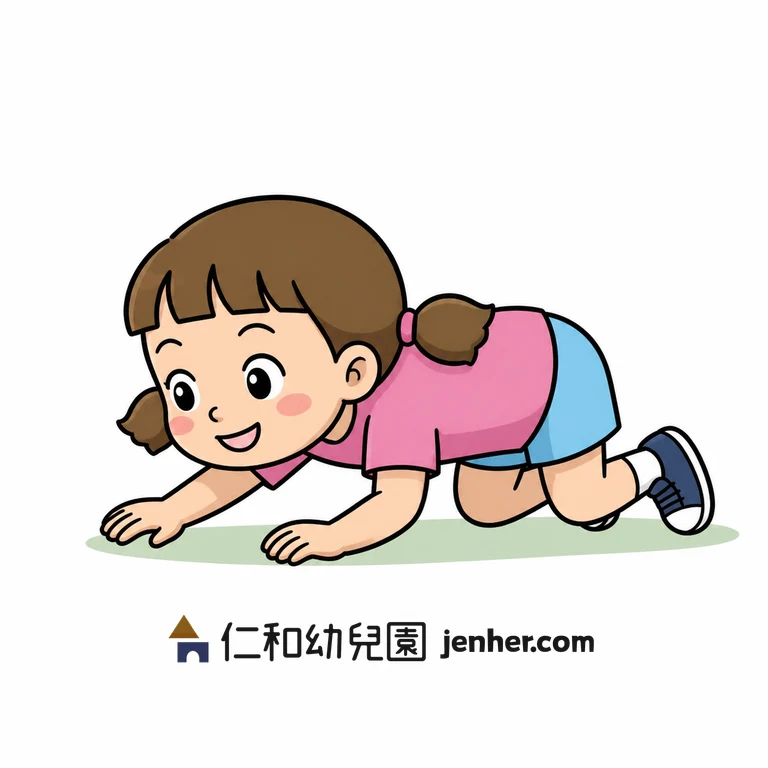
Heel Tap Balance Walk

Lift your toes upward, tap your heel onto the floor with each step, and listen to the quiet tapping sound as you balance forward.

Teacher & Caregiver Notes: Setup, Safety & Variations
Equipment: None (Zero Equipment)
Setup: Smooth carpet runway.
Toddler Safety & Spotting: Adult stands close alongside toddler to support balance adjustments.
Simplify It / More Support: Tap one heel forward while seated in a chair.
Add a Challenge / More Independence: Take 3 heel steps forward, pause, and switch to 3 tiptoe steps.
Caregiver Cue: "Toes point up to the sky, tap-tap on your strong heels!"
Activity T-9: Playful Puppy Floor Crawl
Activity T-9 Quadruped Coordination · Core
Ch. 16 No-Equipment Games ›

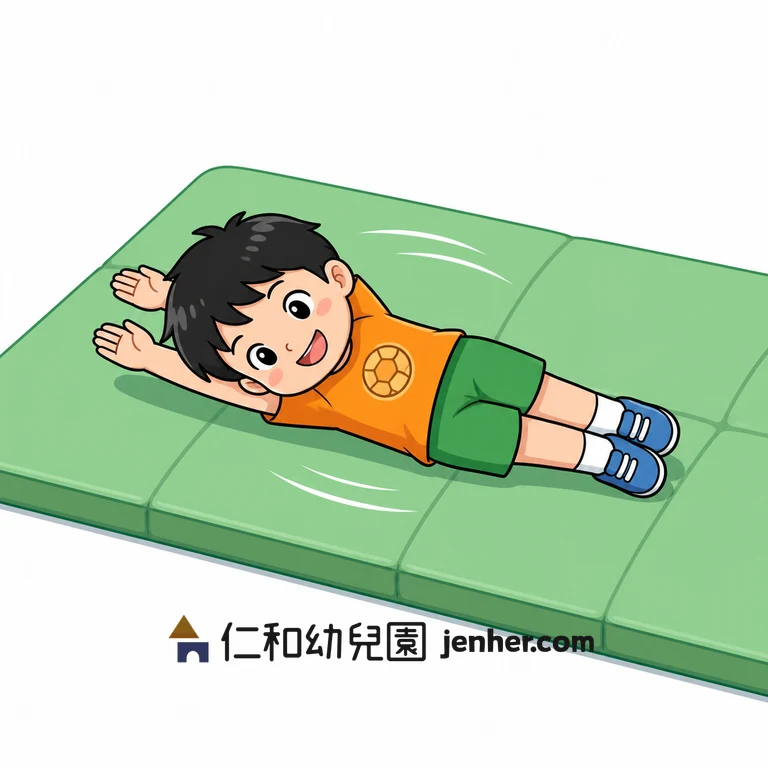
Playful Puppy Floor Crawl

Get down on hands and knees, crawl smoothly across the floor, and bark happily like a friendly puppy fetching its toy.

Teacher & Caregiver Notes: Setup, Safety & Variations
Equipment: None (Zero Equipment)
Setup: Clean, soft carpet space.
Toddler Safety & Spotting: Check that knees rest on plush carpet or yoga mats.
Simplify It / More Support: Crawl across a flat 6-foot foam mat toward a favorite plush toy.
Add a Challenge / More Independence: Crawl under a low blanket draped over two dining chairs.
Caregiver Cue: "Hands and knees down, crawl fast like a puppy... WOOF WOOF!"
Activity T-10: Foam Log Roll Downhill
Activity T-10 Vestibular Stimulation · Spatial Sense
Ch. 11 Mat Activities ›

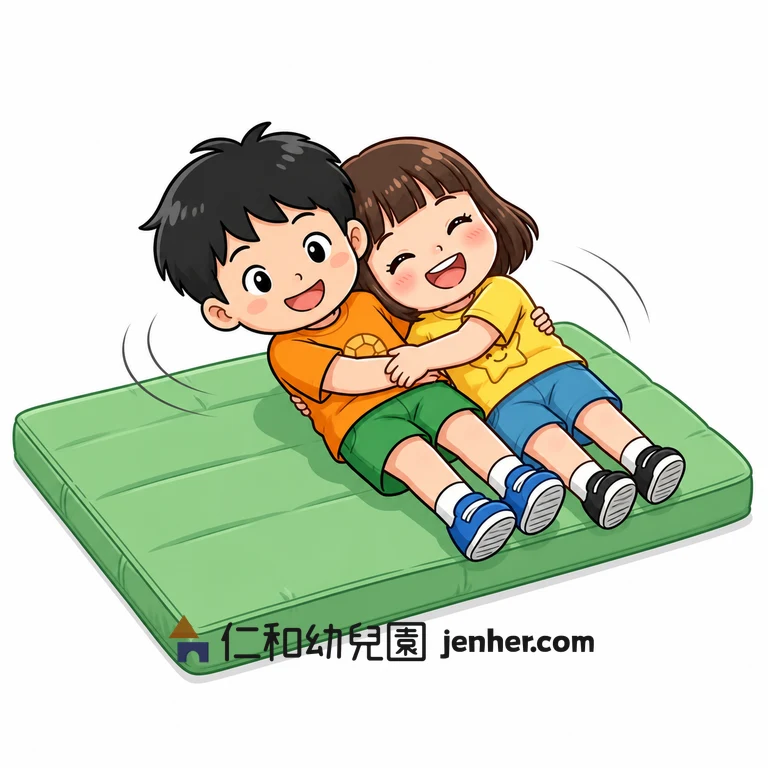
Foam Log Roll Downhill

Lie flat on your back on a soft gym mat with arms glued along your sides, and roll like a wooden pencil or log across the mat with adult guidance.

Teacher & Caregiver Notes: Setup, Safety & Variations
Equipment: 1 folding gymnastics mat or plush carpet
Setup: Lay mat flat on floor with clear buffer around edges.
Toddler Safety & Spotting: Adult gently guides hips and shoulders; ensure toddler does not roll off mat.
Simplify It / More Support: Gently rock toddler side-to-side on a thick blanket.
Add a Challenge / More Independence: Toddler initiates log roll independently across 3 consecutive mat sections.
Caregiver Cue: "Arms glued tight like a pencil—roll, roll, roll like a log down the hill!"
ADVERTISEMENT
Activity T-11: Low Mountain Foam Mat & Cushion Climb
Activity T-11 Quadruped Climbing · Level Transition
Ch. 11 Mat Activities ›

Low Mountain Foam Mat & Cushion Climb

Place secure firm floor cushions, foam blocks, or a folded gymnastics mat on a non-slip floor, guiding the toddler to crawl up, over, and step down under close adult supervision.

Teacher & Caregiver Notes: Setup, Safety & Variations
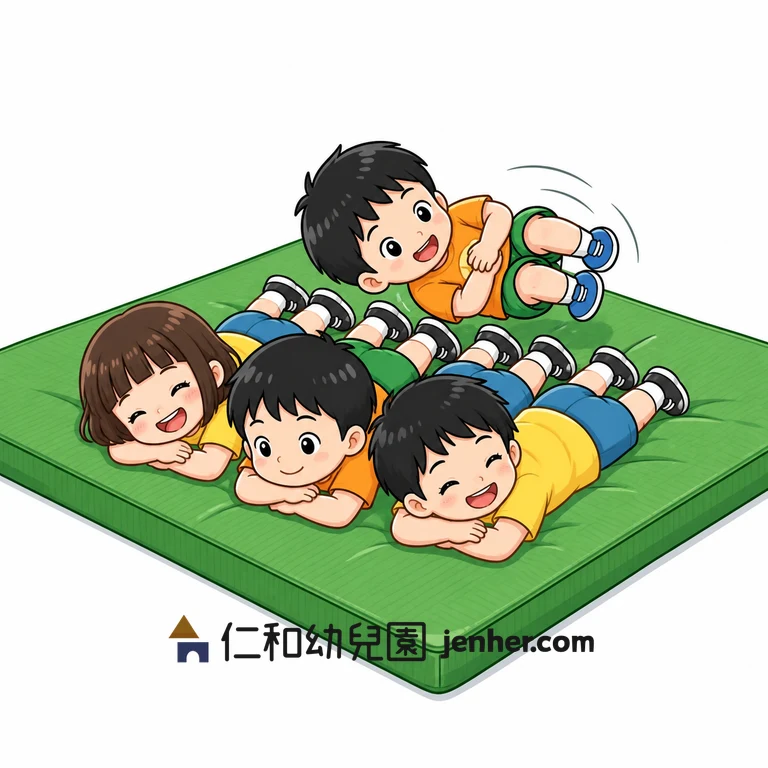
Equipment: Firm floor cushions secured against sliding, purpose-built foam blocks, or a folded tumbling mat on non-slip carpet
Setup: Position climbing surface on a non-slip floor against a secure wall or surrounded by landing mats.
Toddler Safety & Spotting: Provide active, hands-on spotting right next to the child; ensure the climbing surface cannot slip or slide under shifting weight.
For Emerging Movers / More Support: Crawl across a single flat 4-inch firm foam pad.
For Confident Movers / Add a Challenge: Step over the low foam obstacle upright with two-hand adult hold.
Caregiver Cue: "Hands up on the mountain, climb up tall, and slide down softly!"
Activity T-12: Soft Crash Pad Drop
Activity T-12 Impact Absorption · Leg Power
Ch. 11 Mat Activities ›

Soft Crash Pad Drop

Hold the toddler's two hands as they step down from a low 3-inch foam block onto a thick crash pad, bending both knees softly upon landing.

Teacher & Caregiver Notes: Setup, Safety & Variations
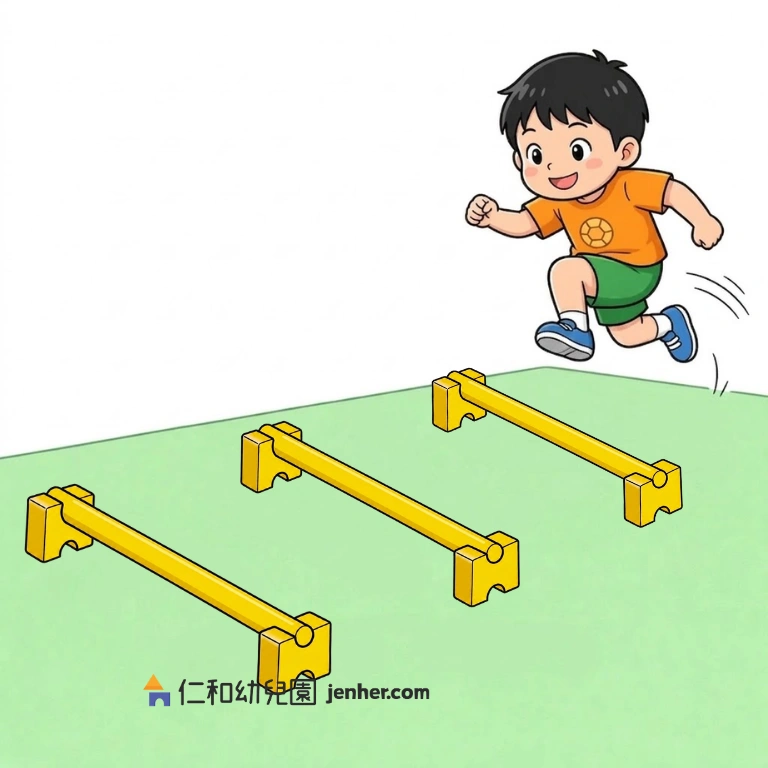
Equipment: 1 low foam step block (3 in) · 1 thick crash mat
Setup: Anchor step block securely against foam mat.
Toddler Safety & Spotting: Always maintain two-hand support for toddlers under 24 months.
Simplify It / More Support: Step down from floor level onto plush mat with two hands held.
Add a Challenge / More Independence: Perform a mini two-foot bounce onto the mat with single-hand hold.
Caregiver Cue: "Bend your knees like soft springs—BEND and land quiet like a kitten!"
Activity T-13: Tape River Step-Over
Activity T-13 Stepping Clearance · Visual Motor
Ch. 9 Short Balance Beam ›

Tape River Step-Over

Lay two parallel strips of blue painter's tape 12 inches apart on the carpet as a "river," and guide the toddler to take a big step over the water without stepping in.

Teacher & Caregiver Notes: Setup, Safety & Variations
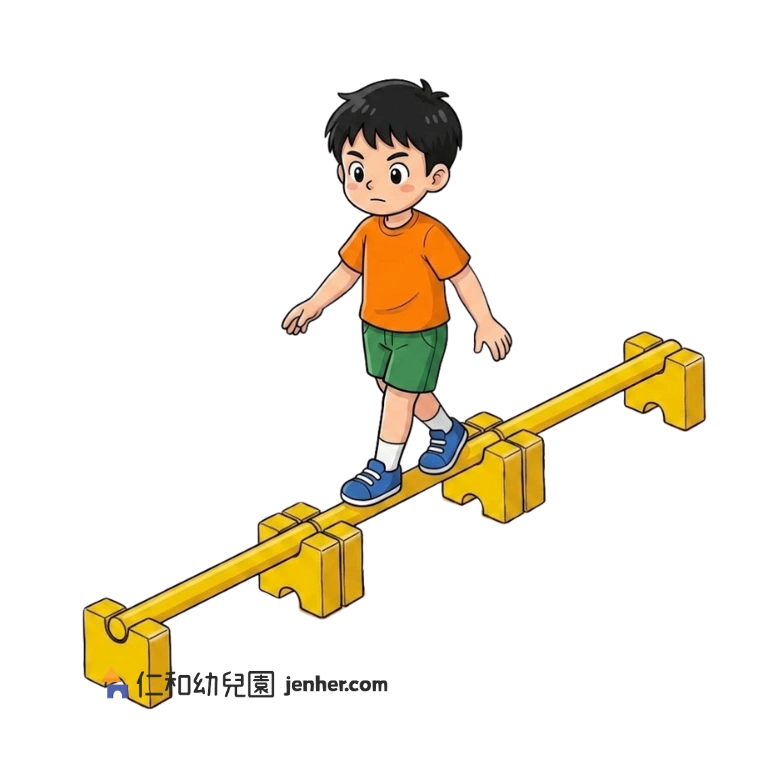
Equipment: 1 roll blue painter's tape
Setup: Tape 3 sets of "rivers" spaced 3 feet apart on the rug.
Toddler Safety & Spotting: Flat tape minimizes raised-edge tripping hazards when it is fully adhered; check the tape before play and replace any loose edges.
Simplify It / More Support: River width set to 6 inches with one-hand adult assist.
Add a Challenge / More Independence: Two-foot jump across the river landing on both feet.
Caregiver Cue: "Big giant step OVER the blue river—don't get your socks wet!"
Activity T-14: Non-Slip Stepping Stones
Activity T-14 Balance · Foot Placement
Ch. 9 Short Balance Beam ›

Non-Slip Stepping Stones

Place rubber stepping stones or flat carpet spots close together (6 inches apart), guiding the toddler to step carefully from stone to stone.

Teacher & Caregiver Notes: Setup, Safety & Variations
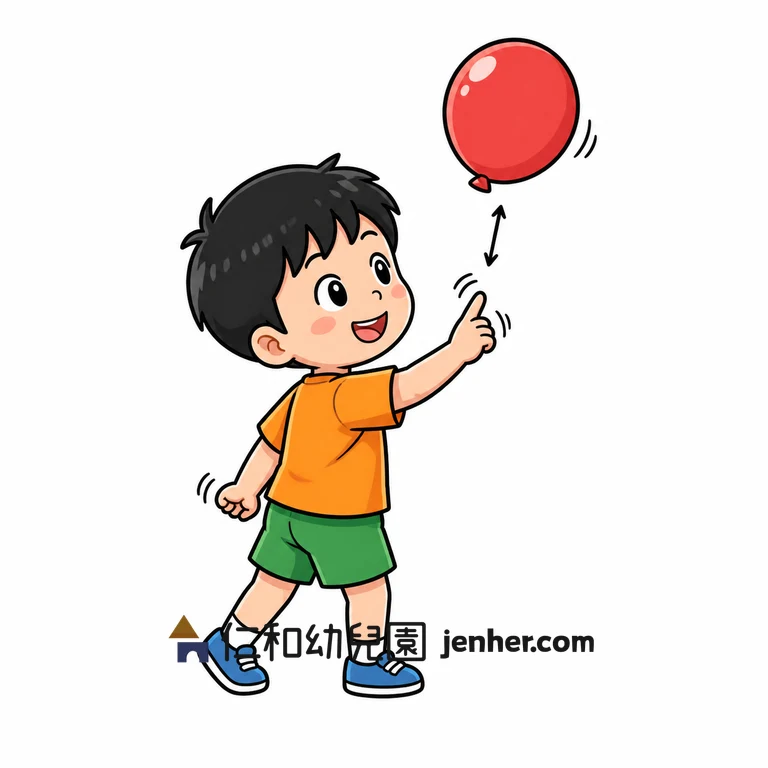
Equipment: 4–6 flat non-slip rubber stepping discs or vinyl spots
Setup: Align stepping stones in a gentle curve on carpet.
Toddler Safety & Spotting: Use exclusively flat, non-skid rubber spots—avoid tall rigid plastic blocks for toddlers.
Simplify It / More Support: Stones placed touching edge-to-edge with adult two-hand hold.
Add a Challenge / More Independence: Step across 4 stones independently while balancing a beanbag in hand.
Caregiver Cue: "Step on the blue stone, step on the yellow stone—careful, steady feet!"
Activity T-15: Adult-Held Soft Target Tap
Activity T-15 Visual Tracking · Upward Reach & Tap
Ch. 15 Soft Ball Play ›

Adult-Held Soft Target Tap

An adult holds a lightweight beach ball, chiffon scarf, or soft fabric ball at the toddler's chest-to-shoulder height and invites gentle two-hand taps or reaches.

Teacher & Caregiver Notes: Setup, Safety & Variations
Equipment: 1 lightweight beach ball, chiffon scarf, or soft fabric sensory ball
Setup: An adult holds the soft target within comfortable reaching distance while the toddler sits or stands on a clear, non-slip surface.
Toddler Safety & Spotting: Use a soft, age-appropriate target and keep the adult in control of it throughout the activity. Do not suspend targets from cords, ribbons, elastic, or other tethers in the toddler movement area.
For Emerging Movers / More Support: Bring the soft target within easy seated or supported-standing reach so the child can touch, push, or hug it.
For Confident Movers / Add a Challenge: Invite two or three gentle taps as the adult slowly changes the target position within comfortable reach.
Caregiver Cue: "Reach up high... TAP the soft target and watch it swing!"
Activity T-16: Gentle Parachute Ocean Waves
Activity T-16 Group Rhythm · Cooperative Movement
Ch. 21 Parachute Games ›

Gentle Parachute Ocean Waves

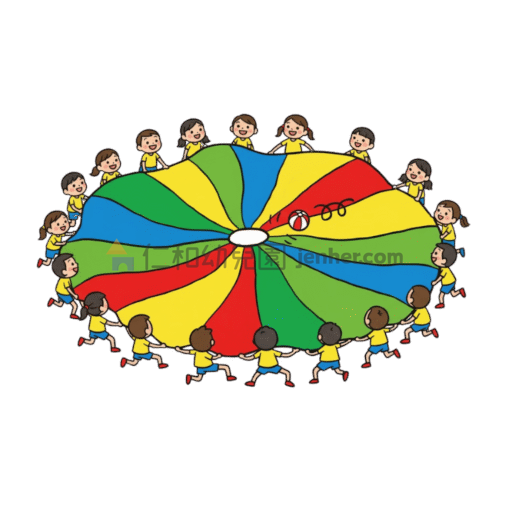
Toddlers sit on the floor holding the edge of a small 10-foot play parachute with educators, lifting hands gently up and down to create calm ocean ripples.

Teacher & Caregiver Notes: Setup, Safety & Variations
Equipment: 1 small play parachute (8–10 ft diameter)
Setup: Toddlers sit evenly around the rim; adults hold primary handles.
Toddler Safety & Spotting: Keep wave motions slow and gentle; never pull parachute over toddlers' faces.
Simplify It / More Support: Toddler sits in an adult's lap while adult moves their hands on the fabric.
Add a Challenge / More Independence: Adults make a small, controlled lift while toddlers remain seated and the canopy stays above faces and fully visible.
Caregiver Cue: "Up goes the rainbow wave, down goes the gentle wave... peek-a-boo!"
Curated Heritage Guide

Connected to 500 Movement Games Collection

These 16 toddler activities are carefully curated from 《幼兒體能遊戲500例》 (500 Movement Games for Young Children), authored by Nanhai Hong, Founder of Jenher Preschool & Kindergarten (est. 1974 in Taiwan).

While the complete 26-chapter collection serves preschool and kindergarten children (ages 3–6), this dedicated guide selects and adapts gross motor foundations for toddler developmental readiness, close supervision, and individual comfort.

ADVERTISEMENT

Frequently Asked Questions

What is the difference between toddler and preschool gross motor activities?
Toddler activities (ages 1–3) focus on foundational locomotor and balance milestones (walking balance, squat-and-rise, low level changes, two-hand rolling) with close, responsive adult presence. Preschool activities (ages 3–5) incorporate multi-step obstacle courses, directional throwing, kicking, and cooperative group games.
How much physical activity do toddlers need each day?
WHO recommends at least 180 minutes of physical activity spread throughout the day for children ages 1–2. AAP guidance similarly encourages toddlers to be active for three or more hours across the day. This can include ordinary active play, walking, low climbing, and adult-guided movement—it does not need to be formal exercise.
What equipment do I really need for toddler movement games at home or school?
Basic, safe items work well: a soft 8-inch foam or vinyl ball, painter’s tape for floor lines, secured floor mats or firm foam blocks for low climbing, laundry hampers for tossing, and clean non-slip floor rugs.
How can I reduce the risk of falls and head injuries during indoor movement play?
Remove hard or sharp furniture from the movement zone whenever possible. Maintain clean, dry, non-slip surfaces according to your program's footwear policy, and provide active, arm's-reach adult supervision during climbing or level-change activities.
How does this guide connect to the 500 Movement Games collection?
This guide curates selected toddler-ready movements adapted from Jenher’s 500 Movement Games collection. For older preschoolers (ages 3–5), explore our full 26-chapter collection covering ball skills, obstacle courses, parachutes, and gymnastics.
Jenher Preschool Favicon

Gross Motor Activities for Toddlers: Copyright & Educational Use Notice

First Published
2002
Digitization & Content Review
Jenher Preschool
Last Reviewed
August 2026

This curriculum originated from Nanhai Hong's years of practical early childhood physical education teaching. Jenher Preschool preserved the core activities, digitizing and updating the text, instructions, and safety guidelines for modern early childhood classroom needs.

This material is freely provided for classroom teaching and non-commercial research. When citing, please attribute "500 Preschool Movement Games" with a link to this webpage. Commercial resale or unauthorized mass reproduction is strictly prohibited.

Gross Motor Activity Safety Reminder

Before starting, assess each child's readiness and ensure an open, slip-resistant play area with continuous adult supervision. For children with specific health, motor, or developmental considerations, please consult a pediatrician or pediatric physical therapist.