ECE Movement Curriculum · Ball Skills & Tracking

10 Wall Rebound Ball Games for Preschoolers: Visual Tracking, Gentle Tossing, and Target Play

Adapt wall rebound movement play for early childhood settings with 10 structured, low-impact activities from Chapter 24 of the Jenher collection. Features safe soft-foam gear, dedicated one-way lanes, underhand tossing, and progressive rolling-and-catching progressions.

ADVERTISEMENT

Wall Rebound Safety & Lane Management

Key safety guidelines for implementing wall ball activities in early childhood classrooms and gyms.

Safe Soft Balls Only

Use lightweight foam or soft inflatable balls. Avoid hard, dense, or heavy sports projectiles that rebound too rapidly.

One Thrower Per Lane

Create distinct throwing corridors. Waiting children remain behind the safety line until the lane is clear.

Flexible Catching Options

Invite children to catch on the rebound, after a floor bounce, or trap with two hands based on individual readiness.

Controlled Retrieval Protocol

Establish clear signals for retrieving balls. Never allow children to run across active throwing lanes.

Chapter 24

Wall Rebound Ball Games (10 Activities)

Low bowling rolls, straddle backward pushes, gentle wall taps, bounce-catches, and partner goal kicks.
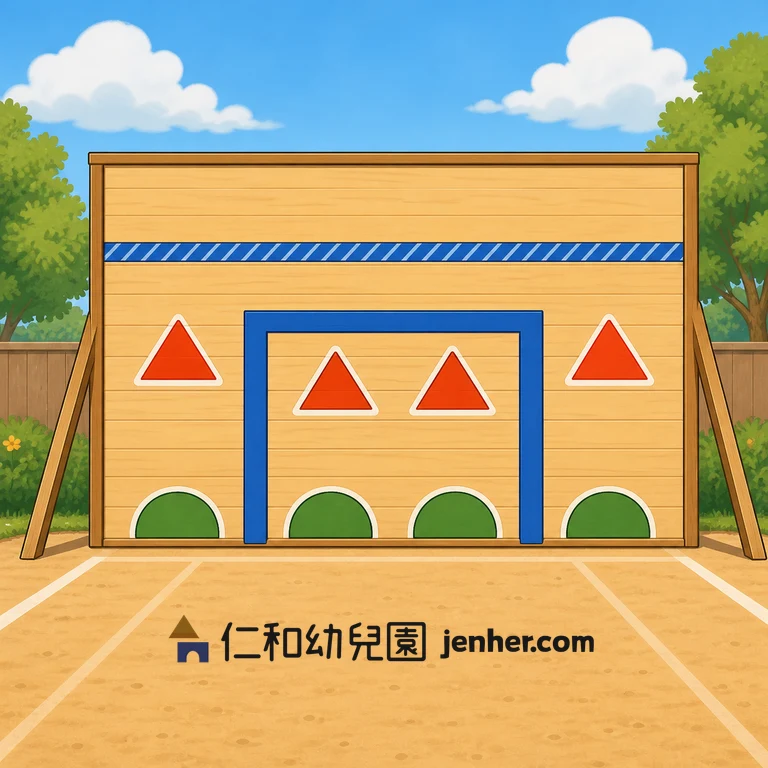
Activity 24-1: Wall Target Setup & Safety Zone

Wall Target Setup & Safety Zone

Select a clear, durable wall or practice board and mark low visual targets such as geometric shapes or tape lines to help children focus their ball pathway.

Teacher Notes: Setup, Safety & Variations
Aim: Establish a predictable rebound area and visual focus targets for rolling and tossing play.
Equipment: A smooth, impact-safe wall surface, painter's tape for targets, and lightweight foam balls.
Setup: Choose a wall area free of windows, doors, electrical fixtures, and crossing pedestrian paths.
Steps: Tape simple target shapes at low chest height, mark a buffer zone along the wall, and demonstrate where children stand during active turns.
Safety: Ensure the rebound wall is structurally sound and clear of obstacles. Keep spectators seated well behind the throwing line.
Make It Easier: Use a wide tape line along the base of the wall as a general rolling target.
Make It Harder: Invite children to choose between a high tape target and a low geometric shape.
Teacher Cue: "Eyes on the target, clear the wall zone, and roll with control."
Activity 24-2: Distance Lines & Turn-Taking Lanes

Distance Lines & Turn-Taking Lanes

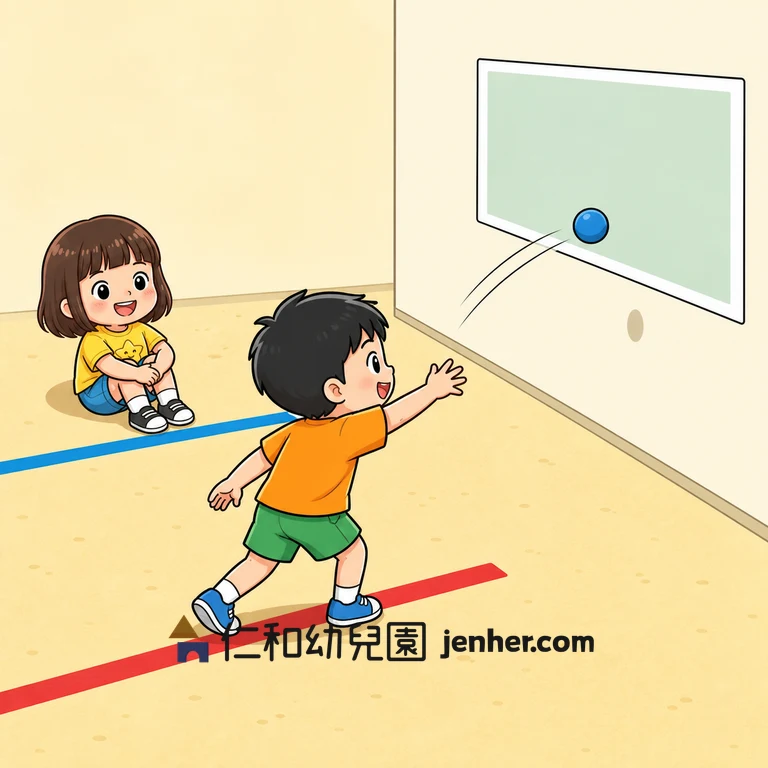
The source assigns 1 m (age 4) and 2 m (age 5) starting lines. In this adaptation, treat those measurements as archive context and choose a comfortable starting distance based on each child's control rather than age alone.

Teacher Notes: Setup, Safety & Variations
Aim: Practice structured turn-taking and maintaining personal space during active ball play.
Equipment: Floor spot markers or colored tape lines placed at comfortable starting distances from the wall.
Setup: Create distinct parallel corridors so children do not cross into neighboring rebound paths.
Steps: Stand behind the designated line, send the soft ball toward the wall, wait for it to return or settle, retrieve, and hand off to the next partner.
Safety: Only one active thrower per lane. Waiting children stay behind the safety line until the educator gives the retrieval signal.
Make It Easier: Start closer to the wall so the ball returns with minimal rolling distance.
Make It Harder: Step back one floor marker after a successful controlled turn.
Teacher Cue: "Wait behind the line, send your ball, collect safely, and pass to a friend."
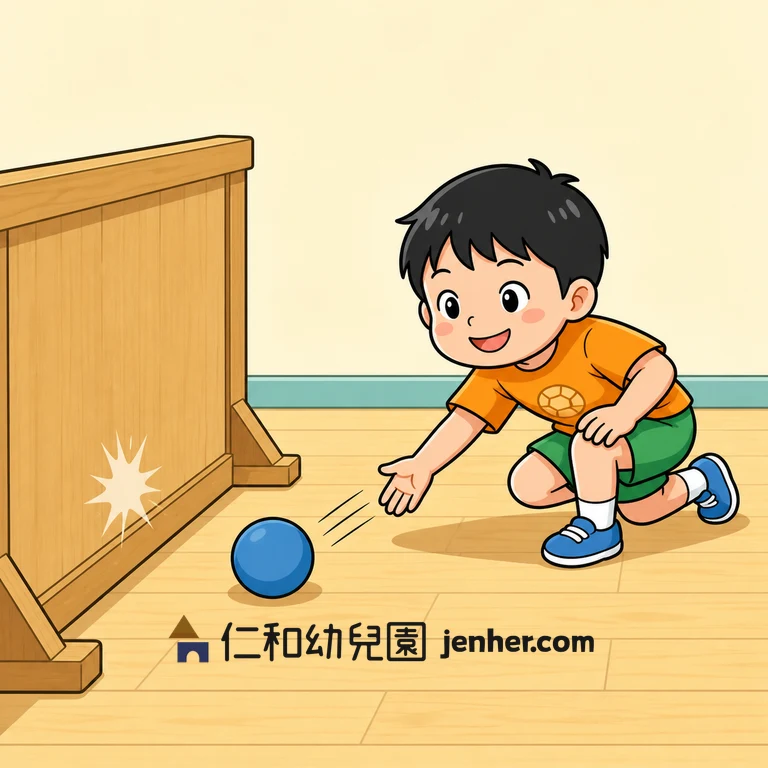
Activity 24-3: Low Bowling Wall Roll

Low Bowling Wall Roll

Crouch in a low, balanced stance and roll a soft ball along the floor toward the wall with one hand, watching its smooth path and gentle rebound.

Teacher Notes: Setup, Safety & Variations
Aim: Practice coordinating a low arm swing and releasing a ball smoothly along the ground.
Equipment: Soft foam or sensory balls with gentle rolling momentum.
Setup: A flat, clean floor surface leading directly to the wall base.
Steps: Step forward with the opposite foot, lower the hips, swing the rolling hand low, and release the ball toward the wall base.
Safety: Roll the ball along the floor; do not bounce or throw overhead. Ensure feet stay behind the start line during the swing.
Make It Easier: Roll with two hands from a squat position.
Make It Harder: Aim the roll between two small floor markers positioned near the wall.
Teacher Cue: "Step, bend low, and roll like a bowling ball."
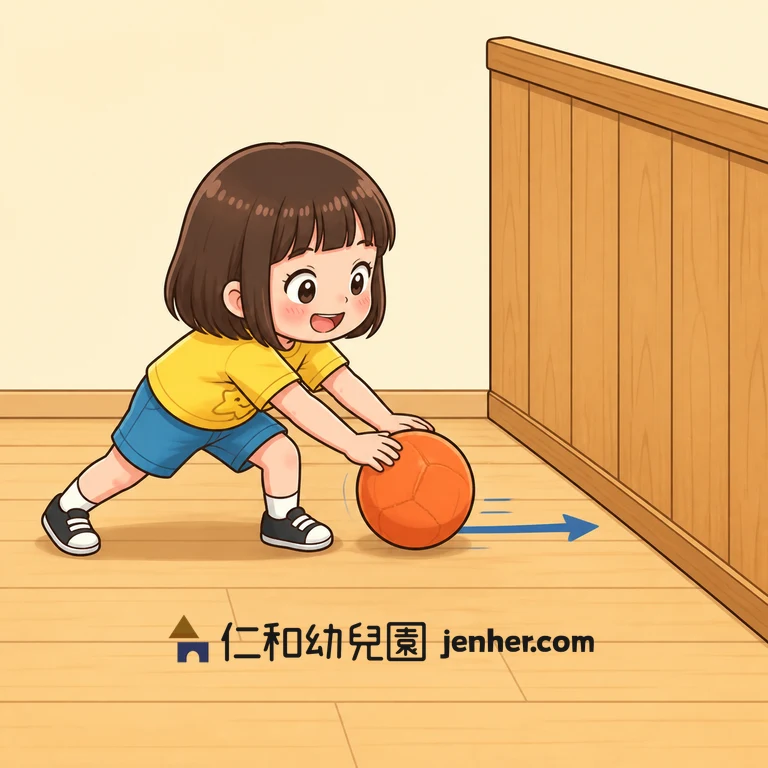
Activity 24-4: Two-Hand Forward Floor Roll

Two-Hand Forward Floor Roll

Stand with feet shoulder-width apart, bend at the waist and knees, and push a lightweight ball forward with both hands along the floor.

Teacher Notes: Setup, Safety & Variations
Aim: Practice two-hand pushing coordination and symmetrical upper-body control.
Equipment: Medium-sized lightweight playground ball or soft textured ball.
Setup: Clear open lane with a wide target area against the wall.
Steps: Hold the ball in both hands, bend knees and hips in a stable wide stance, and push the ball smoothly across the floor toward the wall.
Safety: Keep balance centered over both feet. Do not lurch or dive forward onto the hands.
Make It Easier: Sit on the floor with legs spread and roll the ball forward with both hands.
Make It Harder: Add a target marker on the wall and try to push the ball straight into the center.
Teacher Cue: "Two hands together, push forward smooth and steady."
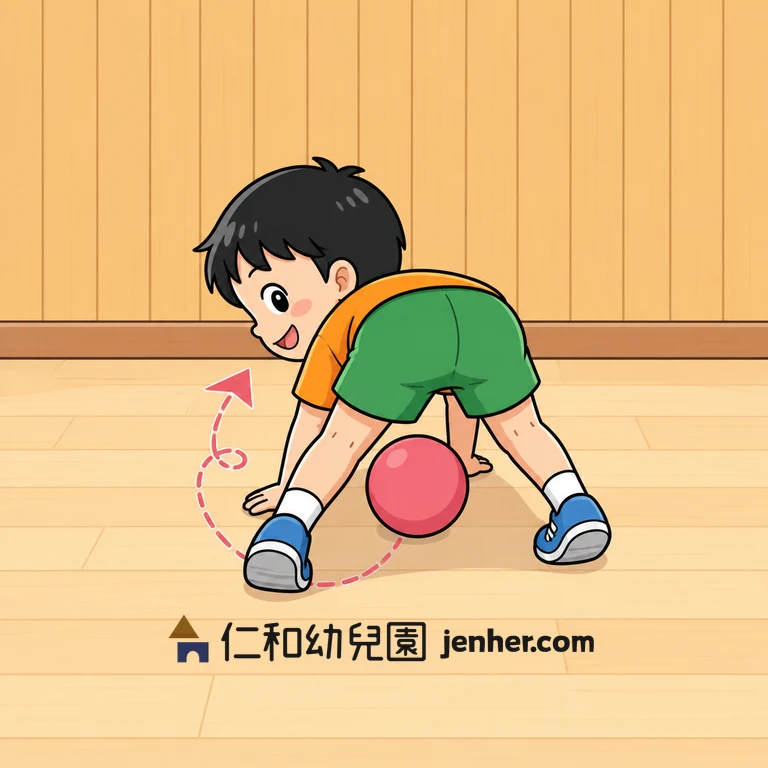
Activity 24-5: Straddle Backward Floor Roll

Straddle Backward Floor Roll

Stand with feet wide, facing away from the wall, bend forward, and gently push the ball backward between the legs toward the wall base.

Teacher Notes: Setup, Safety & Variations
Aim: Explore body orientation and sending an object backward through a straddle stance.
Equipment: Soft foam ball that rolls easily without bouncing unpredictably.
Setup: Level nonslip floor with generous clearance behind the child.
Steps: Stand facing away from the wall with feet wide, bend forward to look between the legs, hold the ball with both hands, and roll it backward.
Safety: Ensure children have adequate balance before bending. Keep the distance to the wall short so excessive force is not required.
Make It Easier: Kneel on a soft mat and roll the ball backward between the knees.
Make It Harder: After rolling backward, turn around quickly to watch the rebound roll back.
Teacher Cue: "Look between your knees, gentle push back to the wall."
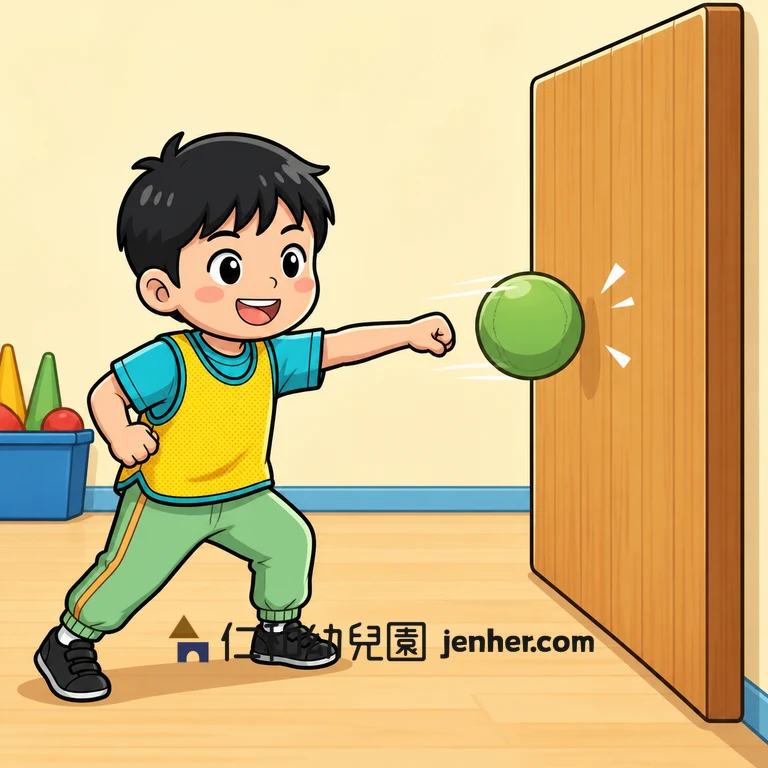
Activity 24-6: Gentle Palm Wall Tap

Gentle Palm Wall Tap

The source shows striking a ball with a closed fist. In this adaptation, use a gentle open-palm or soft-hand tap to send a suspended or stationary soft ball toward a low wall target.

Teacher Notes: Setup, Safety & Variations
Aim: Practice forward striking motions with controlled, gentle contact on a soft ball.
Equipment: Very soft foam ball, tethered foam ball, or educator-held ball.
Setup: Close, comfortable distance from the wall with soft floor padding.
Steps: Focus on the ball in front, extend the arm forward in a controlled tap or palm push, and direct the ball into a wide wall target.
Safety: Use soft foam balls only; never hard sports balls. Cue gentle pushing rather than aggressive punching to protect wrists and fingers.
Make It Easier: Push a large soft beach ball against the wall with two open hands.
Make It Harder: Alternate left and right hands for successive gentle taps.
Teacher Cue: "Soft hands, steady aim, tap to the wall."
Activity 24-7: Floor-Bounce Wall Rebound

Floor-Bounce Wall Rebound

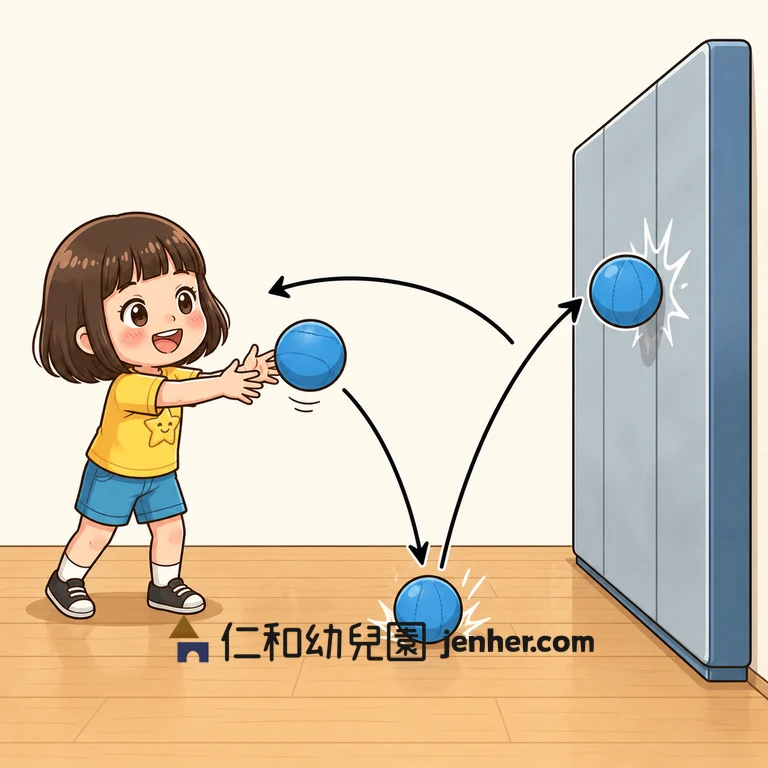
Bounce a soft ball downward onto the floor in front of the wall, allowing it to bounce up against the wall and return for a two-hand catch or floor trap.

Teacher Notes: Setup, Safety & Variations
Aim: Observe and respond to multi-stage ball trajectories (floor to wall to hands).
Equipment: Medium-sized bouncy playground ball or high-density foam ball.
Setup: Firm, level floor with a clear vertical wall space.
Steps: Hold the ball at chest height, push it downward onto the floor toward the wall, watch the rebound arc, and catch with two hands or let it bounce once before catching.
Safety: Do not throw downward near feet. Allow children to trap the ball against the chest or wait for a second bounce rather than forcing an aerial catch.
Make It Easier: Catch the ball after it completes a second bounce on the floor.
Make It Harder: Catch the rebound cleanly in the air before it touches the ground a second time.
Teacher Cue: "Bounce down, hit the wall, watch the arc, catch soft."
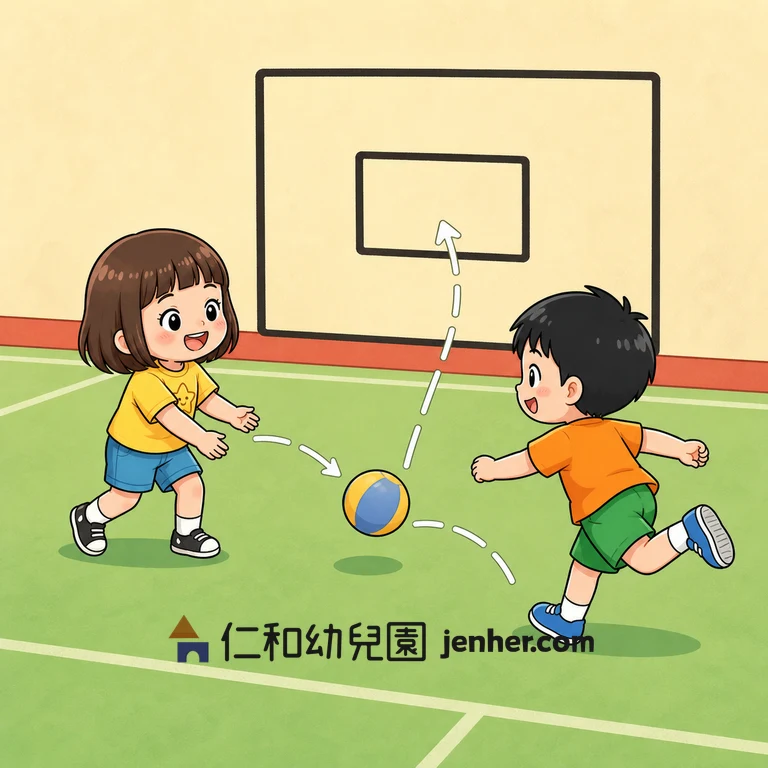
Activity 24-8: Direct Wall Toss & Catch

Direct Wall Toss & Catch

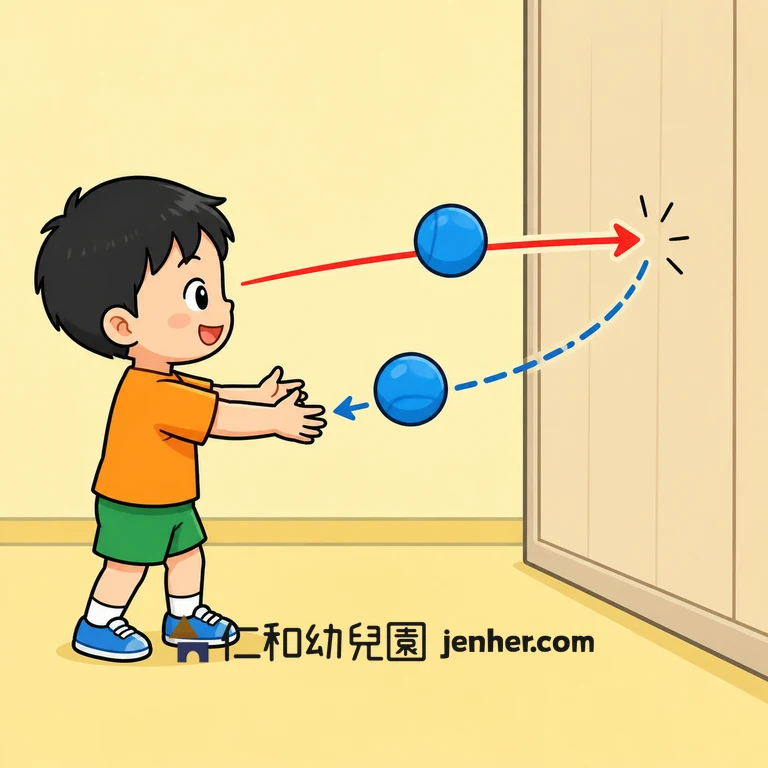
Toss a soft ball underhand directly against the wall at chest height, track the return flight, and receive it with two cupped hands or a body trap.

Teacher Notes: Setup, Safety & Variations
Aim: Coordinate gentle underhand tossing with visual tracking and receptive hand positioning.
Equipment: Lightweight foam or rubber ball with predictable rebound.
Setup: Designated throwing lane with clear boundaries and no crossing traffic.
Steps: Hold the ball in two hands, toss gently underhand toward the wall target, track the rebound, extend hands forward with fingers relaxed, and secure the catch.
Safety: Toss underhand or from chest height; do not throw overhand with high velocity. Keep distance comfortable and allow catching after a bounce if needed.
Make It Easier: Let the rebounding ball bounce once on the floor before catching.
Make It Harder: Take one step backward after three successful catches.
Teacher Cue: "Gentle toss, soft basket hands, pull into the body."
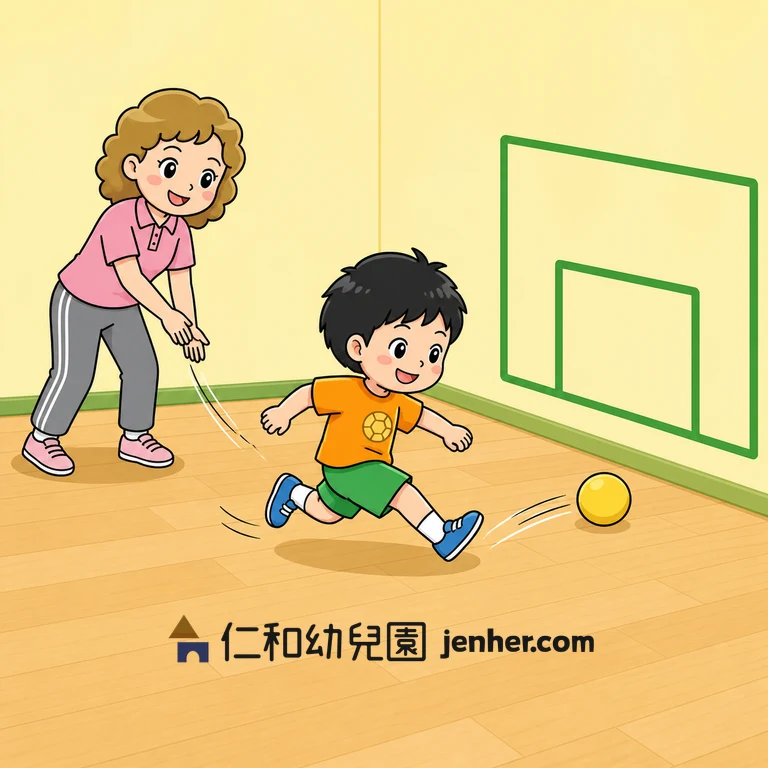
Activity 24-9: Roll-and-Kick Wall Target

Roll-and-Kick Wall Target

The source shows the educator rolling from approximately 4 meters while the child runs forward to kick. For preschool safety, shorten the distance and use a controlled step or short approach rather than a fast run.

Teacher Notes: Setup, Safety & Variations
Aim: Time a forward stepping movement to intercept and kick a rolling ball toward a target.
Equipment: Soft soccer ball or foam ball, tape markers on wall defining a wide low goal.
Setup: Open indoor hall or grassy outdoor area against a solid barrier.
Steps: Watch the educator roll the ball slowly into the kicking zone, step forward with the non-kicking foot, and use the inside of the foot to guide the ball toward the wall goal.
Safety: Use soft balls and low kicks only. The educator controls the roll speed to match the child's developmental comfort.
Make It Easier: Kick a stationary ball placed at a comfortable distance from the wall.
Make It Harder: Vary the roll angle slightly so the child adjusts their approach steps.
Teacher Cue: "Plant your foot, swing easy, kick with the inside of your shoe."
Activity 24-10: Partner Pass & Wall Goal Kick

Partner Pass & Wall Goal Kick

The source finishes with a forceful kick on goal. In this adaptation, preserve the cooperative two-pass sequence but use a controlled, low kick with a soft ball toward a low wall target.

Teacher Notes: Setup, Safety & Variations
Aim: Combine peer-to-peer cooperative passing with directional target aiming.
Equipment: Soft foam soccer ball, floor cones to define lane width, and low tape goal on the wall.
Setup: Wide corridor with plenty of lateral space between partner pairs.
Steps: Partner A passes gently to Partner B; Partner B traps the ball, passes back or takes one touch, and kicks toward the low wall goal. Partners trade roles.
Safety: Keep passes on the floor. Avoid hard kicks or high trajectories. Leave generous lateral space between neighboring partner lanes.
Make It Easier: Roll the ball with hands between partners before one child kicks to the wall.
Make It Harder: Move the starting position back one step while maintaining soft, accurate ground passes.
Teacher Cue: "Pass to friend, trap and look, guide into the goal."
Frequently Asked Questions

Wall Ball Games in Preschool Settings

Practical answers for early childhood educators regarding equipment safety, court setup, and developmental expectations.

What types of balls are safest for preschool wall rebound games?
Use lightweight, high-density foam balls, soft textured playground balls, or inflatable sensory balls. Avoid hard baseballs, tennis balls, or heavy rubber balls that rebound unpredictably or could cause discomfort upon contact.
What should educators consider when choosing a wall space for active ball play?
Select a smooth, solid wall free of glass windows, electrical panels, mounted equipment, or door swings. Ensure the floor is dry, nonslip, and clear of tripping hazards, with generous clearance from general classroom pedestrian paths.
How can teachers organize wall rebound activities without children crowding or colliding?
Organize the play space into parallel lanes marked by floor spots or tape, with only one active child per lane at a time. Establish a clear retrieval protocol where children wait for the ball to return or for the educator's signal before collecting it.
Is direct catching of a wall rebound required for preschool children?
No. Catching a rebounding ball in mid-air is challenging for many preschoolers. Allow children to trap the ball against the floor, catch after one or two bounces, or roll and stop the ball. The emphasis is on tracking trajectory, adjusting effort, and enjoying movement.
How do wall rebound games connect with early physical development frameworks?
These activities provide opportunities to practice perceptual-motor skills, such as visual tracking, timing, bilateral hand use, and eye-foot coordination, supporting general gross motor development within developmentally appropriate play practices.
ADVERTISEMENT