
Quick Teacher Guide: Step-Launcher Ball Play
Confirm these four boundaries before setting up any of the 10 activities below:
Choose an intact, age-appropriate manufactured step launcher and only the lightweight soft ball intended for it. Follow product instructions and program policy; do not improvise a launcher from the historical diagram.
Mark one launch direction, keep faces and bystanders out of the path, and separate launching from retrieval with an educator signal. Stop if the base shifts or the mechanism behaves unpredictably.
Start with a gentle press, watching the ball, and retrieving after it lands. Add catching, targets, partner receiving, or movement only when the child can remain balanced and the lane stays clear.
The English preschool version replaces the source heading action with hands or retrieval, and replaces two children racing for one descending ball with one named receiver per turn.
10 Step-and-Launch Ball Games
Browse the source activities in their original order. Each card defines a short playable turn, an observable movement focus, ways to simplify or extend the task, and the safety adaptation when the historical action is not appropriate for preschool use.
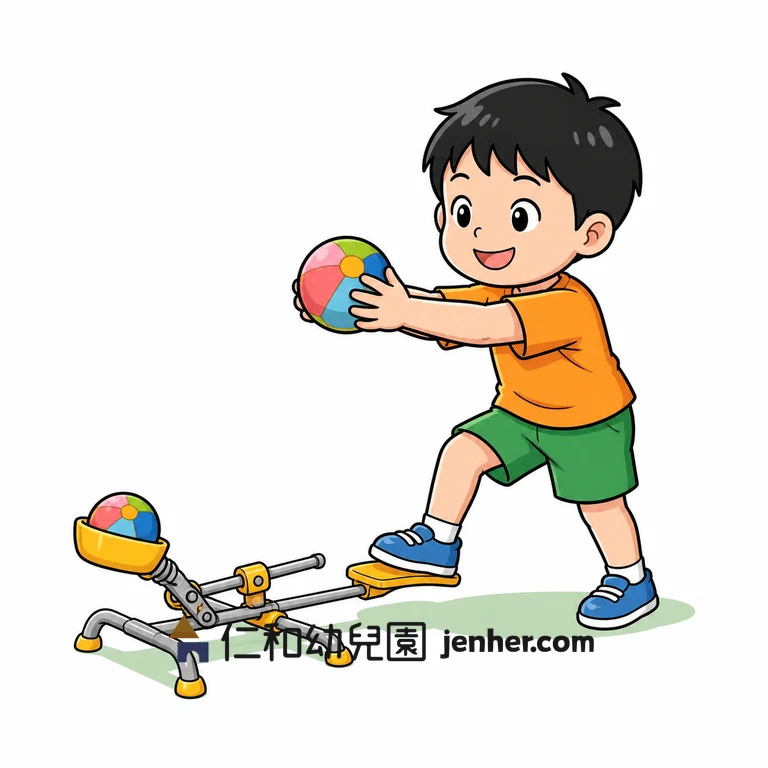
Step, Track, and Catch
Press the launch pedal with one foot, return both feet to the floor, and track the soft ball into a two-hand catch or retrieve it after it lands.
Teacher Notes: Setup, Safety & Variations
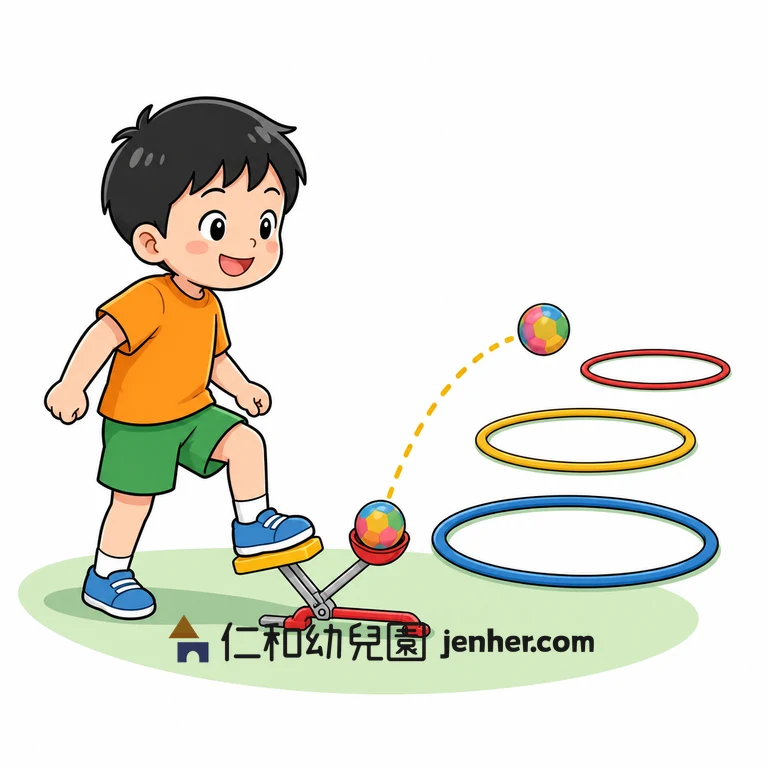
Near-and-Far Hoop Targets
Arrange numbered hoops from near to far. The child changes the pedal press to send the ball toward the hoop the educator names.
Teacher Notes: Setup, Safety & Variations
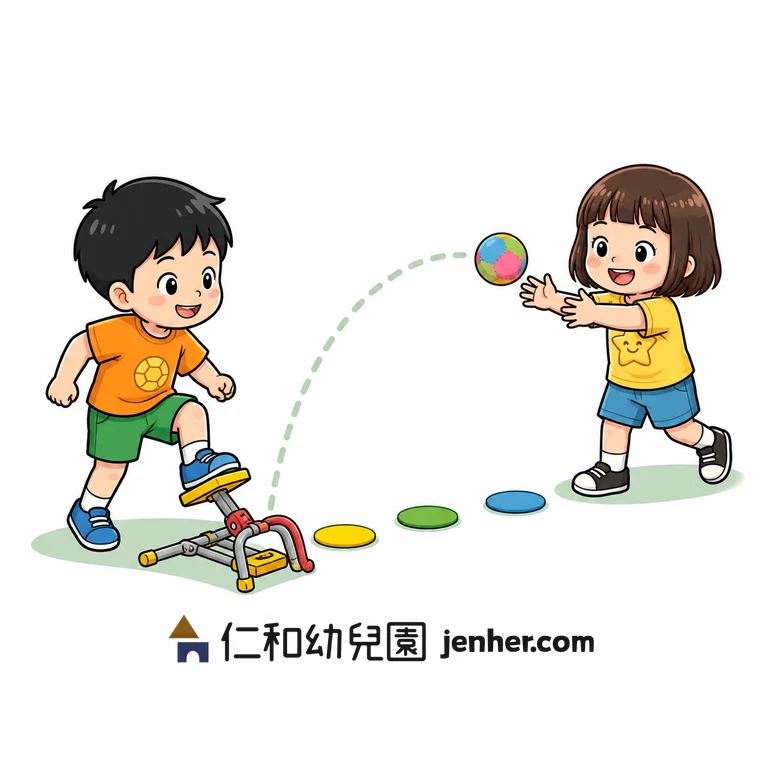
Partner Launch and Catch
One child operates the launcher and a partner receives the ball from a marked spot. After a successful turn, the receiver may move back one floor marker.
Teacher Notes: Setup, Safety & Variations
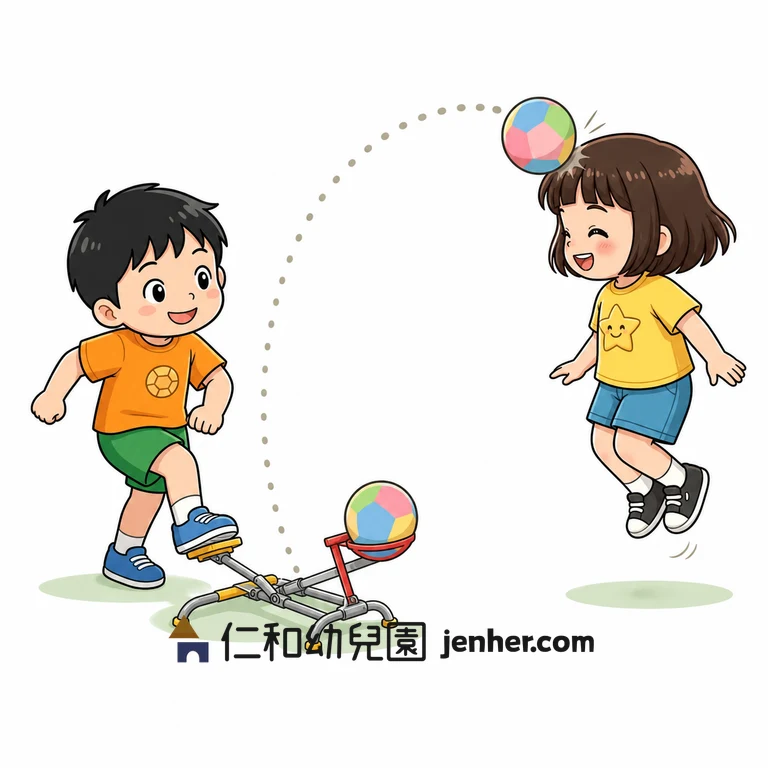
Launch, Catch, and Return
The source depicts a jumping head return. In this modern preschool adaptation, the receiver catches the soft ball with two hands, then rolls or gently returns it to the launcher child.
Teacher Notes: Setup, Safety & Variations
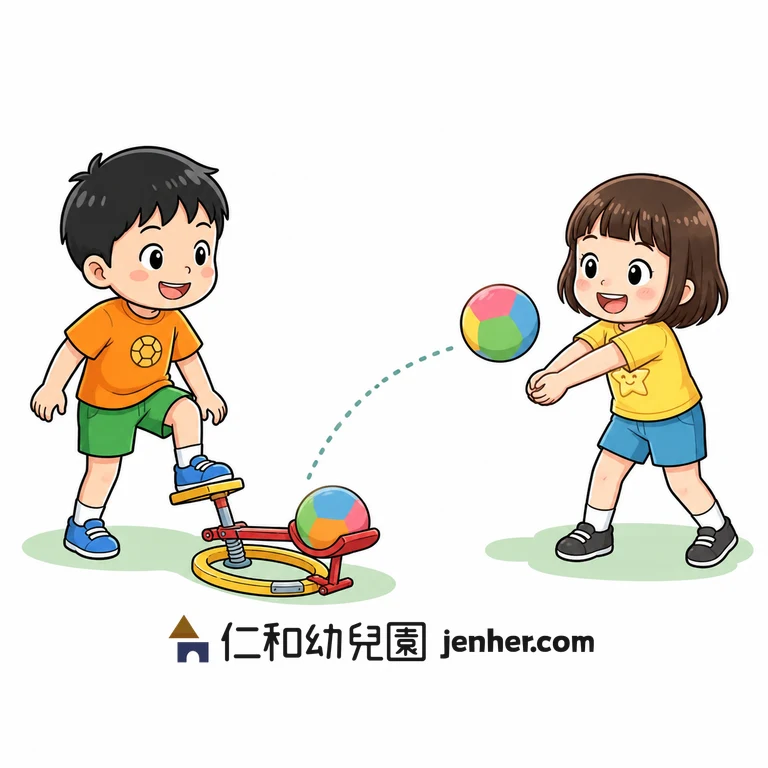
Launch and Forearm Return
A partner tracks the launched ball and uses a gentle two-forearm return. Catching first and then making a soft two-hand return is always an available progression.
Teacher Notes: Setup, Safety & Variations
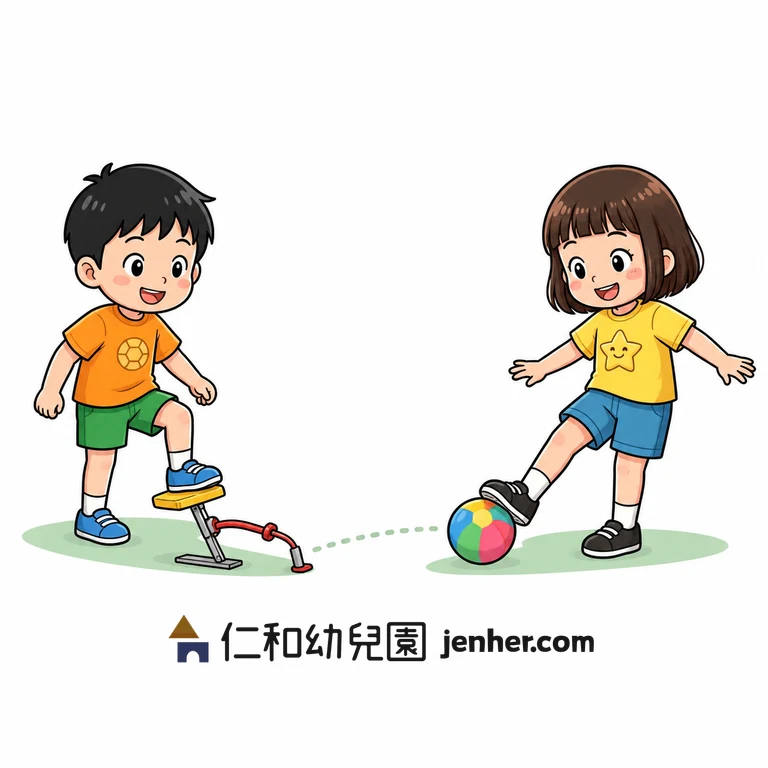
Launch, Roll, and Stop
Send the ball along a low path. The receiving child cushions it with the inside of the foot or gives it a light sole touch without standing on top of the ball.
Teacher Notes: Setup, Safety & Variations
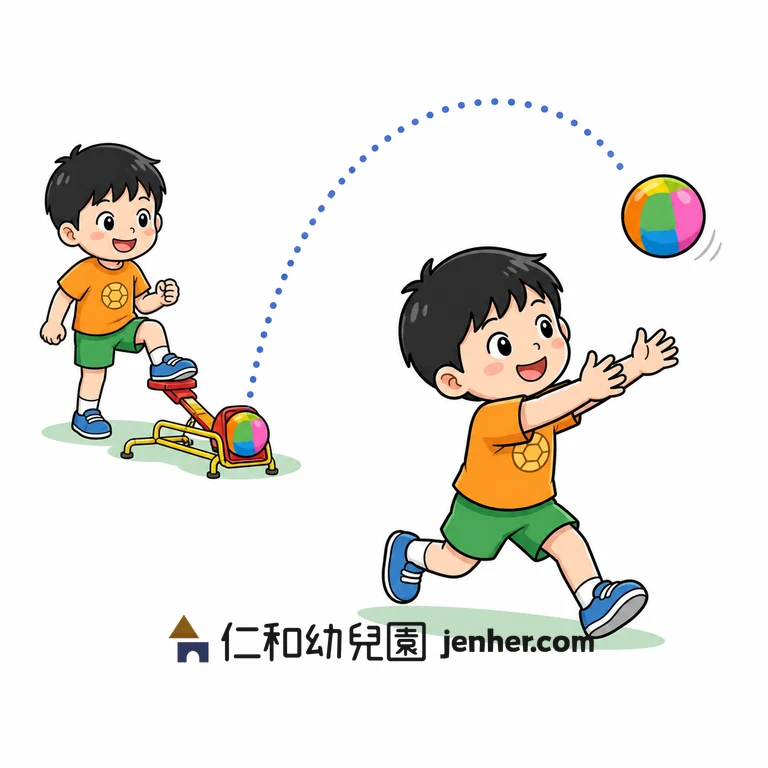
Self-Launch and Move to the Ball
Press the launcher forward, place both feet down, and move along a clear lane to catch the ball or collect it after it lands.
Teacher Notes: Setup, Safety & Variations
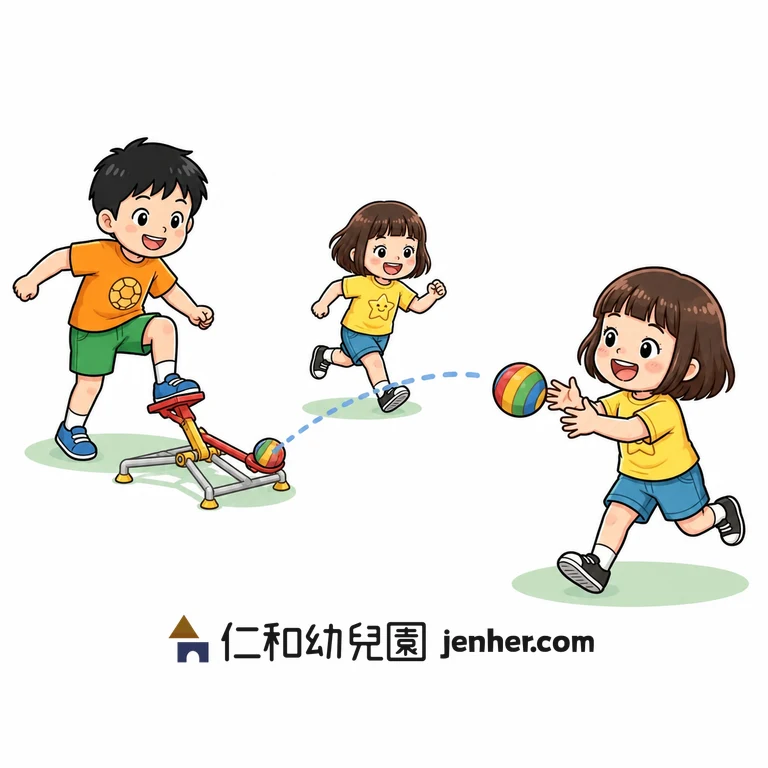
Angle Launch and Partner Tracking
One child launches the ball on a gentle diagonal while a partner moves from a marked starting spot to receive it or retrieve it after landing.
Teacher Notes: Setup, Safety & Variations
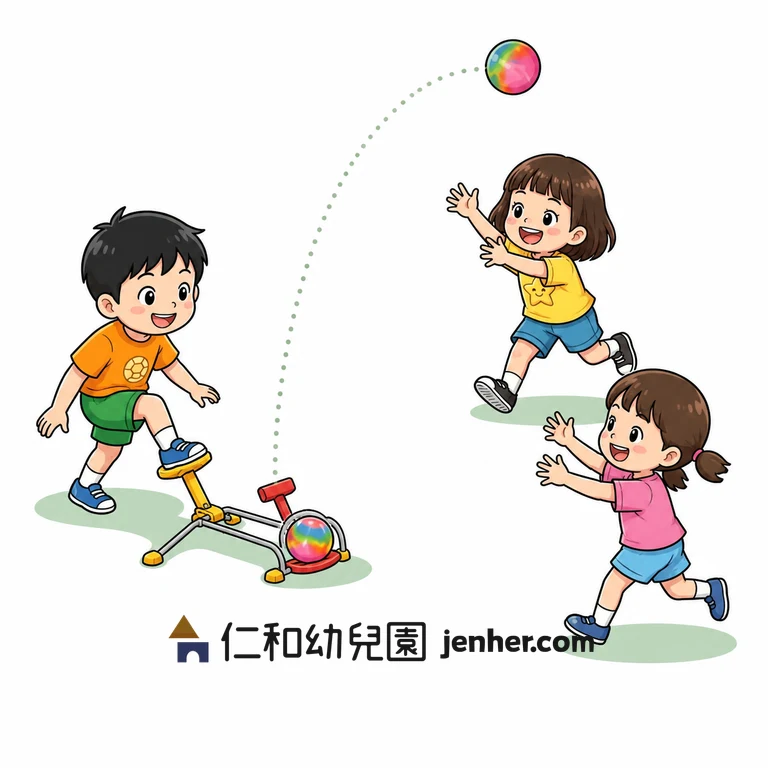
Named Receiver Response Game
The source shows two children racing for the same descending ball. This adaptation keeps two waiting spots but names one receiver before each launch so only one child enters the landing area.
Teacher Notes: Setup, Safety & Variations
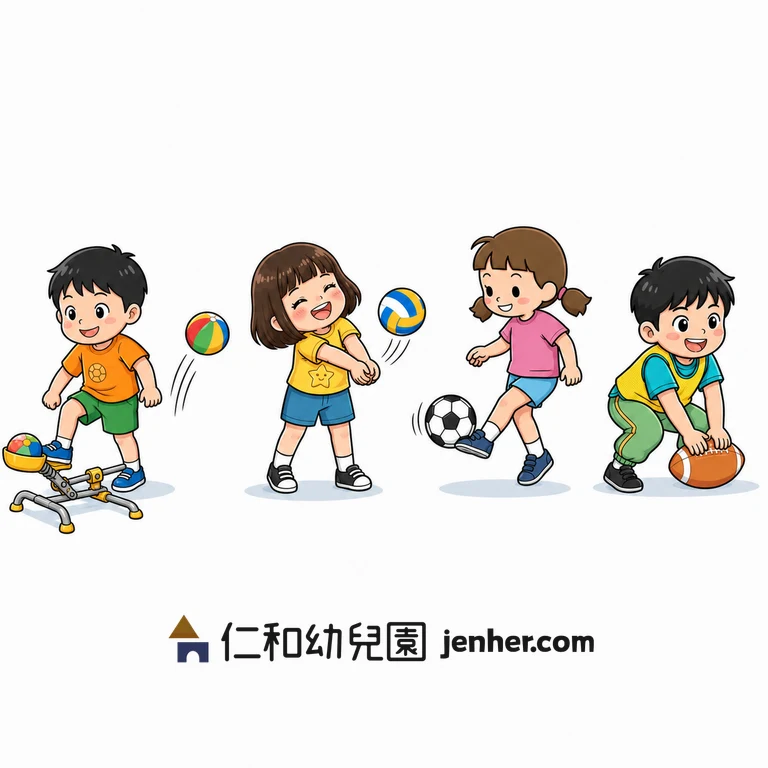
Step-and-Launch Ball Circuit
Combine the source's ball-sport actions into a one-way circuit: launch and receive, make a gentle forearm return, stop and dribble with the feet, then carry a soft football to an end-zone marker.
Teacher Notes: Setup, Safety & Variations
Step-Launcher Ball Play — Teacher FAQ
Equipment terminology, alternatives, flight-lane management, no-heading guidance, and developmentally responsive participation options.
What is a step launcher?
What can I do if our program does not have a step launcher?
Should preschoolers head a ball launched into the air?
How can teachers organize step-launcher turns without long waits or collisions?
What can educators observe during these activities?

About 500 Preschool Movement Games
This curriculum originated from Nanhai Hong's years of practical early childhood physical education teaching. Jenher Preschool preserved the core activities, digitizing and updating the text, instructions, and safety guidelines for modern early childhood classroom needs.
This material is freely provided for classroom teaching and non-commercial research. When citing, please attribute "500 Preschool Movement Games" with a link to this webpage. Commercial resale or unauthorized mass reproduction is strictly prohibited.
Before starting, assess each child's readiness and ensure an open, slip-resistant play area with continuous adult supervision. For children with specific health, motor, or developmental considerations, please consult a pediatrician or pediatric physical therapist.