ECE Movement Curriculum · Preschool and Pre-K

25 Rock Paper Scissors Games for Preschoolers: Movement, Reaction, and Social Play

A familiar hand game can become a flexible movement prompt for preschool and Pre-K. These 25 illustrated activities offer opportunities to explore gross motor movement, reaction, coordination, counting, creative expression, and social play. Most use no equipment or everyday materials.

ADVERTISEMENT

Quick Teacher Guide: Rock-Paper-Scissors in Preschool

Keep these four points in mind before setting up any of the 25 activities below:

Developmental Readiness

For preschool and Pre-K settings. Use readiness, confidence, attention span, and comfort with the rules to decide the starting point; age alone is not a performance cutoff.

Equipment

Most activities need no equipment. When an activity calls for an item, it uses everyday materials such as a hat, picture cards, colored floor spots, a loosely rolled newspaper, or a gym mat. No specialized equipment is required.

Space and Setup

Many activities run in a seated circle or small standing pair. For running and jumping activities, clear separate lanes and buffers between pairs, and keep traffic out of the activity paths. Run several pair stations at once to minimize wait time.

Classroom Management

Model the losing action yourself before children play. Keep a warm, silly tone — losing is always a shared activity, never a penalty. Offer an observe-first option for hesitant children.

Chapter 1 — Illustrated Activity Cards

25 Rock Paper Scissors Movement Games

Browse the activity cards below. Each card shows a concise instruction beside the original diagram. Expand Teacher Notes for setup, safety, and ways to simplify or extend the activity.
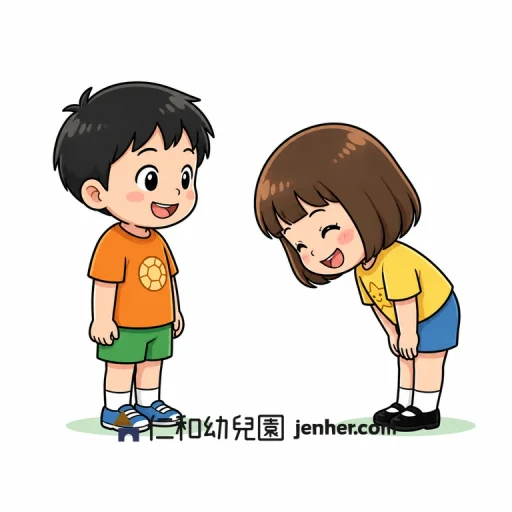
Activity 1-1: Bow After You Lose

Bow After You Lose

After each round, the child who loses gives a friendly bow to the winner. Play continues with the same partner or rotate to a new one.

Teacher Notes: Setup, Safety & Variations
Equipment: No equipment needed
Setup: Any flat indoor space with enough room for pairs to stand facing each other.
Safety: Partners should leave enough room to bow without bumping heads.
Make It Easier: Play one-on-one with the teacher first to practice the bow before pairing children.
Make It Harder: After the bow, add a friendly handshake or wave before playing the next round.
Teacher Cue: "Rock, paper, scissors, shoot! Bowing shows good sportsmanship — nice bow!"
Activity 1-2: Picture Card Rock-Paper-Scissors Quiz

Picture Card Rock-Paper-Scissors Quiz

The teacher holds up two picture cards — one Rock, one Paper or Scissors. Children call out which one wins. This offers a gentle introduction to the rules.

Teacher Notes: Setup, Safety & Variations
Equipment: Rock / Paper / Scissors picture cards (teacher-made or printed)
Setup: Seated circle where all children can see the teacher's cards.
Safety: Give children enough time to think — avoid rushing or calling on only the fastest responders.
Make It Easier: Start with just Rock and Paper (two options) before introducing Scissors.
Make It Harder: After children call the winner, ask them to quickly make the winning sign with their own hand.
Teacher Cue: "Which one wins? Paper covers rock — paper wins!"
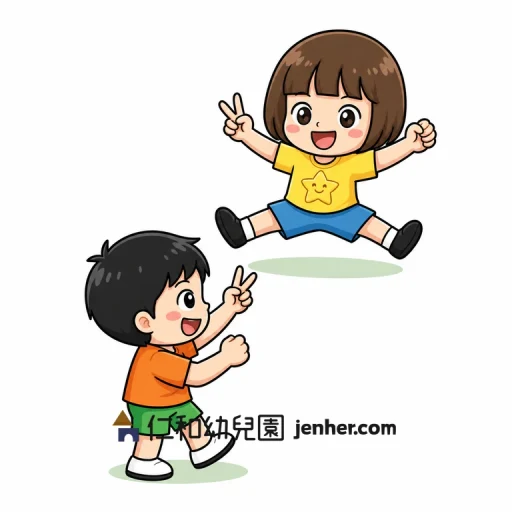
Activity 1-3: Left or Right — Which Hand Wins?

Left or Right — Which Hand Wins?

The teacher shows a different sign in each hand. Children call out which side wins.

Teacher Notes: Setup, Safety & Variations
Equipment: No equipment needed
Setup: Arrange children so everyone has a clear view of the teacher.
Safety: Encourage everyone to answer together to reduce performance pressure on any single child.
Make It Easier: Show the hands slowly and pause before asking the question.
Make It Harder: After calling the winner, children quickly copy that winning hand sign.
Teacher Cue: "Look at both hands — which side wins? Together!"
Activity 1-4: Solo Rock-Paper-Scissors

Solo Rock-Paper-Scissors (Right vs. Left)

Children play against themselves — making one sign with the right hand and a different sign with the left at the same time, then figure out which hand won.

Teacher Notes: Setup, Safety & Variations
Equipment: No equipment needed
Setup: Children can sit at their seats or on a mat — no large space required.
Safety: Encourage gentle finger movements; avoid forced or stiff hand positions.
Make It Easier: Start with matching (same sign in both hands) before trying different signs.
Make It Harder: Challenge: make your right hand win on purpose, every time.
Teacher Cue: "Right hand Scissors, left hand Paper — right hand wins!"
Activity 1-5: Beat the Teacher — Rock-Paper-Scissors

Beat the Teacher — Rock-Paper-Scissors

The source example has the teacher show Paper while the children show Scissors to win the round. Call out the answer first, then make the winning hand sign together.

Teacher Notes: Setup, Safety & Variations
Equipment: No equipment needed
Setup: Indoor gym or large open classroom.
Safety: Keep a relaxed, game-like atmosphere so children feel comfortable if they respond incorrectly.
Make It Easier: Have the teacher show Paper and let children copy Scissors together before asking them to respond independently.
Make It Harder: Invite a child to be the teacher and show a sign for the group to answer.
Teacher Cue: "Teacher shows Paper — what beats Paper? Scissors! Show it together!"
Activity 1-6: Quarter-Turn Rock-Paper-Scissors

Quarter-Turn Rock-Paper-Scissors

Each win earns a 90-degree turn to the right. The first child to complete four wins — a full circle back to the starting direction — wins the game.

Teacher Notes: Setup, Safety & Variations
Equipment: Floor spot markers (optional) to help children track starting position
Setup: Flat indoor floor with enough space between pairs.
Safety: Plant feet firmly before turning to avoid losing balance.
Make It Easier: Reduce to two wins (half-turns), so children only need to turn twice.
Make It Harder: After turning, name the direction you are now facing before the next round.
Teacher Cue: "You win — turn right! How many more turns to come all the way around?"
Activity 1-7: Spin-the-Hat Rock-Paper-Scissors

Spin-the-Hat Rock-Paper-Scissors

Each win earns a quarter turn of the child's hat. The first child to rotate their hat fully around — brim back to front — wins the match.

Teacher Notes: Setup, Safety & Variations
Equipment: One ball cap or soft-brim hat per child
Setup: Indoor or outdoor; any flat surface.
Safety: Children adjust only their own hat — no pulling or yanking each other's hats.
Make It Easier: Simplify to two turns (front to back) for a shorter game.
Make It Harder: Strike a pose matching the hat's current direction after each turn.
Teacher Cue: "Win and turn the brim to the side! Next win — brim goes to the back!"
Activity 1-8: Rooster and Chick Sound Imitation

Rooster and Chick Sound Imitation

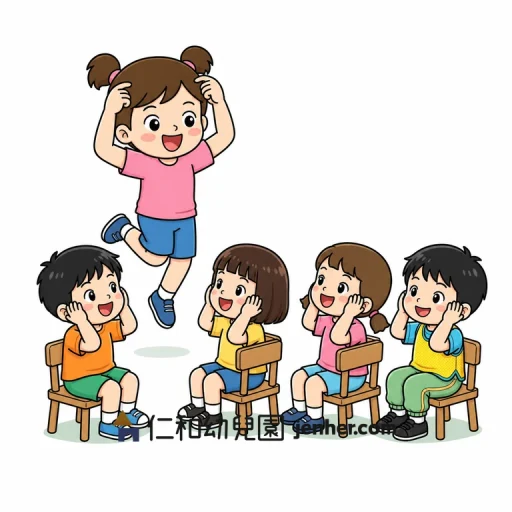
The winner struts and crows like a rooster. The child who loses crouches slightly and cheeps like a baby chick. Both actions are kept light and funny.

Teacher Notes: Setup, Safety & Variations
Equipment: No equipment needed
Setup: Large open space — children will spread out to act out their animal.
Safety: Create a warm, silly atmosphere so losing feels fun, not embarrassing.
Make It Easier: Start with only the sound, then add posture later.
Make It Harder: Add wing-flapping arms to both the rooster strut and the chick cheep.
Teacher Cue: "Winner — cock-a-doodle-doo! Loser — peep peep peep!"
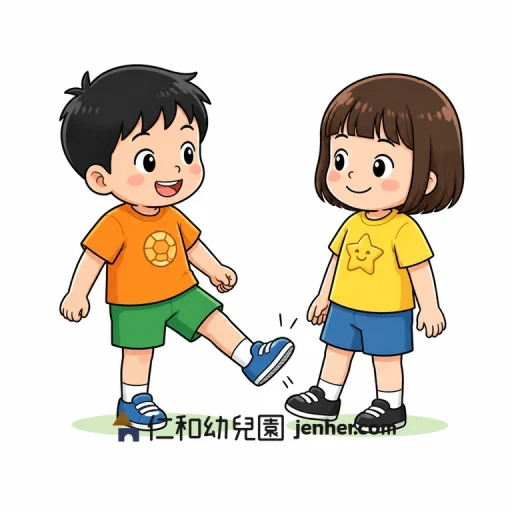
Activity 1-9: Foot Rock-Paper-Scissors

Foot Rock-Paper-Scissors

Children make Rock-Paper-Scissors signs with their feet: Rock = feet together; Scissors = one foot forward, one back; Paper = feet spread wide apart.

Teacher Notes: Setup, Safety & Variations
Equipment: No equipment needed
Setup: Clear floor area where children can see their own feet and avoid nearby pairs.
Safety: Use controlled steps and pause between positions. Children may walk their feet into place instead of jumping.
Make It Easier: Walk feet into position instead of jumping.
Make It Harder: Add a rhythmic jump between each sign change.
Teacher Cue: "Rock, Scissors, or Paper with your feet — ready, shoot!"
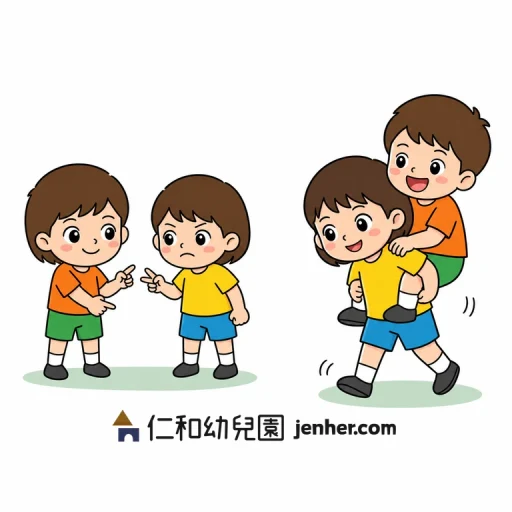
Activity 1-10: Gentle Toe-Tap

Gentle Toe-Tap Rock-Paper-Scissors

The winner gives a very gentle tap on top of the other child's foot with their own foot. Softness is the rule — touching, never stomping.

Teacher Notes: Setup, Safety & Variations
Equipment: Closed-toe shoes or sneakers
Setup: Flat floor; children face each other within easy reach.
Safety: Reinforce feather-light touch before the activity begins. Stop if any child taps too hard.
Make It Easier: Replace the foot tap with a gentle shoulder tap using the hand.
Make It Harder: The child who loses may pull their foot away to dodge — the winner must tap before the dodge.
Teacher Cue: "Soft as a feather! Just a touch — no stomping!"
Activity 1-11: Carry-a-Friend 10 Steps

Carry-a-Friend or Walk Together

The source illustration shows the child who loses carrying the winner for 10 counted steps. For a current preschool setting, make a hand-in-hand walk the default and use carrying only when an educator has confirmed readiness, a suitable match, and close supervision.

Teacher Notes: Setup, Safety & Variations
Equipment: No equipment needed for the hand-in-hand version; a gym mat is useful if an educator approves a supported carry.
Setup: Clear indoor space for a short, supervised path. Keep other children and furniture out of the travel path.
Safety: Modern safety adaptation: use the hand-in-hand walk as the default. Do not ask a child to lift or carry a peer without educator confirmation of readiness, a suitable match, and close supervision.
Make It Easier: Hold hands and walk 10 steps side by side instead.
Make It Harder: If an educator approves the carry, use a slow, deliberate pace and count the 10 steps together.
Teacher Cue: "One, two, three — count each step together — ten steps!"
Activity 1-12: Frog Jumps Rock-Paper-Scissors

Frog Jumps Rock-Paper-Scissors

The child who loses does 5 frog jumps in place — crouching down and springing up. Both children count together.

Teacher Notes: Setup, Safety & Variations
Equipment: No equipment needed; choose a suitable, clear floor surface.
Setup: Open space so children have room to jump without bumping each other or entering another pair's path.
Safety: Modern safety adaptation: cue children to bend their knees and land softly on both feet. Offer a step-up or march-in-place version when jumping is not comfortable.
Make It Easier: Do fewer jumps or march in place when repeated jumping is not comfortable.
Make It Harder: Add a clap above the head at the top of each jump.
Teacher Cue: "Lose? Frog hops! Ribbit one — ribbit two — five hops!"
Activity 1-13: Hand-and-Foot Combo

Hand-and-Foot Combo Rock-Paper-Scissors

Children make a hand sign while simultaneously stepping to a matching floor position: Rock = step left; Scissors = stay center; Paper = step right.

Teacher Notes: Setup, Safety & Variations
Equipment: Three colored floor spot markers (Left / Center / Right)
Setup: Indoor floor with a clearly marked left, center, and right position for each child.
Safety: Space children so nobody steps into a neighbor's lane. Children can step rather than jump between positions.
Make It Easier: Practice just the foot steps without hand signs first.
Make It Harder: Speed up the signs one after another in quick sequence.
Teacher Cue: "Rock — step left! Scissors — stay center! Paper — step right!"
Activity 1-14: Monkey Winner Celebration

Monkey Winner Celebration

The child who wins acts out a playful monkey — making monkey sounds and bouncing in place with arms swinging.

Teacher Notes: Setup, Safety & Variations
Equipment: No equipment needed
Setup: Large indoor space — children spread out slightly to act.
Safety: Keep enough space between pairs so children do not collide during the monkey move.
Make It Easier: Just make the monkey sound in place with no movement.
Make It Harder: After the celebration, add a small monkey walk while staying in the pair's space.
Teacher Cue: "You win — monkey time! Bounce and chatter!"
Activity 1-15: Clap-Count Rock-Paper-Scissors

Clap-Count Rock-Paper-Scissors

After showing a sign, each child claps a matching number of times: Rock = 1 clap; Scissors = 2 claps; Paper = 3 claps.

Teacher Notes: Setup, Safety & Variations
Equipment: No equipment needed
Setup: Whole-class seated circle or standing in place.
Safety: Clap gently — hands should not hurt from repeated clapping.
Make It Easier: The teacher calls the count aloud while children clap together.
Make It Harder: No counting aloud — children clap the correct number with no verbal support.
Teacher Cue: "Rock — clap! Scissors — clap clap! Paper — clap clap clap!"
Activity 1-16: Fold-a-Finger Rock-Paper-Scissors

Fold-a-Finger Rock-Paper-Scissors

Each win earns one folded finger. The first child to fold all five fingers into a fist wins the match.

Teacher Notes: Setup, Safety & Variations
Equipment: No equipment needed
Setup: Children can sit or stand — no large space needed.
Safety: Move fingers gently without straining joints.
Make It Easier: Use a smaller number of fingers for a shorter game, agreed on before play.
Make It Harder: Reverse — start with a fist and extend one finger per win until fully open.
Teacher Cue: "Win! Fold one finger down. Five fingers folded — you win the whole match!"
Activity 1-17: Facial Expression Rock-Paper-Scissors

Facial Expression Rock-Paper-Scissors

Children use their face to play: Rock = mouth tight and closed; Scissors = stick out the tongue; Paper = open the mouth wide.

Teacher Notes: Setup, Safety & Variations
Equipment: A small mirror (optional, for warm-up)
Setup: Calm, giggly-friendly space — children will be making silly faces.
Safety: Reinforce mutual respect — facial expressions are playful, never mocking.
Make It Easier: Practice with a small mirror to see their own expression first.
Make It Harder: Use only facial expressions (no hands at all) for the full round.
Teacher Cue: "Closed mouth — Rock! Tongue out — Scissors! Big open mouth — Paper!"
Activity 1-18: Wide-Stance Balance Rock-Paper-Scissors

Wide-Stance Balance Rock-Paper-Scissors

After each loss, the child steps one foot outward and tries to keep a steady stance. If they need to touch down or reset, that round ends safely rather than becoming a fall challenge.

Teacher Notes: Setup, Safety & Variations
Equipment: Gym mat for a comfortable reset (optional)
Setup: Clear, dry floor with a defined personal space for each child; use a mat for resets when available.
Safety: Modern safety adaptation: keep steps small, stop before discomfort, and never ask children to force an extreme stretch or wait for a fall.
Make It Easier: Use a small step or keep both feet planted while shifting weight side to side.
Make It Harder: Add a gentle knee bend at each new stance only while the child remains comfortable and steady.
Teacher Cue: "Lose — step one foot out! Keep your balance — how far can you go?"
Activity 1-19: Gradual Crouch Rock-Paper-Scissors

Gradual Crouch Rock-Paper-Scissors

Each loss lowers the child one level: first loss = one knee down; second loss = both knees down; third loss = gently lower to the belly on a mat.

Teacher Notes: Setup, Safety & Variations
Equipment: Gym mat (required)
Setup: Mat-covered floor for comfortable kneeling and lying down.
Safety: Modern safety adaptation: use hands to lower gently to the belly; never ask children to fall forward. A child may stop at any level or observe.
Make It Easier: Practice the three posture levels without playing for a winner.
Make It Harder: Invite children to name each posture before moving to it, then return to standing after the round.
Teacher Cue: "Lose — one knee down! Lose again — both knees! Last loss — lower gently to your belly on the mat."
Activity 1-20: Run-a-Circle Rock-Paper-Scissors

Run-a-Circle Rock-Paper-Scissors

The child who loses jogs a full circle around their partner and returns to the starting spot before the next round begins.

Teacher Notes: Setup, Safety & Variations
Equipment: No equipment needed
Setup: Open indoor gym or outdoor space — pairs need enough gap so runners do not cross paths.
Safety: Set clear boundaries and separate paths so runners do not cross another pair's space. Remind children to move at a comfortable pace and slow down before stopping.
Make It Easier: Walk the circle instead of jogging.
Make It Harder: Use a skip, gallop, or sideways shuffle instead of a jog.
Teacher Cue: "Lose? Jog the circle — around your partner and back!"
Activity 1-21: Horsey Walk or Supported Partner Movement

Horsey Walk or Supported Partner Movement

The source illustration shows the child who loses becoming the horse for the winner to ride. For a current preschool setting, make a hand-hold walk the default; only use a supported weight-bearing version when an educator confirms readiness and supervises closely.

Teacher Notes: Setup, Safety & Variations
Equipment: No equipment needed for the hand-hold version; a gym mat is useful for educator-approved floor work.
Setup: Clear, supervised space with no crossing traffic. Use a mat for any floor-based version.
Safety: Modern safety adaptation: use the hand-hold walk as the default. Do not have children ride one another unless an educator confirms readiness, a suitable match, and close supervision; no bouncing or shifting weight.
Make It Easier: Walk side by side while the winner places a hand near, but not on, the partner's shoulder.
Make It Harder: If an educator approves a supported floor version, take slow steps and stop for a check-in.
Teacher Cue: "Winner leads, loser walks beside — gentle and slow!"
Activity 1-22: Laugh-and-Cry Expression Game

Laugh-and-Cry Expression Game

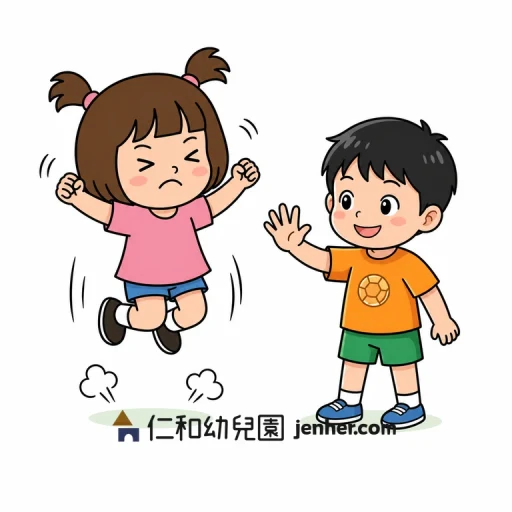
Winners burst into exaggerated laughter. Children who lose make an exaggerated sad face and pretend to cry. Both switch back to smiling right after — it is all pretend!

Teacher Notes: Setup, Safety & Variations
Equipment: No equipment needed
Setup: Large, open, lively space — the silliness is part of the fun.
Safety: Make sure the pretend crying stays fun — check that no child actually feels upset. Emphasize that it is just pretend.
Make It Easier: Practice the laugh-face first before adding the sad face.
Make It Harder: Use the whole body — winners do a victory dance, losers curl up dramatically.
Teacher Cue: "Winner — laugh big! Loser — pretend cry! Then everyone laughs together!"
Activity 1-23: Back-Pat Rock-Paper-Scissors

Back-Pat Rock-Paper-Scissors

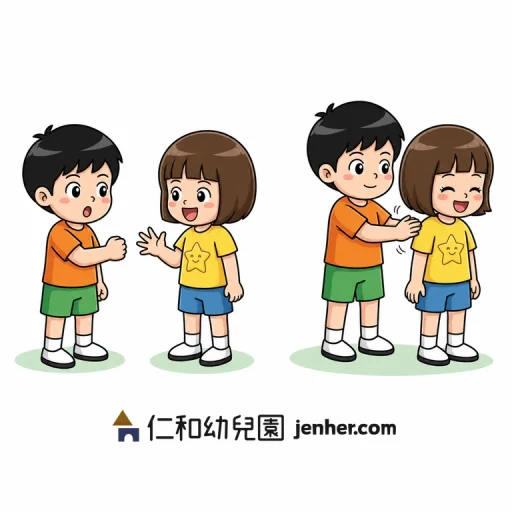
With consent, the child who loses gently pats the winner's back or shoulders 20 times while both count together. A no-touch option is always available.

Teacher Notes: Setup, Safety & Variations
Equipment: No equipment needed
Setup: Calm, comfortable seated or standing arrangement.
Safety: Modern safety adaptation: ask before touching and demonstrate soft patting. Stop immediately if any child says no or pats too hard. Offer a no-touch count, wave, or high-five instead.
Make It Easier: Reduce to 10 pats, or replace with a shoulder tap.
Make It Harder: Pat in rhythm to a beat or song.
Teacher Cue: "Soft pats — count together: 1, 2, 3 — be gentle, like raindrops!"
Activity 1-24: Favorites Share Rock-Paper-Scissors

Favorites Share Rock-Paper-Scissors

The winner shares one favorite thing (a food, a color, an animal). The child who loses shares one thing they find tricky or do not like as much. A quick conversation-starter.

Teacher Notes: Setup, Safety & Variations
Equipment: Optional: a toy microphone or talking stick prop
Setup: A quiet circle or paired conversation space.
Safety: Affirm every response — avoid laughing at or dismissing what a child shares. Children may pass or choose a neutral topic, and teachers model acceptance of all answers.
Make It Easier: Limit choices to a familiar category, such as a favorite color.
Make It Harder: The partner listens, then repeats back what was shared.
Teacher Cue: "Winner — share a favorite! Loser — share something you find tricky. Every answer is great!"
Activity 1-25: Newspaper Roll Tap-and-Block

Newspaper Roll Tap-and-Block

Using a soft, loosely rolled newspaper, the winner gives one gentle tap toward the other child's upper arm or shoulder. The loser raises their hands to block. Speed is the fun — not force.

Teacher Notes: Setup, Safety & Variations
Equipment: One loosely rolled newspaper per pair (roll loosely — do not tightly roll)
Setup: Safe indoor floor with clear space around each pair.
Safety: Modern safety adaptation: roll the newspaper loosely so it stays soft on contact. Tap the upper arm or shoulder only — never the face, head, or neck. Demonstrate the allowed zone and stop immediately if any child taps with force.
Make It Easier: Replace the newspaper with a hand signal that the partner blocks.
Make It Harder: Invite the loser to get ready to block as soon as the round begins; keep the tap gentle and predictable.
Teacher Cue: "Gentle tap — upper arm or shoulder only! Loser — block fast!"
Frequently Asked Questions

Rock-Paper-Scissors in Preschool — Teacher FAQ

Practical guidance on readiness, classroom management, Head Start ELOF connections, and inclusive participation for early childhood educators.

Are these games appropriate for children who do not know the rules yet?
Yes — activities like the Picture Card Quiz (1-2) and Left or Right quiz (1-3) offer gentle rule introductions. Start with just Rock and Paper before adding Scissors. Many activities in this collection use the sign only as a prompt for a shared action, including Frog Jumps (1-12), Laugh-and-Cry (1-22), and Back-Pat Rock-Paper-Scissors (1-23).
How do I manage a large group without long wait times?
Run several stations at once with a few pairs in each clearly defined area. Good partner-station choices include Bow After You Lose (1-1), Foot Rock-Paper-Scissors (1-9), Frog Jumps (1-12), Gradual Crouch (1-19), and Run-a-Circle (1-20). Whole-class choices — Beat the Teacher (1-5), Clap-Count (1-15), and Left or Right (1-3) — let children participate together while the educator models the prompt.
Which Head Start ELOF domains do these activities support?
These activities can offer opportunities related to the Perceptual, Motor, and Physical Development domain of the Head Start Early Learning Outcomes Framework. The movement cards connect most directly with P-PMP 1 and P-PMP 2; educators should use their own observation and curriculum judgment. See the official Head Start ELOF guidance.
Which activities work well indoors when space is limited?
For a tight indoor classroom, start with Bow After You Lose (1-1), Picture Card Quiz (1-2), Solo Rock-Paper-Scissors (1-4), Beat the Teacher (1-5), Spin-the-Hat (1-7), Clap-Count (1-15), Fold-a-Finger (1-16), Facial Expressions (1-17), or Favorites Share (1-24). These can be done seated or in place without running; adjust the setup to the room and the group.
How do I handle a child who is upset about losing?
Frame all consequences as fun shared actions rather than punishments. When you introduce the activity, do the losing action yourself first to model it as something enjoyable. In games like Rooster and Chick (1-8) or Laugh-and-Cry (1-22), the losing role is often the sillier, more memorable one. Allow children to observe before joining. Offer to pair a reluctant child with the teacher rather than a peer.
ADVERTISEMENT