ECE Movement Curriculum · Preschool and Pre-K

71 Newspaper Games for Preschoolers: Creative Paper Play and Gross Motor Movement

Turn clean newspaper into a flexible classroom material for 71 illustrated movement activities across Chapters 6 and 23. Children can crawl, step, jump, carry, roll, toss, create, and cooperate while educators control spacing, paper handling, and the pace of each invitation.

ADVERTISEMENT

Quick Teacher Guide: Newspaper Play in Preschool

Keep these four points in mind before setting up any of the 71 activities below:

Paper and Hygiene

Use clean, dry paper, remove staples, keep pieces large, and provide hand-washing after handling printed material. Recycle scraps when the activity ends.

Clear Pathways

Use dry nonslip floors, individual spots, one-way lanes, and open exits. Paper is a light visual prop, not a mat, restraint, or rigid obstacle.

Prop Boundaries

Keep faces clear. Do not tie, tighten, clamp, or enclose a child with paper; offer hand-held, floor-level, fabric, or no-prop versions whenever needed.

Group Rhythm

Model step-first choices, use an educator cue for starts and retrieval, and provide parallel stations so children spend less time waiting in active lanes.

Chapter 6 — Illustrated Activity Cards

58 Newspaper Movement Activities: Balance, Crawling, and Paper-Ball Play

Chapter 6 moves from balance and crawling to paper-ball play, partner pathways, creative paper work, and gentle target activities. Each card is an independent North American ECE adaptation beside the original diagram.

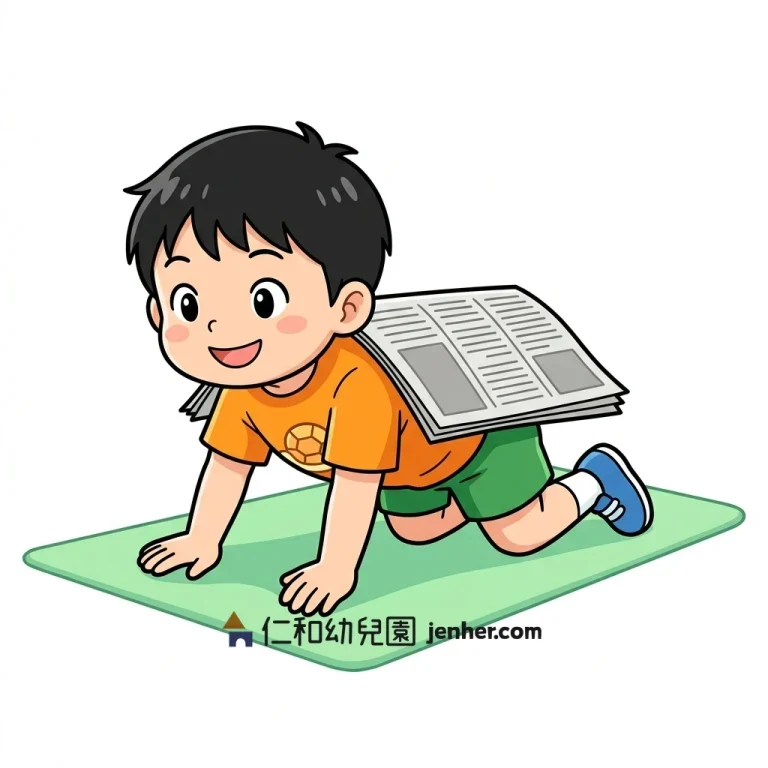
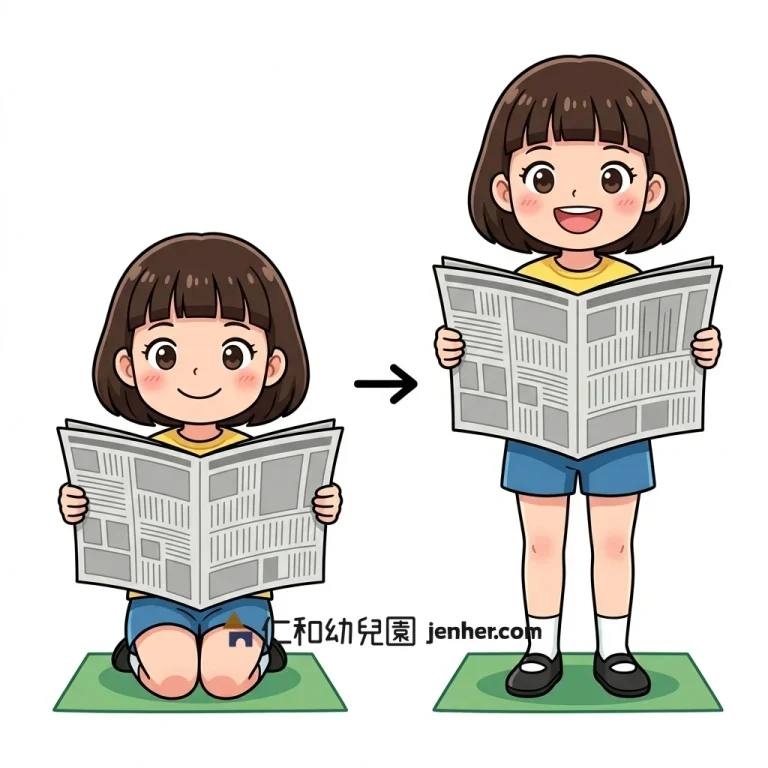
Activity 6-1: Newspaper Stand-Up Balance

Newspaper Stand-Up Balance

Hold an open newspaper flat in both hands and rise from a cross-legged sit without letting the sheet crumple or fall.

Teacher Notes: Setup, Safety & Variations
Equipment: One clean sheet of newspaper per child; a firm mat or carpet underneath.
Setup: Begin seated with space between children. The teacher models a slow rise and keeps walkways clear.
Safety: Use dry paper and a nonslip floor. Children may place the paper down and stand normally if balance or knees feel uncomfortable.
Make It Easier: Rise from a chair or kneeling position while holding the paper.
Make It Harder: Pause halfway up, then finish standing without rushing.
Teacher Cue: "Keep the paper calm, press through your feet, and stand when your body is ready."
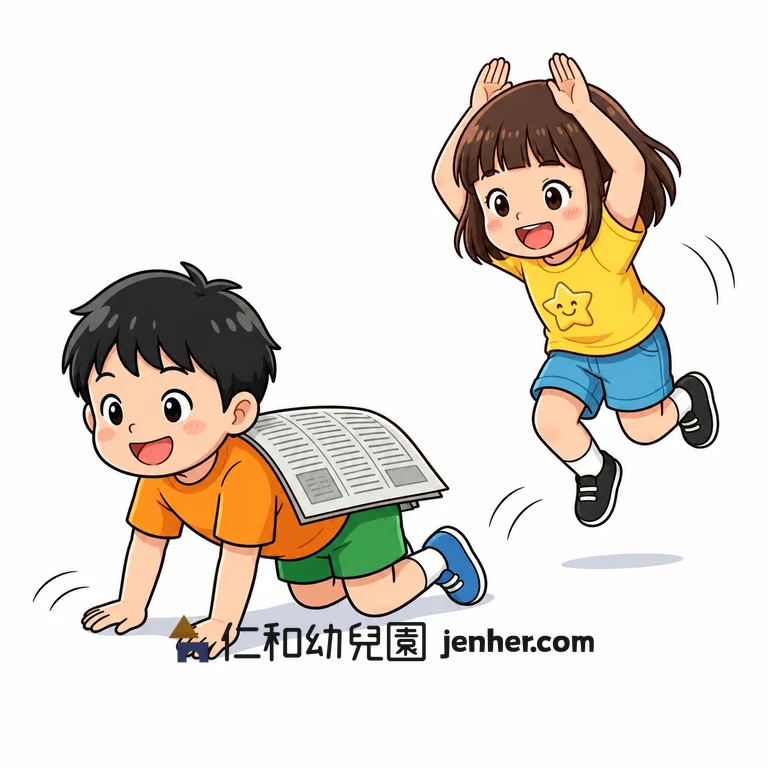
Activity 6-2: Turtle-Back Crawl

Turtle-Back Crawl

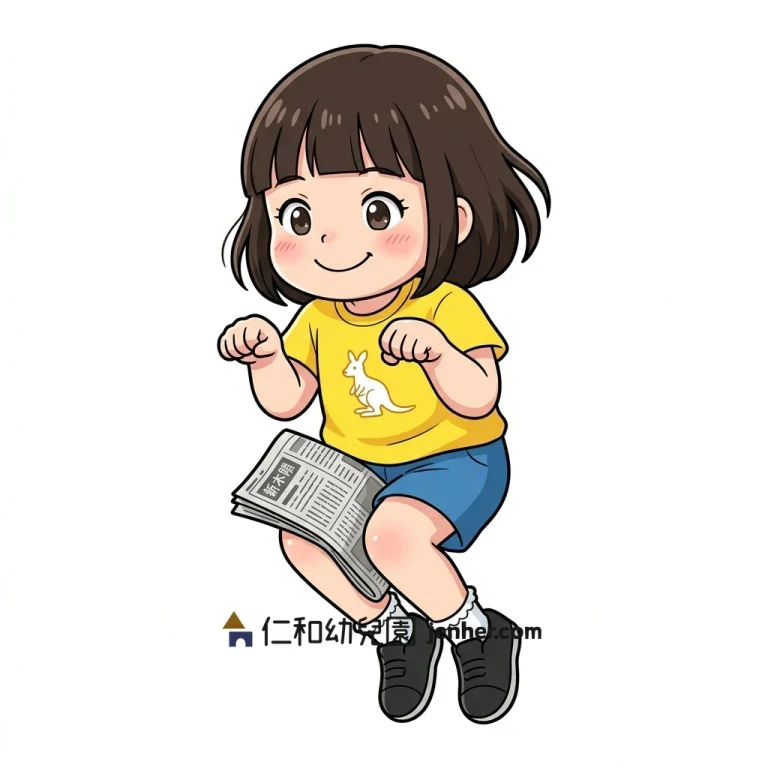
Fold a newspaper into a manageable sheet, rest it loosely on the child's back, and crawl slowly while trying not to let it slide off.

Teacher Notes: Setup, Safety & Variations
Equipment: One folded sheet of newspaper per child; a firm mat or carpet.
Setup: Use short, separate crawl lanes with a clear exit. Children return around the outside of the lanes.
Safety: The paper stays loose and never covers the face. Stop if it slides toward the head, tears into sharp edges, or distracts the child from the route.
Make It Easier: Crawl with a soft beanbag on the back, or crawl without a prop.
Make It Harder: Crawl around one wide floor marker while keeping the pace slow.
Teacher Cue: "Turtle steps—hands, knees, look ahead, and keep your shell loose."
Activity 6-3: Kangaroo Knee-Paper Jumps

Kangaroo Knee-Paper Jumps

Place a folded newspaper gently between the knees and make small two-foot jumps or steps forward without dropping it.

Teacher Notes: Setup, Safety & Variations
Equipment: A folded sheet of newspaper per child and a clear nonslip floor.
Setup: Mark short lanes and demonstrate a step-first version before inviting jumps.
Safety: The paper is held lightly, not squeezed hard. Keep jumps small, land with knees soft, and offer walking when repeated jumping is not comfortable.
Make It Easier: Walk with the paper between the knees or carry it in both hands.
Make It Harder: Add a stop at a floor spot after every two jumps.
Teacher Cue: "Small kangaroo feet, soft landing, and paper stays gentle."
Activity 6-4: Chest-Paper Wind Run

Chest-Paper Wind Run

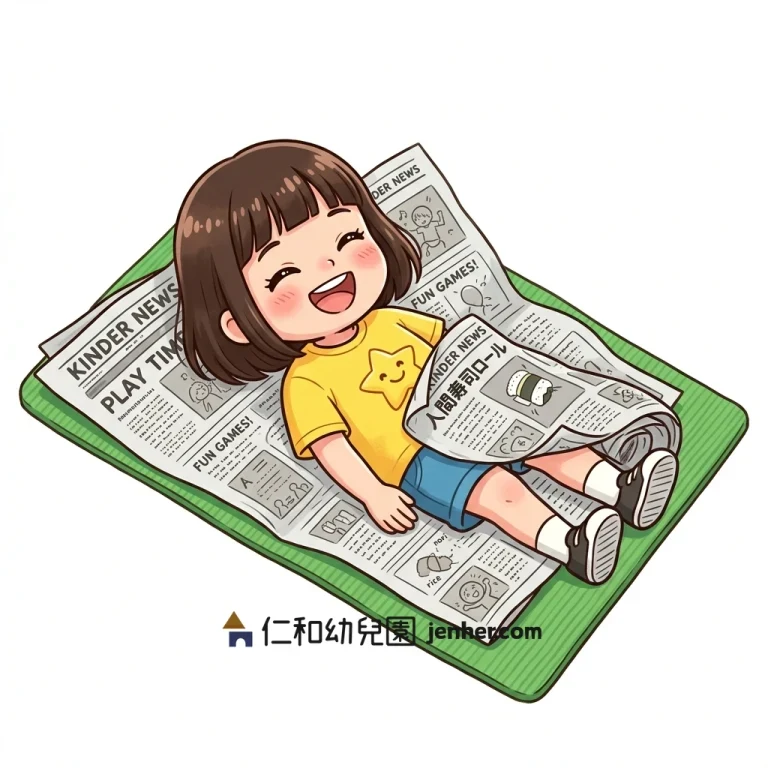
Press a newspaper lightly to the chest, release the hands, and walk or jog along a one-way lane while the moving air helps hold the sheet in place.

Teacher Notes: Setup, Safety & Variations
Equipment: One clean sheet per child; cones or floor spots for lanes.
Setup: Use a dry, open area with all children traveling in one direction. Start at walking speed.
Safety: The paper must not cover the nose or mouth. Keep lanes separate and stop if the child cannot see or control the route.
Make It Easier: Hold the paper with one hand while walking.
Make It Harder: Walk past two markers and stop before the boundary without touching the paper.
Teacher Cue: "Eyes forward, walking first, and keep the paper below your face."
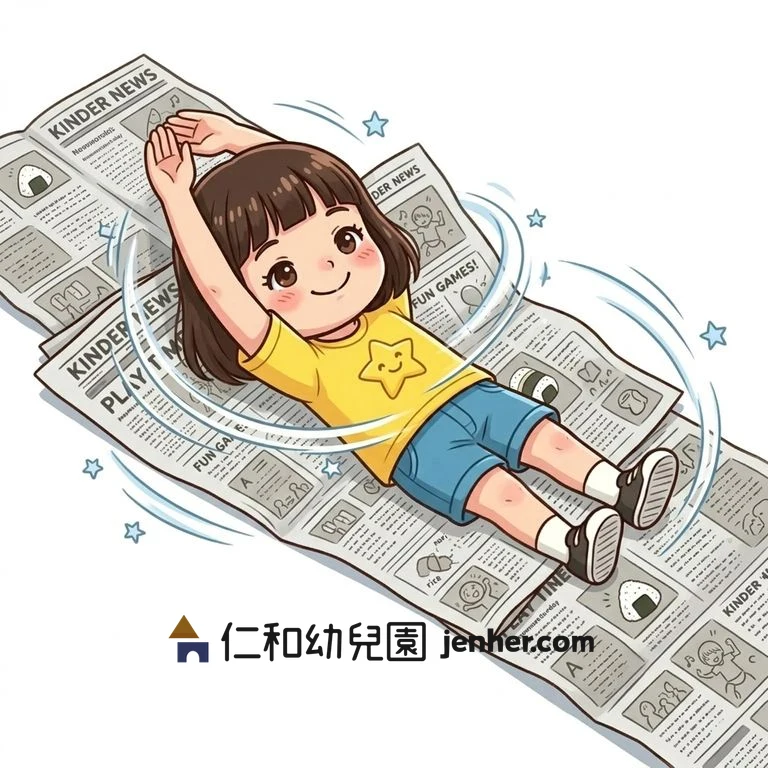
Activity 6-5: Side-Roll Paper Wrap

Side-Roll Paper Wrap

Lie on an open newspaper and roll sideways across it like a playful sushi roll, keeping the paper loose and the head uncovered.

Teacher Notes: Setup, Safety & Variations
Equipment: A large sheet of newspaper on a firm gymnastics mat; remove torn or sharp pieces.
Setup: Give each child a separate mat lane and a clear roll-out area.
Safety: The paper is a loose prop only: keep the face, head, and breathing space clear. Never tape or tighten paper around a child, and stop if the paper bunches under the neck.
Make It Easier: Rock side to side without traveling, or roll on the mat without paper.
Make It Harder: Roll to a floor marker, stop, and return with the same slow pace.
Teacher Cue: "Roll over your shoulder, keep your face free, and stop on the mat marker."
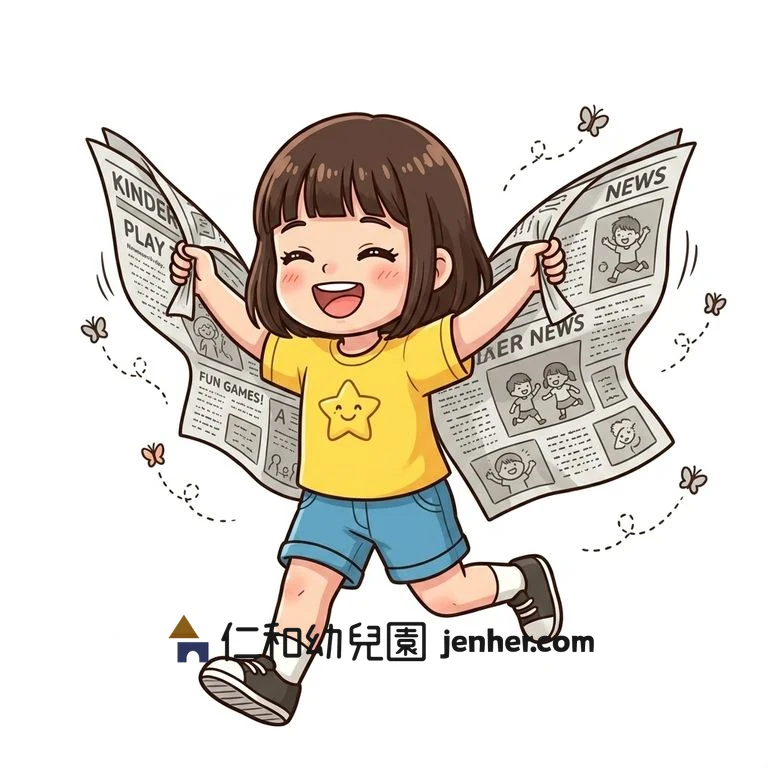
Activity 6-6: Newspaper Cape Run

Newspaper Cape Run

Hold the two top corners of a newspaper over the shoulders and walk or jog so it billows like a cape, without tying it to the body.

Teacher Notes: Setup, Safety & Variations
Equipment: One clean newspaper per child; cones to mark a one-way path.
Setup: Use a wide lane and have children carry the cape in their hands rather than attach it to clothing.
Safety: Never tie, pin, or loop paper around the body. Keep the face clear, use walking speed first, and stop before entering another lane.
Make It Easier: Stand in place and flap the paper with both hands.
Make It Harder: Walk to a marker, turn around it, and return while keeping both corners in hand.
Teacher Cue: "Hold the corners, keep your face clear, and travel in your lane."
Activity 6-7: Wide-Step Paper Path

Wide-Step Paper Path

Lay newspapers in a long strip and invite children to walk forward with feet on either side, stepping over the paper rather than onto it.

Teacher Notes: Setup, Safety & Variations
Equipment: Connected sheets of newspaper and nonslip mats or painter's tape to secure the edges.
Setup: Use a dry, flat floor and leave a clear walk-out. Check that the paper cannot slide before each turn.
Safety: Do not ask children to walk on loose newspaper. If the edges lift or the floor is slick, remove the paper and use floor markers instead.
Make It Easier: Step over one sheet at a time with a hand nearby for balance.
Make It Harder: Change between a wide step and a narrow step at marked points.
Teacher Cue: "Feet beside the paper, eyes on the next space, and walk slowly."
Activity 6-8: Paper Blanket Quiet Body

Paper Blanket Quiet Body

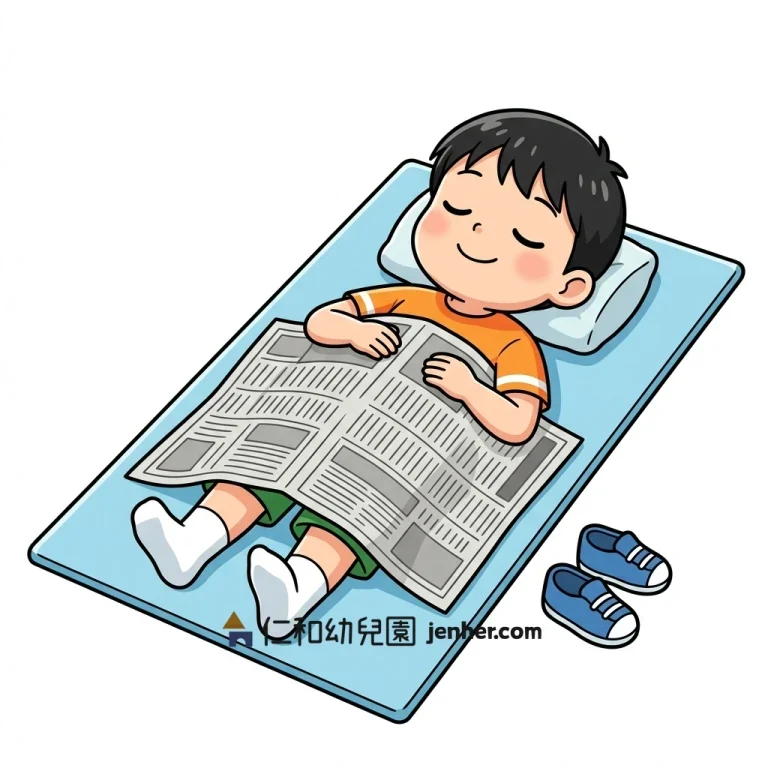
Lie on a mat with a newspaper sheet resting loosely over the trunk for a brief quiet-body and breathing pause; children may choose not to use the paper.

Teacher Notes: Setup, Safety & Variations
Equipment: A firm mat and one clean, lightweight sheet of paper per child.
Setup: Keep the room calm and ensure every child can remove the paper independently.
Safety: The paper stays below the shoulders and never covers the face. Do not tape, tuck, or weigh it down; stop if the child feels enclosed or uncomfortable.
Make It Easier: Rest with the paper beside the body or use a soft scarf held in the hands.
Make It Harder: Invite the child to notice one breath and then place the paper in the recycling bin.
Teacher Cue: "Paper stays loose, face stays clear, and you choose when to move."
Activity 6-9: Kneel-to-Stand Paper Carry

Kneel-to-Stand Paper Carry

Hold a flat newspaper overhead and rise from both knees to standing, keeping the paper level and then lowering it before walking away.

Teacher Notes: Setup, Safety & Variations
Equipment: One clean sheet per child and a firm mat or carpet.
Setup: Children start in separate spots. The teacher models lowering the paper before moving through the room.
Safety: Do not walk or run with paper blocking vision. Children may use a half-kneel, sit-to-stand, or keep the paper at chest level.
Make It Easier: Stand from a chair while holding the paper at chest height.
Make It Harder: Pause tall for one breath before lowering the sheet.
Teacher Cue: "Paper high, eyes clear, feet steady, and lower before you travel."
Activity 6-10: Butterfly Paper Wings

Butterfly Paper Wings

Hold the sides of a newspaper and flap both arms like butterfly wings while walking or lightly jogging through an open space.

Teacher Notes: Setup, Safety & Variations
Equipment: One clean newspaper per child or pair; floor markers for personal spaces.
Setup: Use a circle or distributed spots. Children face the same direction when traveling.
Safety: Keep paper away from faces and other children's bodies. Use walking speed when space is tight and avoid rapid arm swings near neighbors.
Make It Easier: Flap in place while seated or standing.
Make It Harder: Change from high wings to low wings on a musical or spoken cue.
Teacher Cue: "Wings make space—look ahead, flap softly, and stay in your spot."
Activity 6-11: Newspaper Picnic Mat

Newspaper Picnic Mat

Place a newspaper on a nonslip mat, sit cross-legged on or beside it, and use the space for quiet focus or gentle seated stretches.

Teacher Notes: Setup, Safety & Variations
Equipment: A clean newspaper secured over a firm mat; paper is not the nonslip surface.
Setup: Place each child's paper on a separate mat or use it beside the body. Keep the floor dry.
Safety: Do not dance, run, or stand on loose paper. Replace torn sheets and switch to a floor spot if the paper shifts.
Make It Easier: Sit beside the paper and reach toward its corners.
Make It Harder: Trace a slow circle with the hands while keeping the trunk tall.
Teacher Cue: "Paper stays still, body stays comfortable, and stretches stay gentle."
Activity 6-12: Rocket Side-Roll

Rocket Side-Roll

Lie long with the arms close to the thighs and side-roll along a runway made from newspaper sheets placed over a mat.

Teacher Notes: Setup, Safety & Variations
Equipment: Several newspaper sheets over a firm gymnastics mat; remove loose scraps.
Setup: Make separate roll lanes with a generous stop area. Demonstrate shoulder-led rolling before travel.
Safety: The paper cannot replace a mat. Keep the head and neck relaxed, use a slow roll, and stop if paper bunches or the child leaves the mat.
Make It Easier: Rock side to side in a tucked or long shape without traveling.
Make It Harder: Roll to a named floor marker, pause, and return to a seated position.
Teacher Cue: "Long body, shoulder leads, slow roll, and stop on the mat."
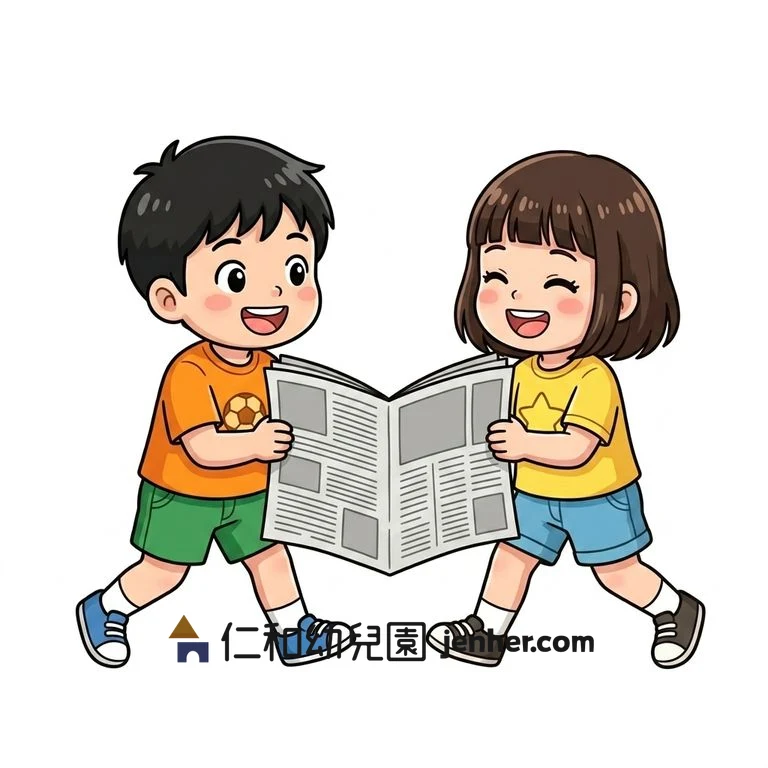
Activity 6-13: Partner Side-Step Paper Hold

Partner Side-Step Paper Hold

Face a partner, each holding a corner or side of one newspaper, and side-step together while keeping the sheet relaxed.

Teacher Notes: Setup, Safety & Variations
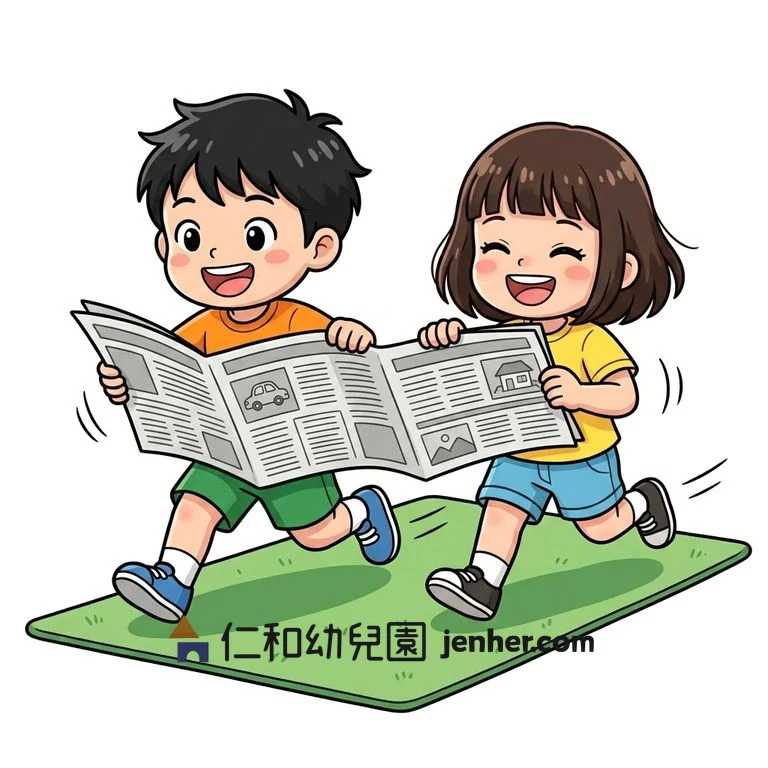
Equipment: One clean newspaper per pair and a wide floor lane.
Setup: Pairs face each other in separated lanes and move at walking speed first.
Safety: Hold the paper lightly; do not pull, wrap it around a body, or run into another pair. Release immediately if either child steps off the lane.
Make It Easier: Side-step two times and return to the starting spot.
Make It Harder: Follow a gentle left-right cue while keeping the paper unstrained.
Teacher Cue: "Match your partner's steps—light hands, wide space, easy stop."
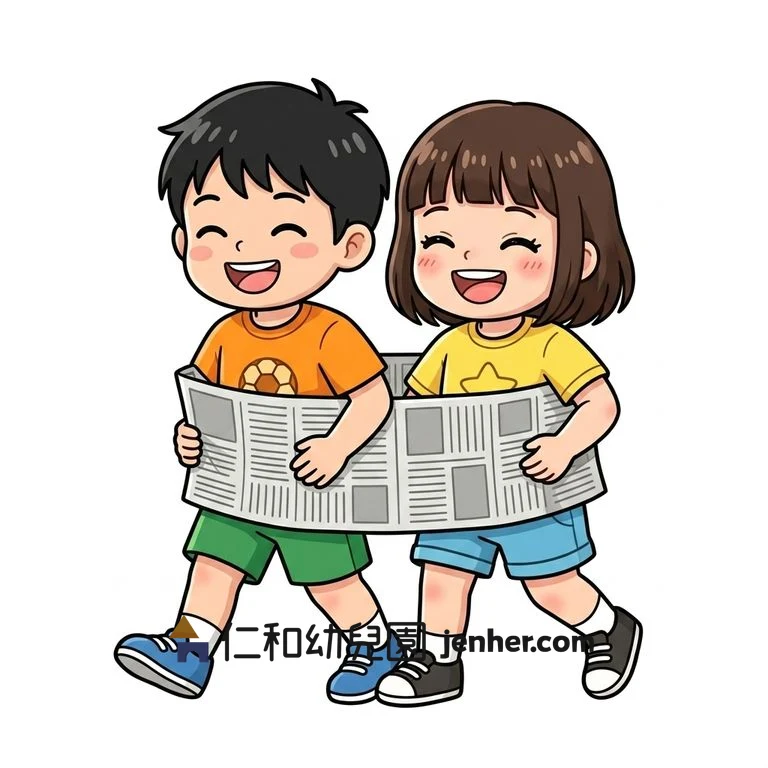
Activity 6-14: Partner Paper Pace Run

Partner Paper Pace Run

Two children hold opposite sides of a newspaper and move forward together, matching pace rather than trying to stretch or tear the paper.

Teacher Notes: Setup, Safety & Variations
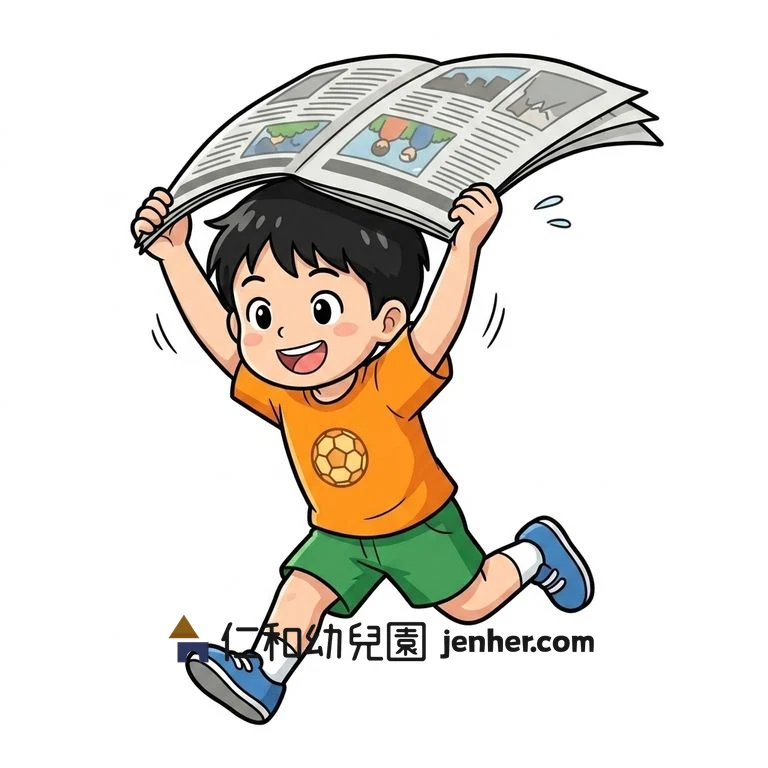
Equipment: One clean sheet per pair and cones for straight lanes.
Setup: Use a short one-way lane with a clear return path outside the lane.
Safety: Walking is the starting pace. No pulling, sudden stops, or face-level paper; pairs release the sheet before turning around.
Make It Easier: Take five walking steps and stop together.
Make It Harder: Change pace from walk to gentle jog on the educator's cue.
Teacher Cue: "Same speed, light grip, eyes forward, and stop together."
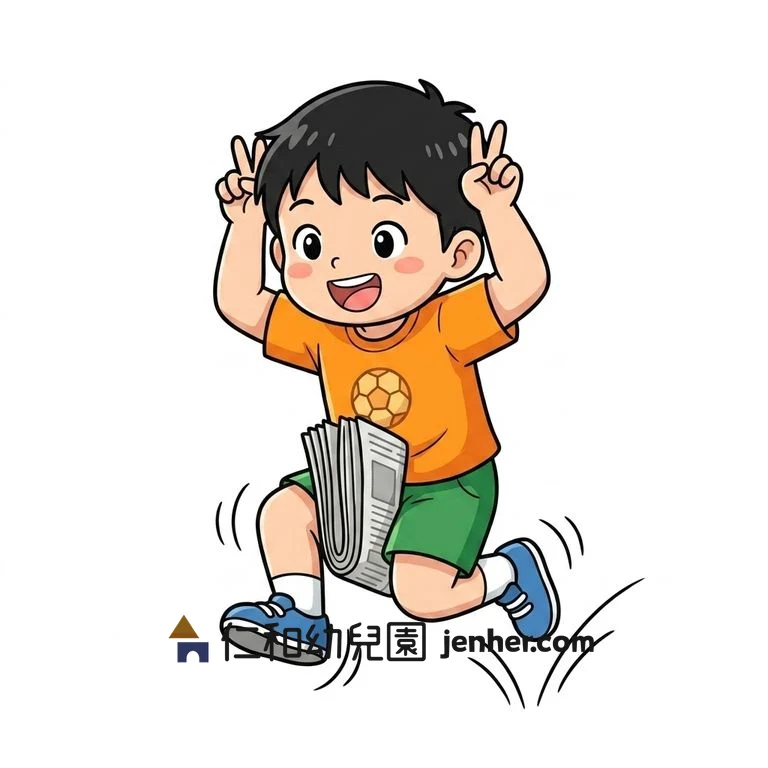
Activity 6-15: Front-Carry Newspaper Run

Front-Carry Newspaper Run

Hold an open newspaper level in front of the body and walk or jog forward while trying to keep the sheet from flipping.

Teacher Notes: Setup, Safety & Variations
Equipment: One clean sheet per child; cones to mark a clear route.
Setup: Use one-way lanes and start with walking. Children lower the paper before leaving the lane.
Safety: Keep the sheet below eye level and do not run into traffic. If vision is blocked, fold the paper or carry it at the side.
Make It Easier: Walk while holding the paper at chest level.
Make It Harder: Walk around one cone and return without changing lanes.
Teacher Cue: "Paper low enough to see, walking feet, and turn around the cone."
Activity 6-16: Newspaper Arch Train

Newspaper Arch Train

Two children hold a newspaper overhead as an arch while the rest of the group walks or crouches underneath one at a time.

Teacher Notes: Setup, Safety & Variations
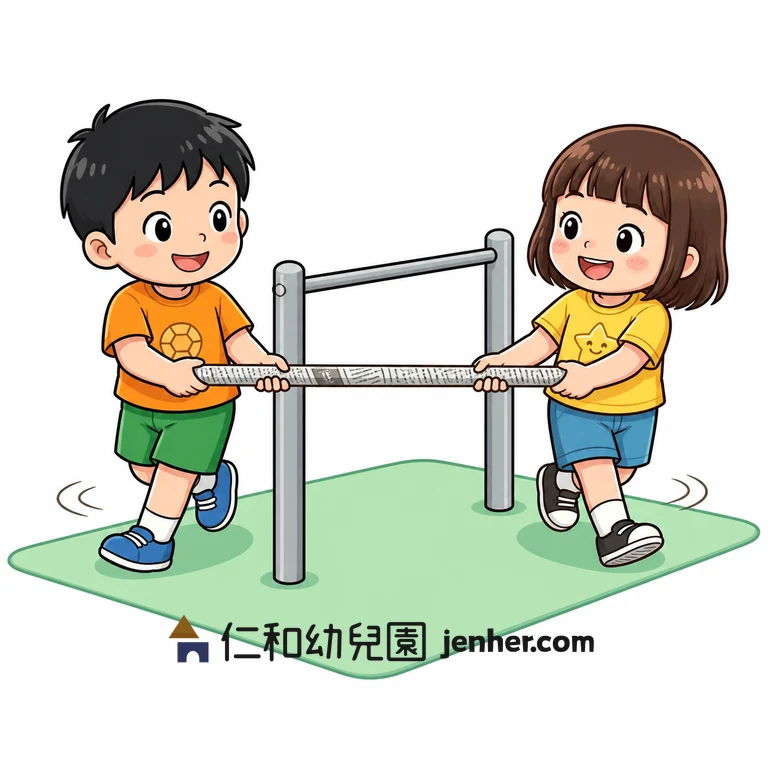
Equipment: A large sheet of newspaper or a soft paper sheet; floor markers for the queue.
Setup: Set one-way entry and exit points. Holders stand still at the sides, not in the path.
Safety: The arch stays high and light; no one lowers it onto a child. Use a fabric play tunnel if the paper tears or the holders cannot keep it steady.
Make It Easier: Use a teacher-held play tunnel or let children walk beside the arch.
Make It Harder: Change from walking to a controlled bear crawl under the arch.
Teacher Cue: "Holders stay still, travelers take turns, and the exit stays open."
Activity 6-17: Partner Paper-Bar Circle Walk

Partner Paper-Bar Circle Walk

Roll a newspaper loosely into a light tube and have two partners hold its ends while walking a wide circle around a floor marker.

Teacher Notes: Setup, Safety & Variations
Equipment: A loosely rolled paper tube and a cone or floor marker; tape may secure the tube without making it rigid.
Setup: Use a wide circle around a floor marker rather than a bar or fixed apparatus. Partners walk at the same pace.
Safety: Keep the paper tube below shoulder level and away from faces. No swinging, pulling, or spinning around a person or apparatus.
Make It Easier: Walk straight while both partners hold the tube.
Make It Harder: Change direction at a walking cue without crossing another pair.
Teacher Cue: "Light tube, wide circle, walking feet, and no swinging."
Activity 6-18: Train-Wheel Arm Run

Train-Wheel Arm Run

Walk or jog while moving the arms in broad forward-and-back circles like train wheels, keeping the paper prop optional and below shoulder level.

Teacher Notes: Setup, Safety & Variations
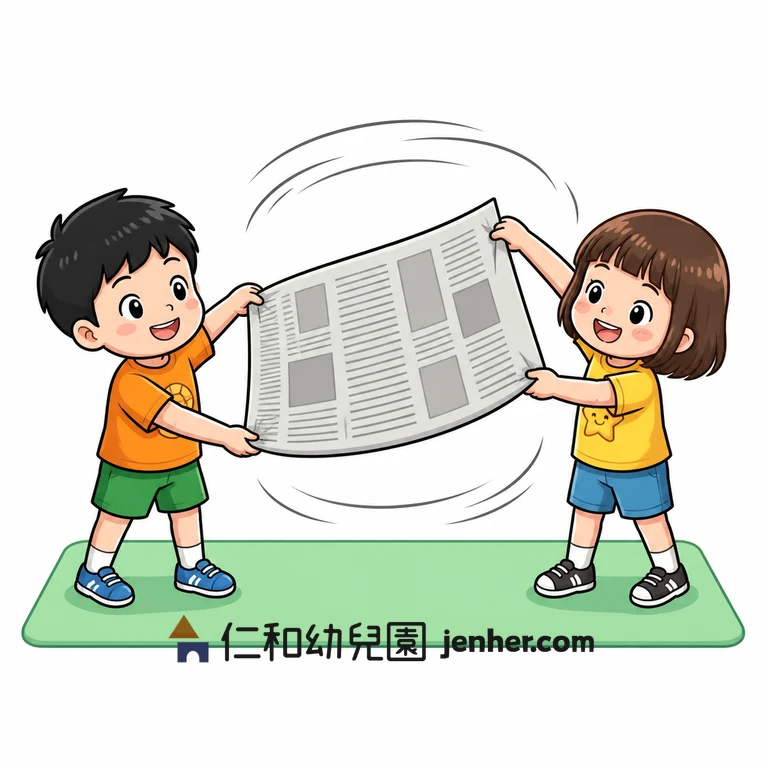
Equipment: No equipment needed; a loosely rolled paper tube is optional for demonstration only.
Setup: Use a circle or one-way lanes with generous spacing between children.
Safety: Keep arm circles below face level and avoid contact with neighbors. Use walking speed when children are learning the pathway.
Make It Easier: March in place and make small arm circles.
Make It Harder: Change from march to gentle jog on a cue while maintaining personal space.
Teacher Cue: "Train arms stay in your space—march, breathe, and watch the lane."
Activity 6-19: Partner Paper-Bar Circle Steps

Partner Paper-Bar Circle Steps

Two partners hold a light paper tube and side-step around a floor marker, keeping the movement wide and controlled instead of spinning.

Teacher Notes: Setup, Safety & Variations
Equipment: A loosely rolled paper tube and a floor marker; no fixed bar is required.
Setup: Give every pair a separate wide circle. One partner faces the marker while both walk or side-step together.
Safety: Do not pull a partner around a pivot, spin quickly, or hold the tube near a face. Release the tube if the partners lose alignment.
Make It Easier: Walk a short arc with the tube, then stop.
Make It Harder: Reverse direction on a clear verbal cue while keeping the same slow pace.
Teacher Cue: "Side-step together, keep the tube low, and make a wide circle."
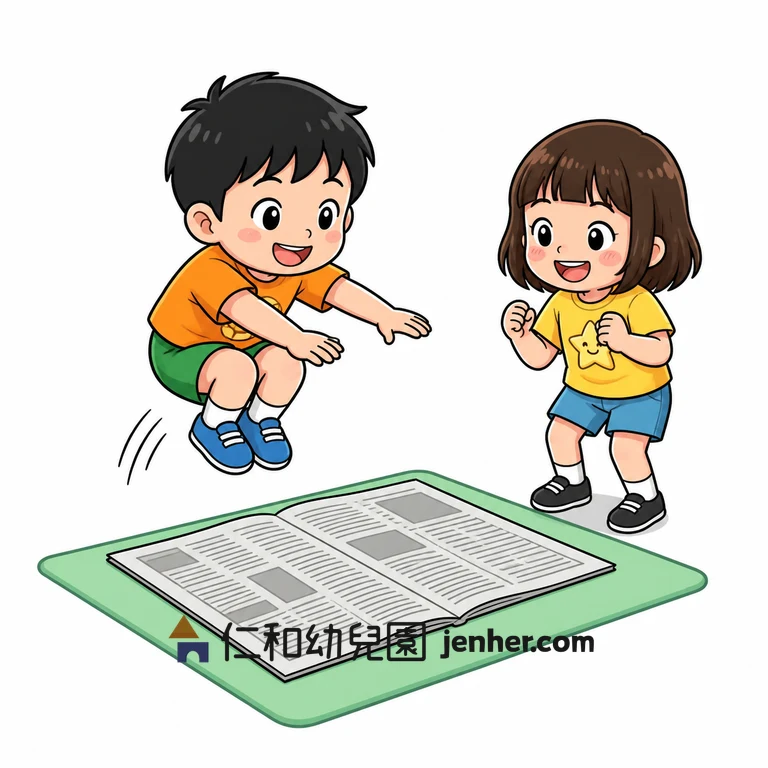
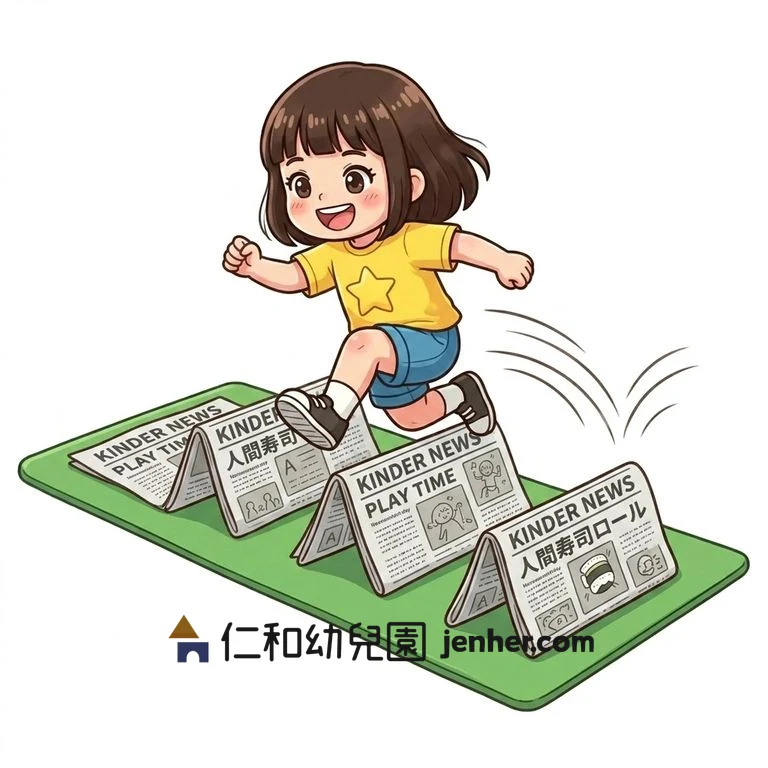
Activity 6-20: Paper Hurdle Two-Foot Jump

Paper Hurdle Two-Foot Jump

Fold newspaper into a low, soft visual hurdle and invite children to step or make a small two-foot jump over it from a marked line.

Teacher Notes: Setup, Safety & Variations
Equipment: Folded newspaper placed on a firm mat or beside a floor line; use a soft foam strip when paper will not stay flat.
Setup: Use a clear one-way lane with a landing spot. Demonstrate stepping before jumping.
Safety: The paper is a low visual cue, not a raised obstacle. Do not place it on a slick floor or ask children to jump far; step over when needed.
Make It Easier: Walk over a flat paper line.
Make It Harder: Add a pause after landing before walking out of the lane.
Teacher Cue: "Look, step or jump, land softly, and walk around."
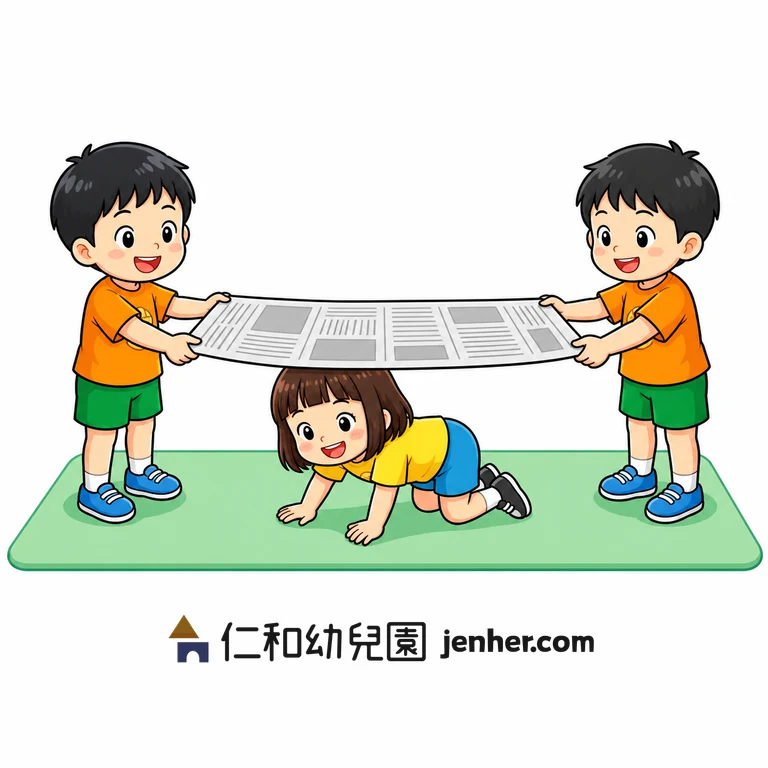
Activity 6-21: Low Paper Crawl Door

Low Paper Crawl Door

An educator holds a newspaper strip low over a mat while the child belly-crawls underneath and exits into an open space.

Teacher Notes: Setup, Safety & Variations
Equipment: A light paper strip or sheet and a firm gymnastics mat; a soft play tunnel is an alternative.
Setup: The educator holds the paper at a comfortable low level and keeps the exit clear. Children enter one at a time.
Safety: The educator releases the paper immediately if it touches the child. Never make a rigid doorway, block the exit, or ask a child to crawl on a slick floor.
Make It Easier: Crawl through a soft play tunnel or under a raised scarf.
Make It Harder: Carry a soft beanbag under the paper door while moving slowly.
Teacher Cue: "Crawl low, keep your face clear, and come out into the open."
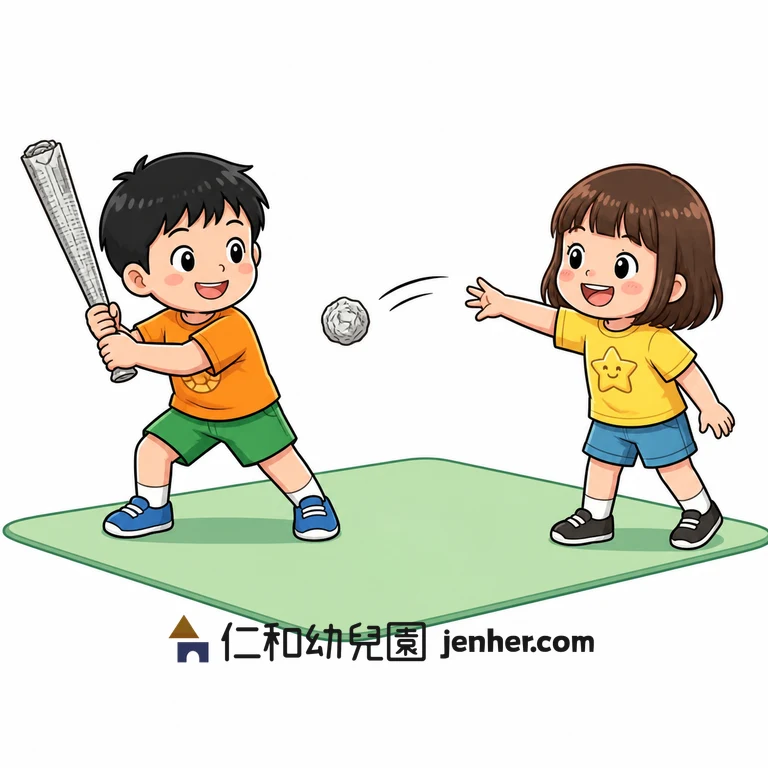
Activity 6-22: Paper-Bat Ball Tap

Paper-Bat Ball Tap

Use a loosely rolled newspaper as a light bat and tap a soft paper ball that an educator rolls or places on the floor.

Teacher Notes: Setup, Safety & Variations
Equipment: A loosely rolled paper bat, a soft paper ball, and a wide striking lane.
Setup: The educator controls the ball and stands to the side. Other children wait behind a line outside the swing path.
Safety: Use a tap, not a full-force swing. Roll or place the ball; never pitch toward the face, and keep the paper bat below shoulder level when carrying it.
Make It Easier: Push the paper ball with an open hand or tap a stationary ball.
Make It Harder: Roll the ball slowly across a floor line and invite a gentle forward tap.
Teacher Cue: "Eyes on the soft ball, small swing, and bat stays in your lane."
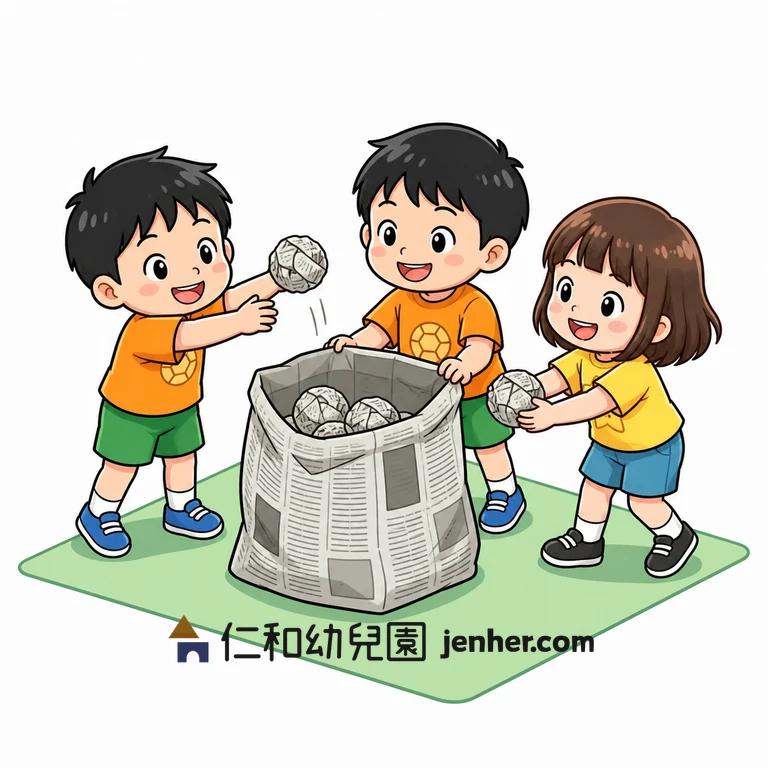
Activity 6-23: Paper Ball Basket Toss

Paper Ball Basket Toss

Crumple newspaper into a soft ball and use an underhand toss to send it into a large open bin or basket, then collect the balls together.

Teacher Notes: Setup, Safety & Variations
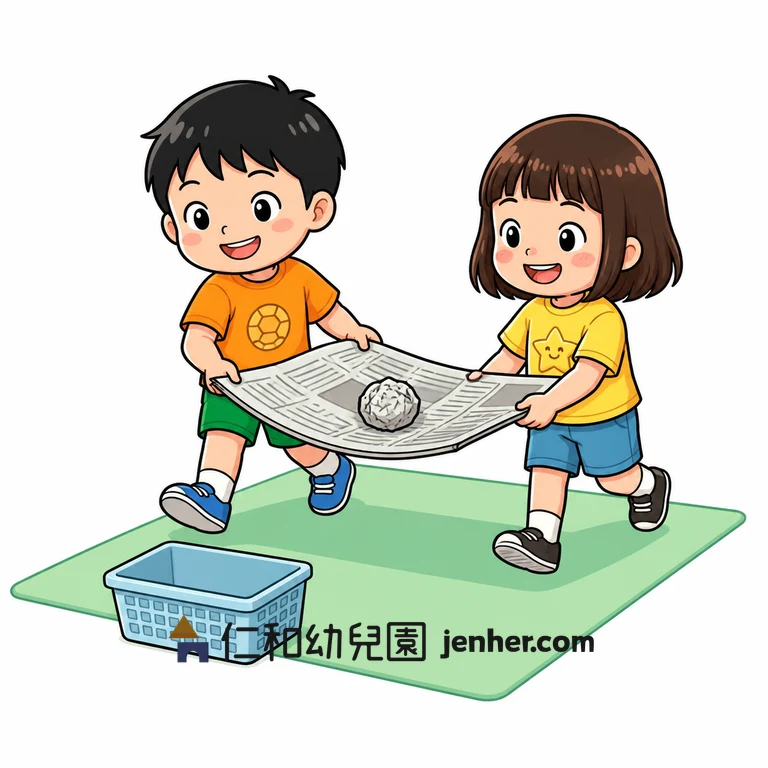
Equipment: Soft paper balls and a large open bin or cardboard box; avoid bags that can close around a child.
Setup: Mark a throwing line and keep the target area clear until the educator signals retrieval.
Safety: Use soft, palm-sized paper balls and underhand throws only. Do not aim at people, put paper in mouths, or use a closed plastic bag as a target.
Make It Easier: Roll the paper ball into a nearby box.
Make It Harder: Offer two large targets at different distances without ranking children by score.
Teacher Cue: "Underhand to the open basket, wait, and collect together."
Activity 6-24: Shared Newspaper Tray Carry

Shared Newspaper Tray Carry

Two children hold the edges of a newspaper like a tray and carry a soft paper ball to a floor marker without letting it roll away.

Teacher Notes: Setup, Safety & Variations
Equipment: One clean newspaper and one soft paper ball per pair; floor markers for the destination.
Setup: Use short, straight routes and have pairs return outside the travel lane.
Safety: Walk only, keep fingers away from the sheet's torn edges, and set the paper down if a partner loses balance. No running or pulling the tray.
Make It Easier: Carry the ball in a small open bowl or with both hands.
Make It Harder: Pause at a marker and name the next direction before continuing.
Teacher Cue: "Same pace, level tray, and talk to your partner."
Activity 6-25: Four-Corner Paper Team Carry

Four-Corner Paper Team Carry

A small group holds the four corners of a large newspaper sheet and carries only light paper balls or soft toys to a nearby marker.

Teacher Notes: Setup, Safety & Variations
Equipment: A large clean paper sheet and lightweight paper balls or soft toys; no heavy load.
Setup: Use a short route with a clear walk-out. The educator assigns corner positions and starts/stops the group.
Safety: Walk, do not run. Keep the sheet below face level, use no heavy objects, and set it down before anyone changes position.
Make It Easier: Two children carry one paper sheet with no object on it.
Make It Harder: Move around one wide floor marker while keeping the sheet level.
Teacher Cue: "Four corners, light load, walking feet, and stop together."
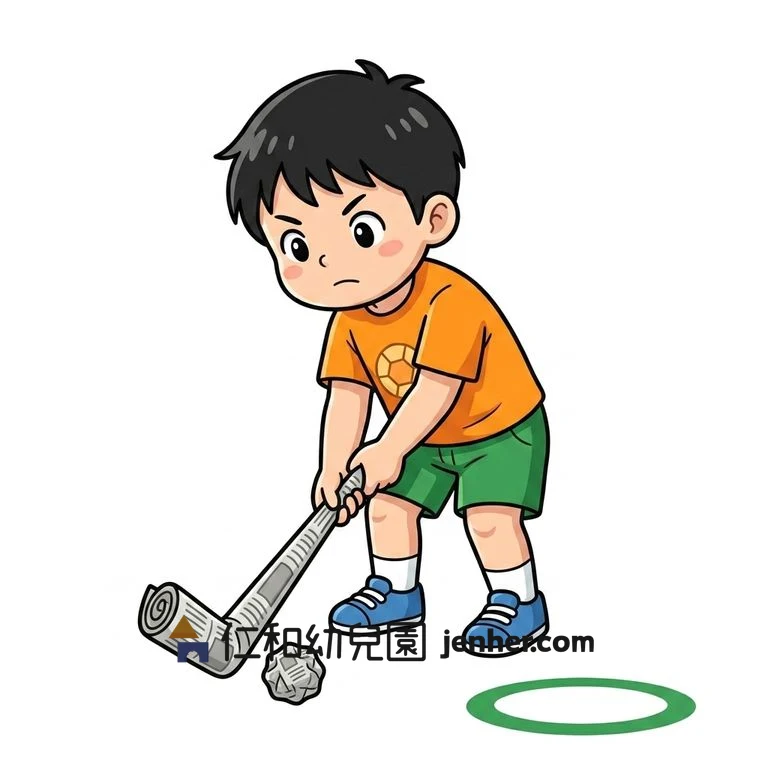
Activity 6-26: Paper Putter Target

Paper Putter Target

Roll a paper ball toward an open box or floor target with a loosely rolled newspaper club, using a gentle push rather than a swing.

Teacher Notes: Setup, Safety & Variations
Equipment: A loosely rolled newspaper club, soft paper balls, an open cardboard target, and a marked start line.
Setup: Use a flat dry surface and a one-way putting lane. Children wait behind the line until the ball stops.
Safety: The club stays below waist level and is used to push, not swing. Use soft balls and no target made of glass, metal, or a person's body.
Make It Easier: Push the paper ball with a hand toward a large floor spot.
Make It Harder: Choose between two wide targets while keeping the same gentle push.
Teacher Cue: "Club low, ball slow, and push toward the open target."
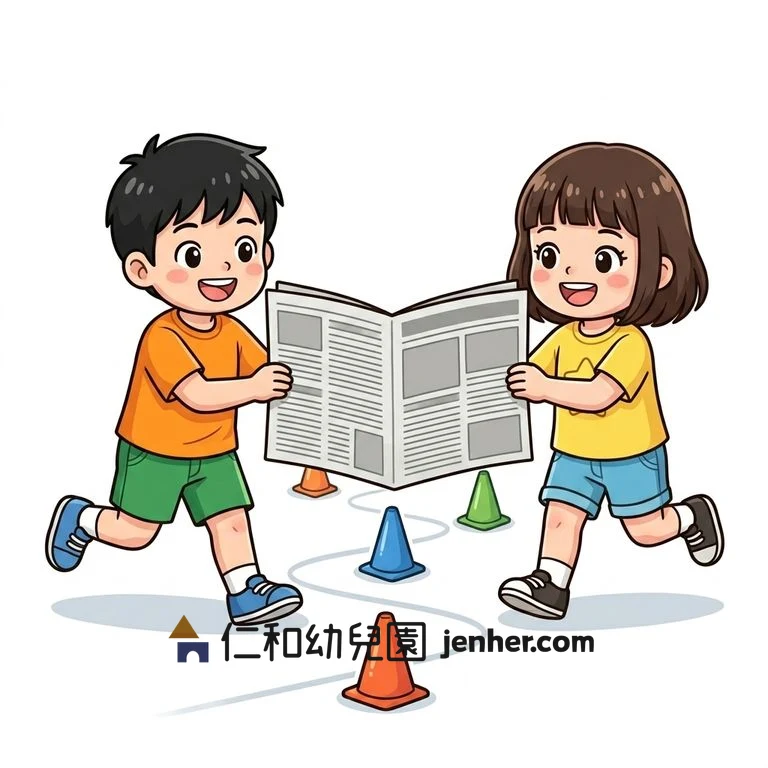
Activity 6-27: Partner S-Curve Paper Walk

Partner S-Curve Paper Walk

Two partners hold one newspaper and walk together through a wide S-shaped path marked by cones.

Teacher Notes: Setup, Safety & Variations
Equipment: One newspaper per pair and widely spaced cones.
Setup: Create separate S-shaped lanes with a clear return path. Start with walking, not running.
Safety: Hold the paper lightly and below the face. Partners release it before turning sharply, and no pair crosses another lane.
Make It Easier: Walk a straight path between two cones.
Make It Harder: Follow a verbal left-right cue while keeping the same slow pace.
Teacher Cue: "Match your partner, wide turns, and paper stays between you."
Activity 6-28: Folded-Paper Step-Over

Folded-Paper Step-Over

Fold a newspaper into a low marker and invite the child to step over it, adding a small two-foot jump only when the floor and landing are controlled.

Teacher Notes: Setup, Safety & Variations
Equipment: A folded newspaper on a firm mat or a soft foam strip; cones for a lane.
Setup: Use a dry, flat floor and leave a clear landing area. Demonstrate walking over the marker first.
Safety: The marker remains low and soft. Never ask children to land on the paper or jump if the sheet slides; replace it with a floor line.
Make It Easier: Walk over a flat strip of paper.
Make It Harder: Step over two markers with a pause between them.
Teacher Cue: "Lift, step over, land softly, and keep the lane clear."
Activity 6-29: Jump-and-Move Paper Cue

Jump-and-Move Paper Cue

Place a newspaper marker on the floor. On the educator's count, the child makes a small vertical jump beside it while the adult moves the paper only after the child is clear.

Teacher Notes: Setup, Safety & Variations
Equipment: A flat newspaper marker and a clear mat or floor space.
Setup: The educator stands to the side and moves the paper only after both feet have left the marker area and the child is landing in clear space.
Safety: Do not pull paper from under a standing child or make the child jump unexpectedly. Use a verbal cue, a small jump or step, and a dry nonslip surface.
Make It Easier: Step over the paper after the count.
Make It Harder: Change the count while keeping the landing area and movement small.
Teacher Cue: "Listen, jump or step clear, land softly, then the paper moves."
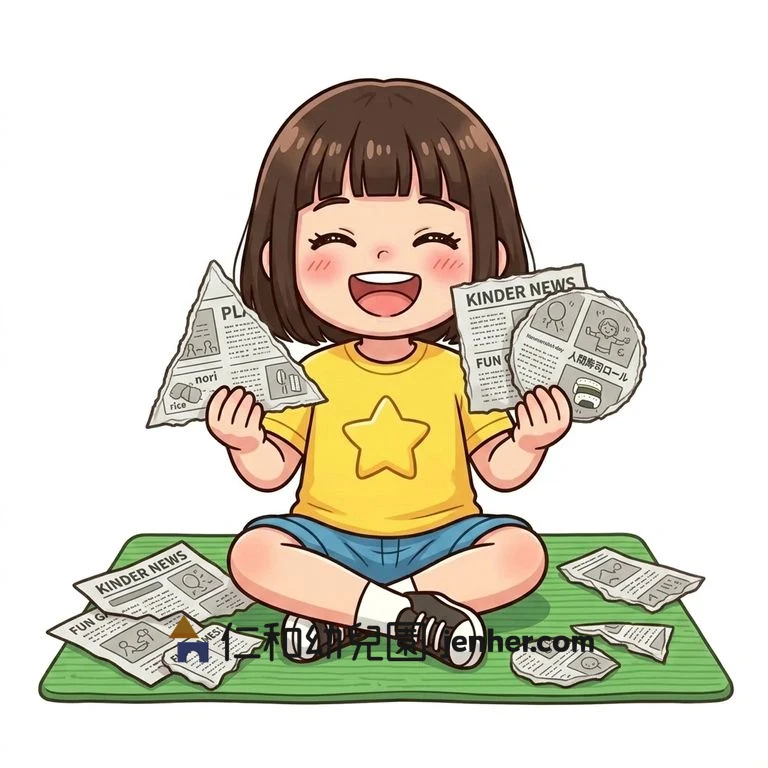
Activity 6-30: Paper Shape Tear and Collage

Paper Shape Tear and Collage

Tear newspaper into large circles, triangles, and squares, then arrange the pieces into a floor collage or a shared picture.

Teacher Notes: Setup, Safety & Variations
Equipment: Clean newspaper, a large work surface, and optional reusable mats or tape for the collage.
Setup: Work at a table or on a mat. Keep scraps in a visible tray and provide hand-washing after the activity.
Safety: Use large pieces rather than tiny scraps, supervise paper handling, and keep torn paper away from mouths and eyes. Recycle scraps at the end.
Make It Easier: Tear along a teacher-started line or arrange pre-torn large pieces.
Make It Harder: Use the shapes to make a movement map, then walk the path around it.
Teacher Cue: "Two hands tear, big pieces stay on the table, and shapes make a picture."
Activity 6-31: Card Toss to Paper Target

Card Toss to Paper Target

Place a newspaper target flat on the floor. From behind a line, the child gently tosses a large card or paper square and checks whether it lands on the target.

Teacher Notes: Setup, Safety & Variations
Equipment: A large newspaper target and sturdy, oversized cards or paper squares; use no small loose pieces with children who mouth objects.
Setup: Mark a throwing line and keep the target area empty until the educator signals retrieval.
Safety: Use gentle underhand throws and large, lightweight cards. No throwing toward people, and stop if cards blow into another lane.
Make It Easier: Slide or place the card onto the target.
Make It Harder: Use two targets and let the child choose where to aim.
Teacher Cue: "Underhand to the paper, watch it land, and wait before collecting."
Activity 6-32: Newspaper Airplane Flight

Newspaper Airplane Flight

Fold a newspaper airplane with an adult and launch it into a clear lane, watching how it glides rather than competing for the farthest flight.

Teacher Notes: Setup, Safety & Variations
Equipment: Large paper sheets and open, lightweight paper airplanes.
Setup: Use an outdoor or large indoor area with one-way flight lanes and a clear retrieval boundary.
Safety: Launch away from faces and bodies. Children wait until all airplanes land before retrieving; use a gentle forward toss, not a hard throw.
Make It Easier: Drop the airplane from a low height and watch it glide.
Make It Harder: Change the launch direction or fold shape and observe the difference.
Teacher Cue: "Point the nose away, gentle launch, watch, and retrieve together."
Activity 6-33: Three-Hole Paper Vest Walk

Three-Hole Paper Vest Walk

The source illustration shows children racing with heads and arms through three holes in a newspaper sheet. For safety, prepare a loose, open-neck vest or hand-held bib and use a walking pace without racing.

Teacher Notes: Setup, Safety & Variations
Equipment: A large sheet of clean paper with adult-cut openings; no ties, cords, or small accessories.
Setup: Prepare and fit the paper away from the active lane. Use a short walking path and keep an adult beside the child.
Safety: The vest must be loose, tear away easily, and leave the face and arms clear. Remove it immediately if it catches, tears, or interferes with breathing or vision; no relay racing.
Make It Easier: Hold the paper in front like a sign instead of wearing it.
Make It Harder: Walk to one marker and return while naming the open arm holes.
Teacher Cue: "Loose paper, clear face, walking feet, and adult help to take it off."
Activity 6-34: Paper Kite Walk

Paper Kite Walk

Attach a short handle to the front edge of a newspaper and guide the sheet along the ground or through the air while walking slowly.

Teacher Notes: Setup, Safety & Variations
Equipment: A newspaper with an adult-secured short handle or strip; the handle must be easy to release.
Setup: Use a wide, dry one-way lane. The educator checks every handle and keeps children separated.
Safety: The handle stays in the child's hand and never loops around a body or another child. Walk, do not run, and discard torn paper or loose tape.
Make It Easier: Carry the newspaper by two corners without a handle.
Make It Harder: Guide the paper around one wide cone without crossing a lane.
Teacher Cue: "Handle in hand, clear path, walking pace, and release if it catches."
Activity 6-35: Paper Ball Gentle Distance Toss

Paper Ball Gentle Distance Toss

Crumple a soft paper ball and toss it forward from behind a line, noticing its landing area instead of ranking children by distance.

Teacher Notes: Setup, Safety & Variations
Equipment: Soft paper balls, floor lines, and clear landing zones.
Setup: Set one-way lanes with a retrieval boundary. The educator controls the turn and chooses a throw style appropriate to the group.
Safety: Throw into an empty zone, never toward a person. Use soft, loosely crumpled balls and stop if the child cannot wait for the lane to clear.
Make It Easier: Roll the paper ball toward a target.
Make It Harder: Invite the child to choose a near or far floor marker, without a distance contest.
Teacher Cue: "Look at the open zone, send it gently, wait, and retrieve."
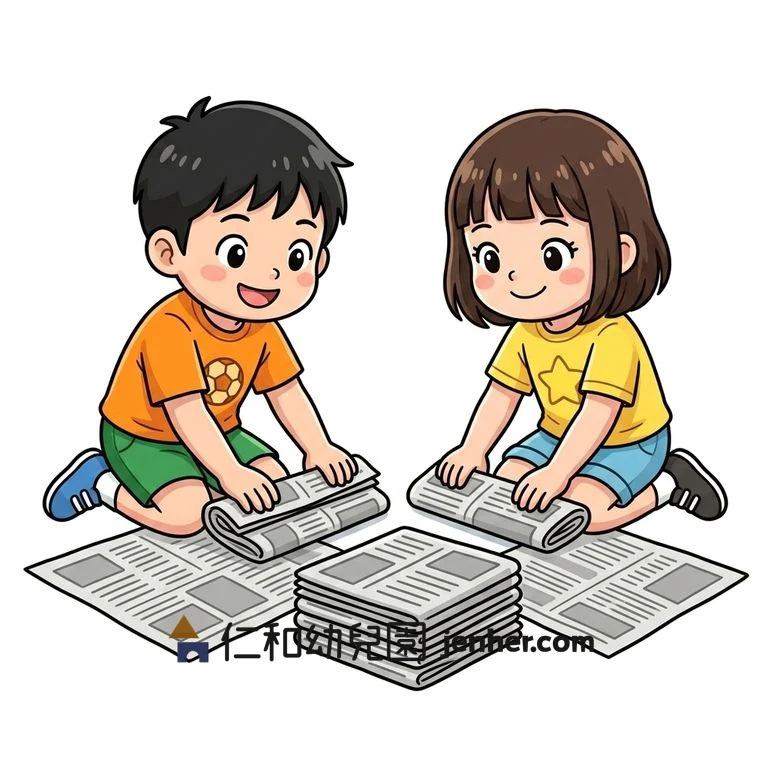
Activity 6-36: Fold-and-Stack Cleanup

Fold-and-Stack Cleanup

Collect scattered newspaper, flatten each sheet, fold it, and place it into a stack or recycling box as a calm end-of-activity routine.

Teacher Notes: Setup, Safety & Variations
Equipment: Newspaper sheets, a recycling box, and a clear sorting area.
Setup: Set collection zones and use walking feet. The teacher models checking the floor for scraps and tape.
Safety: Do not turn cleanup into a race. Remove staples, sharp torn edges, and tape; wash hands after handling printed paper.
Make It Easier: Carry one sheet to the recycling box at a time.
Make It Harder: Sort flat sheets, folded sheets, and scraps into separate bins.
Teacher Cue: "Fold, carry, place—everyone helps the room become ready again."
Activity 6-37: Partner Paper Frame Walk

Partner Paper Frame Walk

The source illustration shows two children wrapped together in newspaper sheets to race. For safety, adapt this by having partners hold the outside edges of separate paper sheets or a large open frame while walking side by side.

Teacher Notes: Setup, Safety & Variations
Equipment: Two clean newspaper sheets per pair and a wide walking lane.
Setup: Pairs walk in parallel lanes with an educator at the turn point.
Safety: Do not wrap or tape the paper around the waist or body. Hold the sheets at the sides, walk only, and release before turning.
Make It Easier: Carry one sheet between two partners by its corners.
Make It Harder: Walk to a marker and return after naming a direction change.
Teacher Cue: "Paper makes a frame, not a wrap—walk together and release to turn."
Activity 6-38: Paper Foot-Marker Steps

Paper Foot-Marker Steps

The source illustration shows children putting their feet through two holes in newspaper as 'foot shackles' to race. For safety, do not bind feet in paper; adapt this by placing flat paper sheets on the floor as visual step markers to step across.

Teacher Notes: Setup, Safety & Variations
Equipment: Large flat newspaper markers or floor spots; no paper loops or restraints.
Setup: Place markers on a dry, nonslip floor with clear space around each one.
Safety: Do not put a child's feet into paper holes or attach paper to the ankles. Step beside or over the sheet, and remove it if it slides.
Make It Easier: Walk between two floor spots.
Make It Harder: Alternate left and right markers on a slow verbal cue.
Teacher Cue: "Feet stay free—step beside, look ahead, and keep the paper flat."
Activity 6-39: Paper Window Crawl

Paper Window Crawl

Cut a large opening in newspaper and hold the sheet as a loose window. The child crawls through at floor level and leaves the paper behind.

Teacher Notes: Setup, Safety & Variations
Equipment: A large sheet with an adult-cut opening and a firm mat; the frame must tear away easily.
Setup: The adult holds the paper at floor level and keeps a broad exit clear. Children approach one at a time.
Safety: Use a generous opening and never force a body part through. No paper is placed over the head, and the adult drops the sheet if it catches or tears.
Make It Easier: Crawl through a soft play tunnel with a wide opening.
Make It Harder: Carry a soft toy through the window and place it in a basket.
Teacher Cue: "Check the window, crawl through slowly, and leave the frame behind."
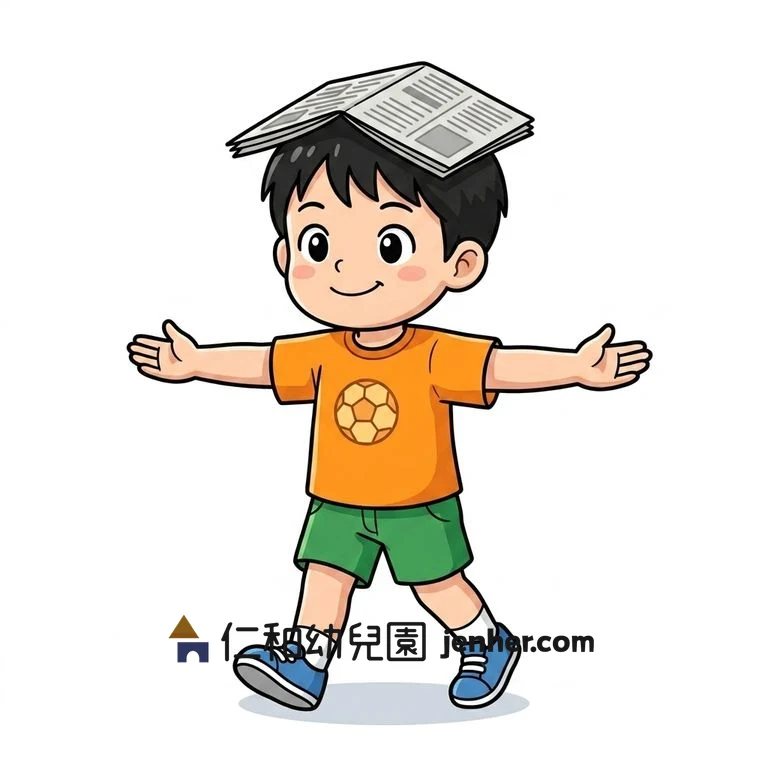
Activity 6-40: Newspaper Head Balance Walk

Newspaper Head Balance Walk

Place a folded newspaper lightly on the head and walk between floor markers, using a hand-held version if the paper blocks vision or falls.

Teacher Notes: Setup, Safety & Variations
Equipment: A clean folded newspaper and floor spots; a soft beanbag is an alternative.
Setup: Use a dry, clear walking path. Children move slowly and remove the paper before leaving the marked area.
Safety: The paper must not cover the eyes, nose, or mouth. Do not tape it to the head; switch to a hand-held prop when balance or vision is affected.
Make It Easier: Balance a soft beanbag on the shoulder or carry the paper in both hands.
Make It Harder: Walk to two markers and pause at each one without changing speed.
Teacher Cue: "Eyes clear, neck easy, walking feet, and paper comes down if it slips."
Activity 6-41: Partner Paper Frame Walk

Partner Paper Frame Walk

The source illustration shows two children putting their heads through paper holes to race. For safety, adapt this by having partners hold the sides of a large paper frame at shoulder height while walking together with faces completely clear.

Teacher Notes: Setup, Safety & Variations
Equipment: One large paper sheet with two adult-prepared openings or a soft fabric frame; the frame must tear away easily.
Setup: Use a short, clear walking lane. The educator stays beside the pair and keeps the opening well away from faces.
Safety: The paper frame is a visual prop, not a wearable restraint. Do not place heads through small openings or ask children to race; drop the frame immediately if it catches.
Make It Easier: Hold the paper frame in front of the partners without putting faces near the openings.
Make It Harder: Walk to one floor marker and stop together before lowering the frame.
Teacher Cue: "Open space, slow steps, faces clear, and let go when the frame catches."
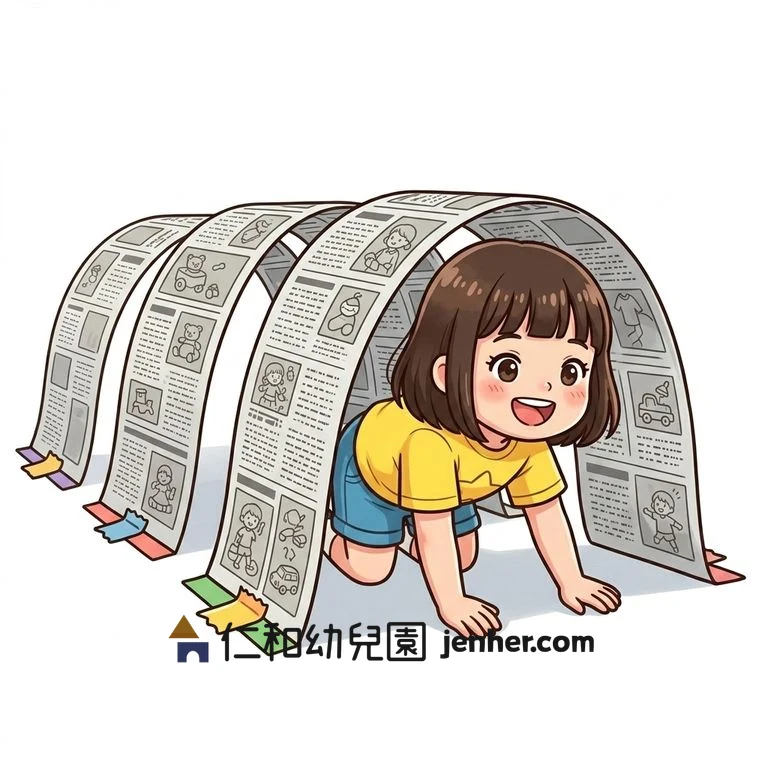
Activity 6-42: Newspaper Tunnel Crawl

Newspaper Tunnel Crawl

An educator holds a wide paper sheet as a low, temporary tunnel while the child crawls underneath and exits into clear space.

Teacher Notes: Setup, Safety & Variations
Equipment: A large sheet of paper and a firm mat; a soft play tunnel is the fallback when paper will not stay open.
Setup: Set one entry and one open exit. The educator holds the paper loosely from the sides and never creates an unstable overhead structure.
Safety: Use a broad opening and floor-level route. Release the paper if it touches the child, tears, or blocks the exit; never tape a paper tunnel around a child.
Make It Easier: Crawl beside the paper tunnel or through a soft play tunnel with a wide opening.
Make It Harder: Carry a soft toy through the tunnel and place it in a basket at the exit.
Teacher Cue: "Crawl low, keep the exit open, and come all the way through."
Activity 6-43: Bunny Paper Jump Path

Bunny Paper Jump Path

Place flat newspaper markers in a short path and invite children to travel between them with bunny steps, choosing a walk or small two-foot jump.

Teacher Notes: Setup, Safety & Variations
Equipment: Flat paper markers or floor spots and a firm, nonslip surface.
Setup: Space markers well apart in one-way lanes. The educator demonstrates stepping before inviting jumps.
Safety: Paper is a visual marker, not a surface for landing. Remove it if it slides, and offer walking or marching whenever jumping is not comfortable.
Make It Easier: March or step from one marker to the next.
Make It Harder: Pause in a balanced squat at every second marker before continuing.
Teacher Cue: "Bunny feet, soft landing, and step when your body says walk."
Activity 6-44: Shared Paper Island

Shared Paper Island

Place large paper islands on the floor and invite children to find space on or beside one, then hold a comfortable shape before moving to the next island.

Teacher Notes: Setup, Safety & Variations
Equipment: Large paper sheets or nonslip floor spots; use one clearly marked space per child rather than crowding one sheet.
Setup: Distribute islands across a dry floor and invite children to move between them only after the educator's cue.
Safety: Do not ask children to crowd onto one sheet or stand on loose paper. Use floor spots beside the paper if it shifts, and avoid a competition about how many children fit.
Make It Easier: Stand beside an island with both feet wide and hands free.
Make It Harder: Choose a different balance shape at each island without traveling quickly.
Teacher Cue: "Find your own island, make space, and hold a shape you can control."
Activity 6-45: Paper Stack Jump Cue

Paper Stack Jump Cue

Use a low stack of loose paper as a visual cue. On a clear count, the child steps or makes a small jump beside it while the educator moves the paper after the child is clear.

Teacher Notes: Setup, Safety & Variations
Equipment: A flat paper stack used as a visual marker and a firm mat or dry floor.
Setup: The child stands beside the stack, not on it. The educator gives the count and moves the paper only after both feet are clear.
Safety: Never pull paper from under a standing child. Use a verbal cue, a step-first option, and a clear landing area; remove the stack if it slides.
Make It Easier: Step away from the marker after the count.
Make It Harder: Change between a step and a small jump on a predictable cue.
Teacher Cue: "Listen, move clear, land softly, then the paper moves."
Activity 6-46: Newspaper Net Catch

Newspaper Net Catch

Two children hold the sides of a newspaper as a low net while an educator rolls or gently drops a soft paper ball onto it for a shared catch.

Teacher Notes: Setup, Safety & Variations
Equipment: One clean newspaper per pair and soft, loosely crumpled paper balls.
Setup: Pairs stand with a wide gap between them. The educator controls the ball and uses a low roll or gentle drop.
Safety: Keep the paper below face level and use soft balls only. Children wait for the educator's cue before retrieval; no fast throws toward people.
Make It Easier: Hold the paper still while the educator places a soft ball on it.
Make It Harder: Take one small step together after the ball settles, then lower the net.
Teacher Cue: "Net low, eyes on the ball, hold steady, and wait for the cue."
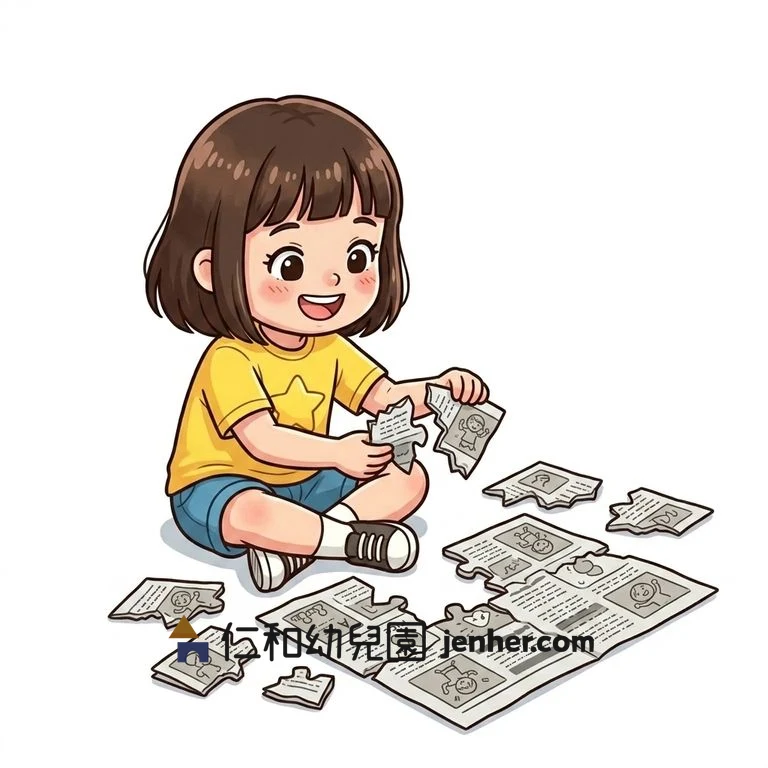
Activity 6-47: Torn-Paper Picture Puzzle

Torn-Paper Picture Puzzle

Tear newspaper into large, visible pieces, arrange them into a picture, and invite children to walk around the picture to name or imitate its shapes.

Teacher Notes: Setup, Safety & Variations
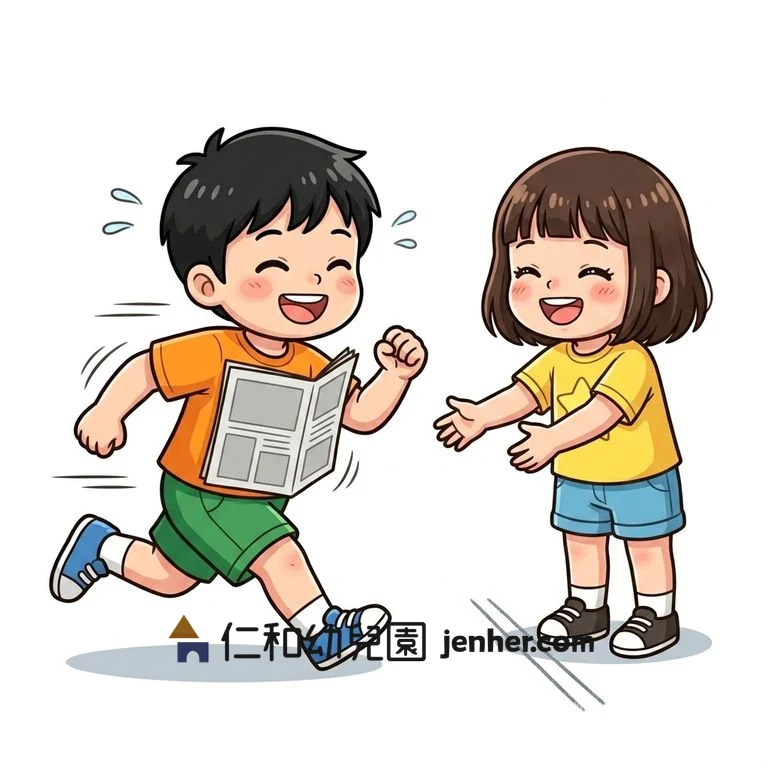
Equipment: Clean newspaper and a large table or mat; a shallow tray for the pieces.
Setup: Work on a stable surface and keep the movement path around the picture open. Wash hands after handling printed paper.
Safety: Use large pieces, not tiny scraps. Keep paper away from mouths and eyes, remove staples, and recycle the pieces when finished.
Make It Easier: Arrange adult-torn large shapes without tearing first.
Make It Harder: Create a picture with a pathway and walk it in a slow pattern.
Teacher Cue: "Big pieces on the mat, eyes on the picture, and walk around the edges."
Activity 6-48: Chest-Paper Team Relay

Chest-Paper Team Relay

Carry a newspaper at chest level to a partner, stop, and pass it by hand before the next child walks the lane.

Teacher Notes: Setup, Safety & Variations
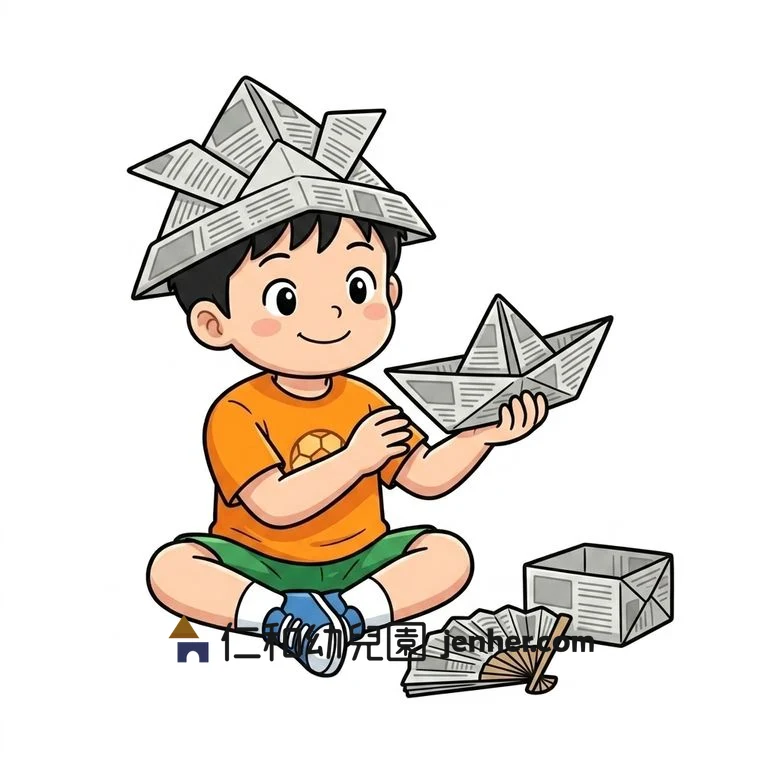
Equipment: One clean newspaper per team and cones for short lanes.
Setup: Create separated walking lanes with a clear handoff point. Children travel one at a time and return outside the lane.
Safety: Use a walk-and-pass format rather than a race. Keep paper away from faces and bodies, and require a hand-to-hand transfer instead of chest contact.
Make It Easier: Pass the newspaper while standing at the handoff point.
Make It Harder: Walk around one marker before making the controlled handoff.
Teacher Cue: "Walk to the line, stop, pass with hands, and make room for the next person."
Activity 6-49: Newspaper Fold-and-Build Studio

Newspaper Fold-and-Build Studio

Fold newspaper into simple open-ended shapes such as a hat, boat, or fan, then invent a movement that matches the shape and share it with the group.

Teacher Notes: Setup, Safety & Variations
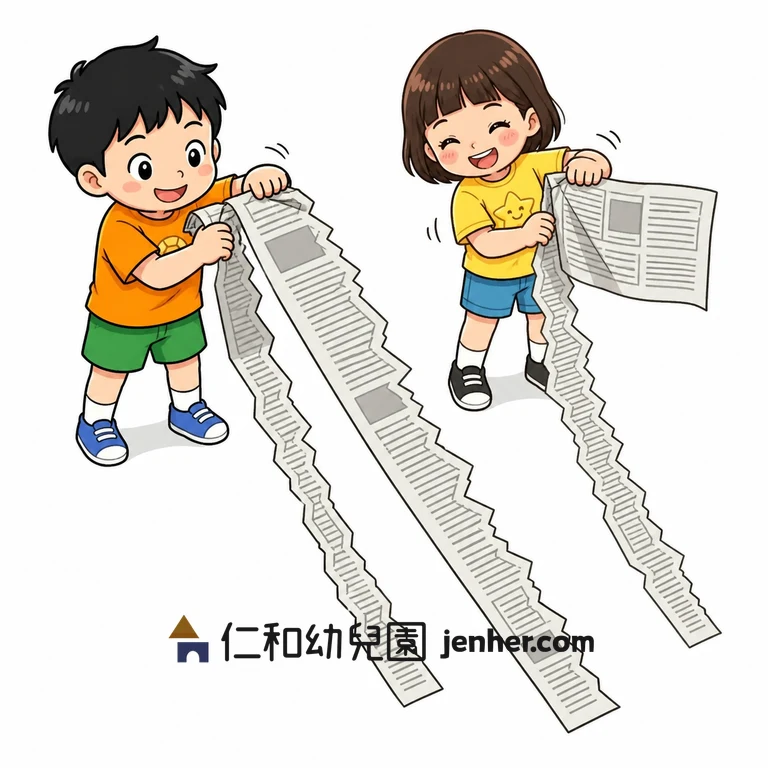
Equipment: Clean newspaper and a large work surface; use only soft, open-ended pretend props.
Setup: Give each child a clear work space, then move to individual floor spots for the movement share.
Safety: Adults handle staples or cutting tools if needed. Keep folded props away from faces and do not turn paper into pretend weapons or pointed objects.
Make It Easier: Use pre-folded shapes and choose a matching action such as sway, march, or reach.
Make It Harder: Link two gentle actions into a short movement story.
Teacher Cue: "Fold, choose a shape, make room, and show one gentle movement."
Activity 6-50: Long Paper Strip Tear

Long Paper Strip Tear

Tear newspaper slowly into one long strip, then walk the strip to a tray and compare its path or shape without pulling it around a child.

Teacher Notes: Setup, Safety & Variations
Equipment: Clean newspaper, a large work surface, and a recycling tray.
Setup: Children tear at a table or mat, then carry pieces with walking feet to the tray. The educator checks every strip.
Safety: Do not turn long paper into a loop, rope, or body prop. Stop when edges become sharp, keep strips away from mouths and eyes, and recycle them afterward.
Make It Easier: Tear short strips along adult-started lines.
Make It Harder: Make a wide zigzag strip and trace its path with a finger before carrying it away.
Teacher Cue: "Two hands tear slowly, keep the strip open, and carry it to the tray."
Activity 6-51: Soft Paper Spear Toss

Soft Paper Spear Toss

Replace a spear-like prop with a loosely rolled, blunt paper tube. From behind a line, the child uses an underhand send toward a large floor target.

Teacher Notes: Setup, Safety & Variations
Equipment: Loosely rolled, blunt paper tubes and large floor targets; no pointed or rigid implements.
Setup: Use one-way lanes with the target at floor level. Children remain behind the line until the educator signals retrieval.
Safety: Use an underhand send only, never aim at a person, and keep the tube below shoulder level. Do not use a pointed paper spear or a distance contest.
Make It Easier: Place or roll the paper tube toward the target.
Make It Harder: Choose one of two broad targets at a walking distance.
Teacher Cue: "Blunt paper, underhand to the floor target, wait, and retrieve together."
Activity 6-52: Paper Flag Dodge

Paper Flag Dodge

An educator holds a flat newspaper as a visual flag. The child walks or side-steps around it, practicing direction changes without contact or charging.

Teacher Notes: Setup, Safety & Variations
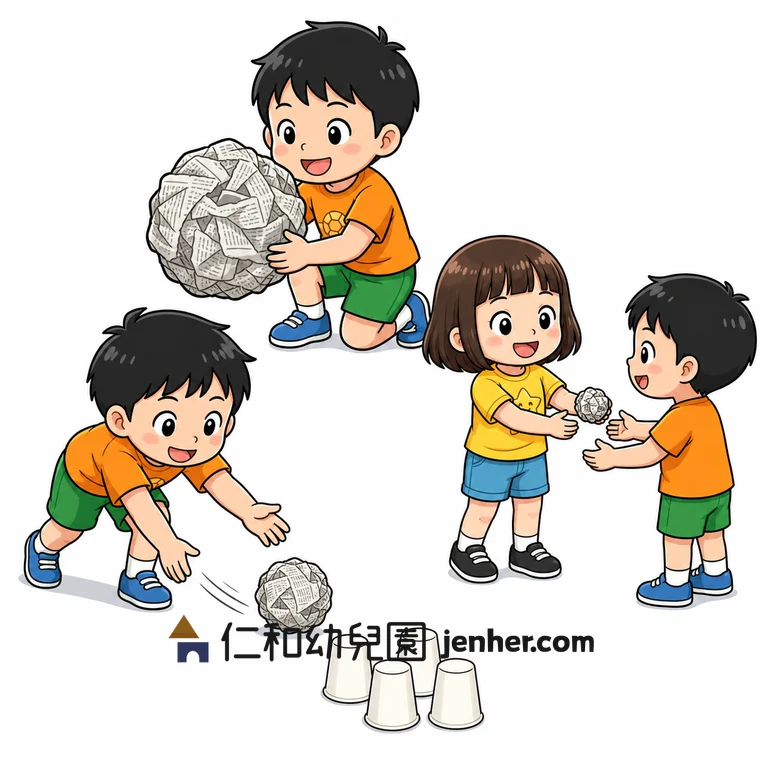
Equipment: One flat newspaper flag and a clear mat or floor area.
Setup: The educator stands at the side and keeps the paper still. Give the child a broad path and a clear stopping point.
Safety: This is a walk-and-dodge activity, not a chase or contact game. Never swing the paper toward a child, and stop when the child signals discomfort.
Make It Easier: Walk around a floor marker while the paper stays on the ground.
Make It Harder: Change direction on a verbal cue while maintaining walking speed.
Teacher Cue: "See the flag, side-step into open space, and stop with control."
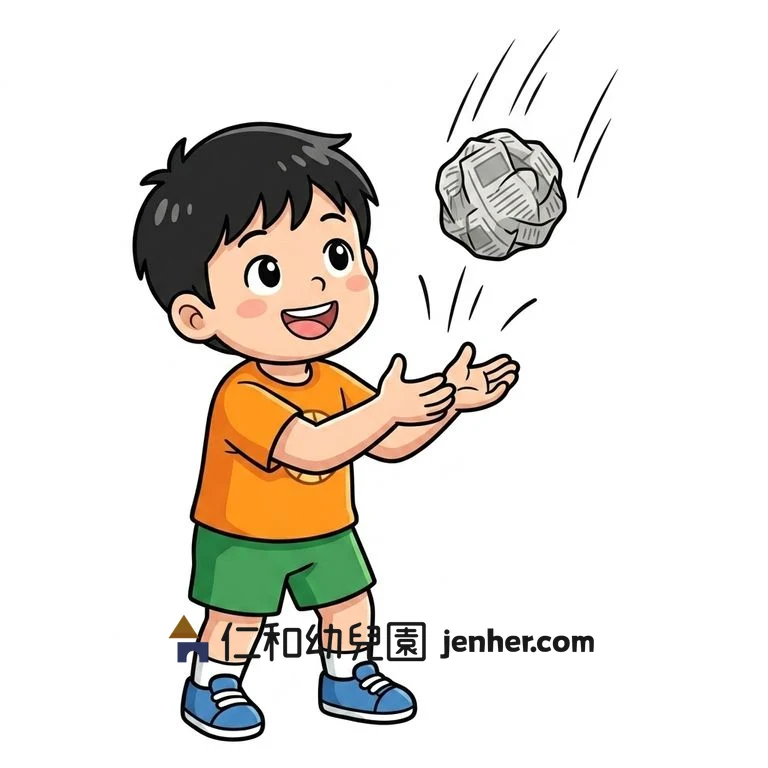
Activity 6-53: Paper Ball Toss-and-Catch

Paper Ball Toss-and-Catch

Crumple a soft newspaper ball, toss it a short distance upward, and catch it with two hands or let it land in a nearby basket.

Teacher Notes: Setup, Safety & Variations
Equipment: Soft, loosely crumpled paper balls and optional large open baskets.
Setup: Use individual floor spots with generous spacing. Children collect only after the educator's cue.
Safety: Keep paper balls away from faces and mouths. Use gentle tosses, no throwing at people, and replace balls that become hard or sharp.
Make It Easier: Drop the ball from chest height and catch it after one bounce.
Make It Harder: Toss, clap once, and catch only when the child can keep the toss low and controlled.
Teacher Cue: "Soft ball, small toss, eyes up, and hands ready."
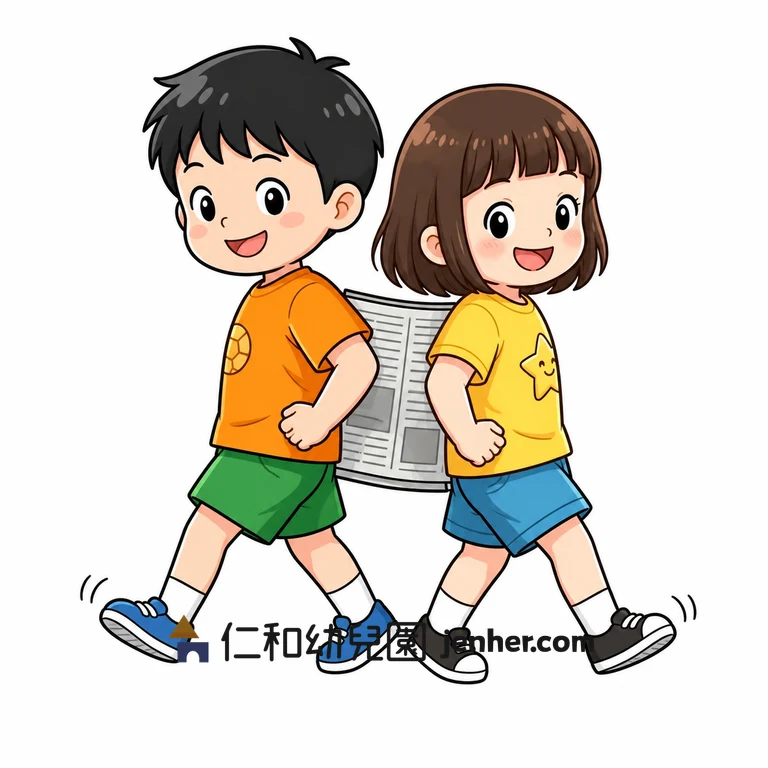
Activity 6-54: Back-to-Back Paper Press Walk

Back-to-Back Paper Press Walk

Place one newspaper sheet between two partners' upper backs and invite them to take a few slow steps while keeping contact light and optional.

Teacher Notes: Setup, Safety & Variations
Equipment: One clean newspaper per pair and a short, clear route.
Setup: Pairs stand back-to-back with an educator nearby. Use a short straight route and make release easy.
Safety: The paper is held lightly between the upper backs; do not push, lean hard, lock bodies together, or use it as a restraint. Either partner may release at any time.
Make It Easier: Hold the paper between one hand from each partner while walking side by side.
Make It Harder: Take three coordinated steps, pause, and lower the paper together.
Teacher Cue: "Light contact, tiny steps, talk to your partner, and release whenever you need."
Activity 6-55: Turtle-and-Bunny Path

Turtle-and-Bunny Path

Offer two clearly separated lanes: a slow turtle crawl and a small bunny step or jump. Children choose a lane and travel to the same finish marker.

Teacher Notes: Setup, Safety & Variations
Equipment: Floor markers or cones for a crawl lane and a step/jump lane; paper props are optional visual markers.
Setup: Keep the lanes parallel but separate, with one-way travel and a clear exit. The educator invites children to switch only at the end.
Safety: Do not turn the animals into a chase or race. Use step or walk options, keep the crawl lane clear, and avoid contact between lanes.
Make It Easier: Walk the turtle lane or march the bunny lane.
Make It Harder: Change from turtle to bunny at a marked rest point, then finish slowly.
Teacher Cue: "Choose your lane, keep your own space, and move at a body-ready pace."
Activity 6-56: Paper-Rod Shoulder Walk

Paper-Rod Shoulder Walk

The source illustration shows children clamping a rolled paper rod between their heads while running. For safety, replace this with a loosely rolled paper tube held in the hands or balanced lightly across the shoulders while partners walk together.

Teacher Notes: Setup, Safety & Variations
Equipment: One loosely rolled, blunt paper tube per pair; a hand-held version is always available.
Setup: Use a short walking lane with an educator beside the pair. Keep the tube below face level and away from other children.
Safety: Do not clamp paper between heads, press against the neck, or run while carrying it. Partners release the tube before turning or whenever alignment changes.
Make It Easier: Each child holds one end in a hand while walking side by side.
Make It Harder: Take four slow steps, pause, and lower the tube together.
Teacher Cue: "Shoulders or hands, not heads—walk slowly and release to turn."
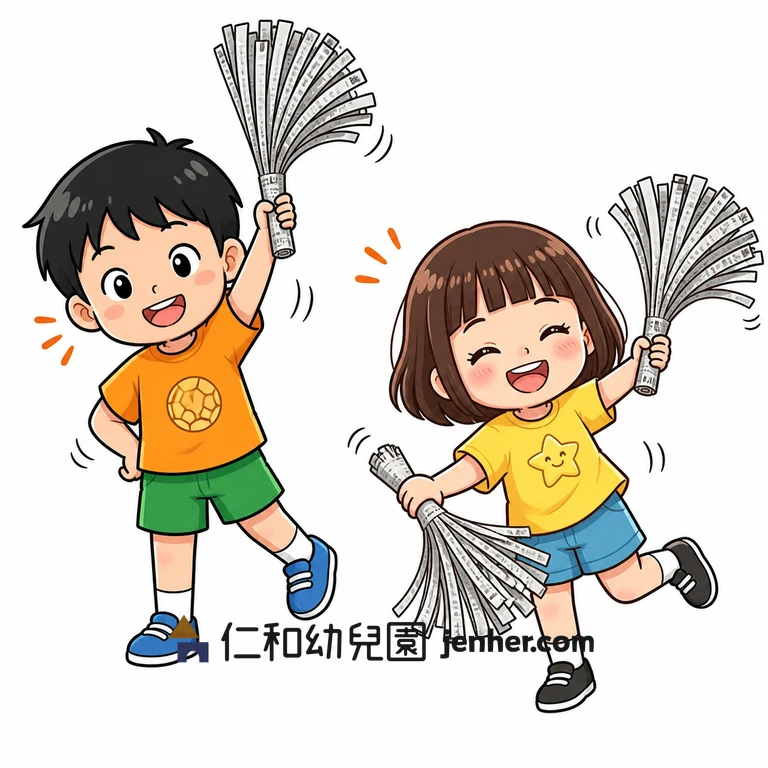
Activity 6-57: Paper Streamer Shaker

Paper Streamer Shaker

An adult prepares broad paper streamers with a short handhold. Children shake, reach, and step to a rhythm while keeping the streamers in personal space.

Teacher Notes: Setup, Safety & Variations
Equipment: Large paper streamers with adult-secured short handles; no tiny confetti or loose small pieces.
Setup: Give each child a floor spot and use a circle or distributed formation. Check handles before movement begins.
Safety: Keep streamers away from faces and mouths. Do not use loops or ties, avoid rapid swings near neighbors, and discard torn pieces.
Make It Easier: Wave one broad streamer while seated or standing in place.
Make It Harder: Change between low, middle, and high reaches on a verbal cue while staying on the spot.
Teacher Cue: "Streamers stay in your space—shake, reach, and keep your face clear."
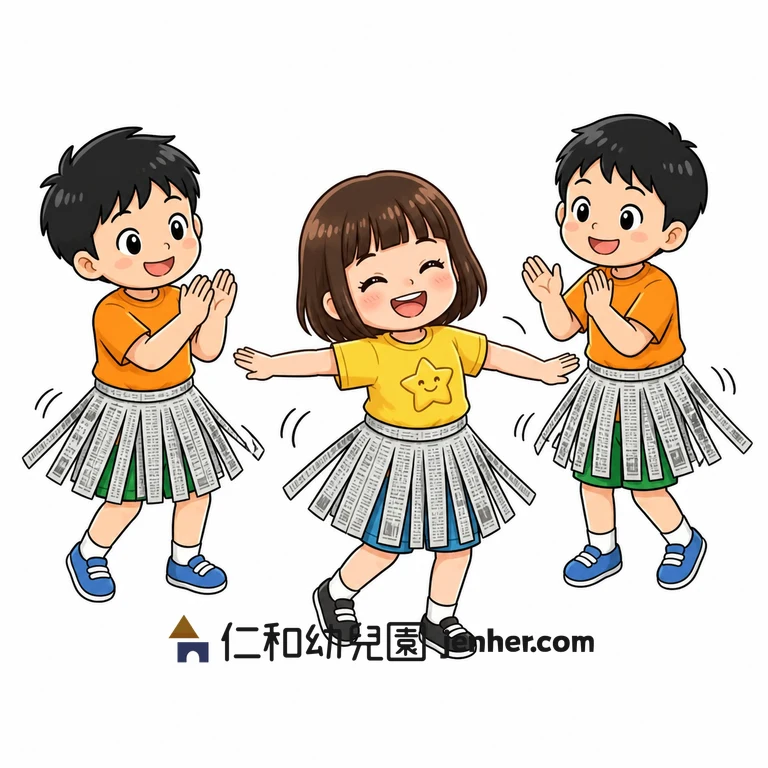
Activity 6-58: Newspaper Fringe Dance

Newspaper Fringe Dance

Use broad paper fringe held at the waist or tucked loosely into a waistband, then invite gentle side steps and hip movements to a rhythm.

Teacher Notes: Setup, Safety & Variations
Equipment: Broad paper fringe prepared by an adult; a hand-held fringe is the default alternative.
Setup: Children move on individual floor spots with a clear exit. The educator checks that each prop can be dropped immediately.
Safety: Use a loose, breakaway prop only: never tie, tighten, or loop paper on the body. Keep fringe away from the face and switch to a hand-held version if it catches.
Make It Easier: Hold the fringe in both hands and sway or step in place.
Make It Harder: Add a four-count side-step pattern and pause when the music stops.
Teacher Cue: "Loose fringe, gentle steps, face clear, and drop it if it catches."
Chapter 23 — Illustrated Activity Cards

13 Creative Newspaper Games: Pretend Play, Targets, and Cooperation

Chapter 23 adds pretend-shape trails, paper circuits, soft striking and putting, and open-container cooperation. Use the floor-level alternatives whenever a source prop would be too restrictive or difficult to supervise.
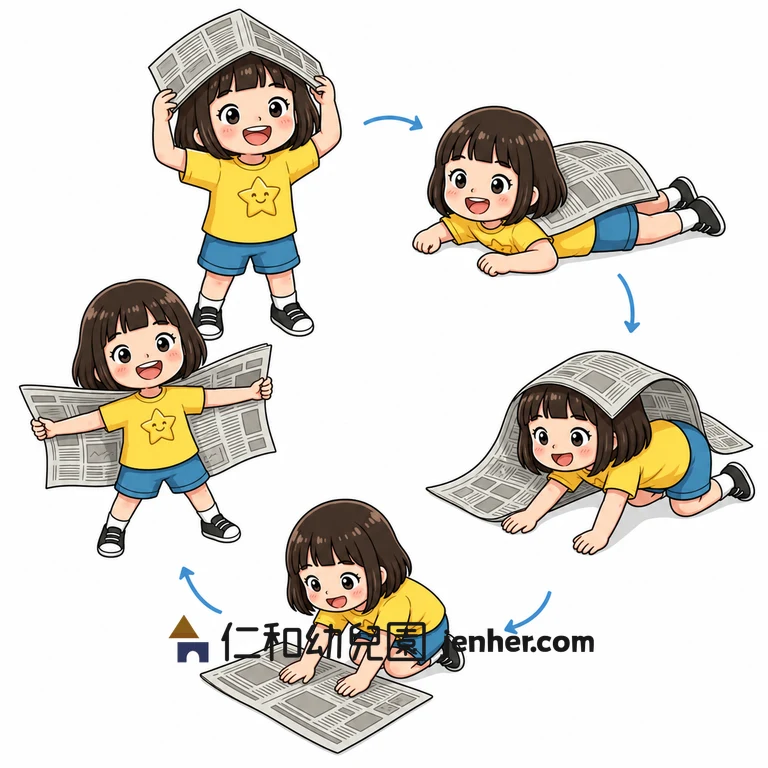
Activity 23-1: Newspaper Pretend-Shape Trail

Newspaper Pretend-Shape Trail

Use newspaper to make a simple open-ended prop such as a hat, fan, or flat shape, then choose a matching movement and travel through a clear pathway.

Teacher Notes: Setup, Safety & Variations
Equipment: Clean newspaper and floor markers; use only broad, open-ended shapes.
Setup: Children begin on separate spots and travel one at a time through a short pathway.
Safety: Keep props away from faces and do not use pointed or weapon-like shapes. Walk first and place the paper down before changing direction.
Make It Easier: Imitate one movement in place while holding the paper at the side.
Make It Harder: Link two pretend shapes to two different movements on a cue.
Teacher Cue: "Choose a shape, keep your face clear, and travel with walking feet."
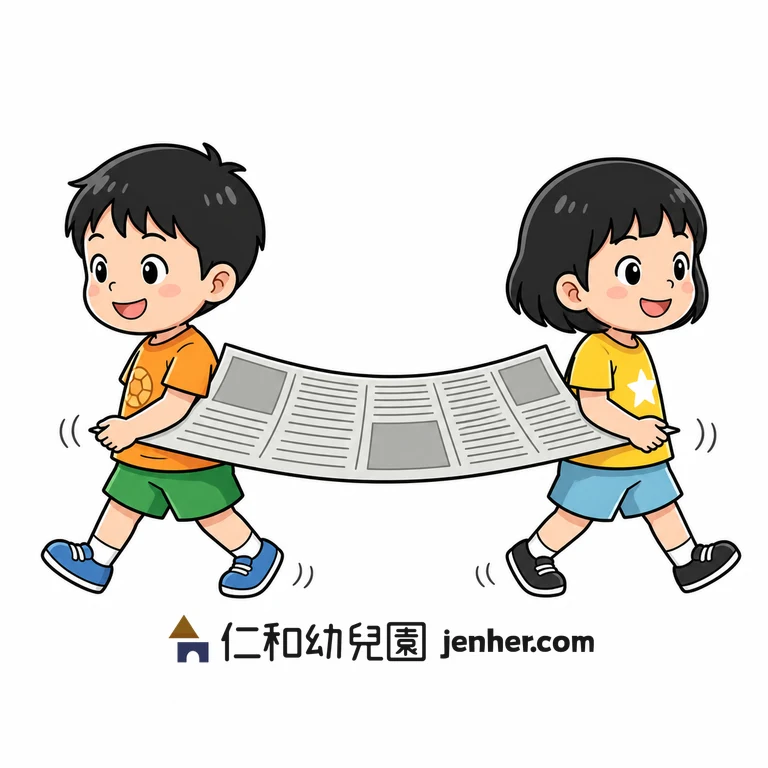
Activity 23-2: Partner Paper Pace Walk

Partner Paper Pace Walk

Two partners hold opposite sides of a newspaper and walk forward together, matching pace and releasing the sheet before turning.

Teacher Notes: Setup, Safety & Variations
Equipment: One clean newspaper per pair and cones for short walking lanes.
Setup: Use parallel lanes with clear return paths. Start and stop each pair with a verbal cue.
Safety: Use walking speed, light hands, and a clear handoff or release before turning. Keep paper below face level and do not pull a partner.
Make It Easier: Take three steps and stop together.
Make It Harder: Walk around one wide marker and return without crossing another lane.
Teacher Cue: "Same pace, light hands, eyes forward, and stop together."
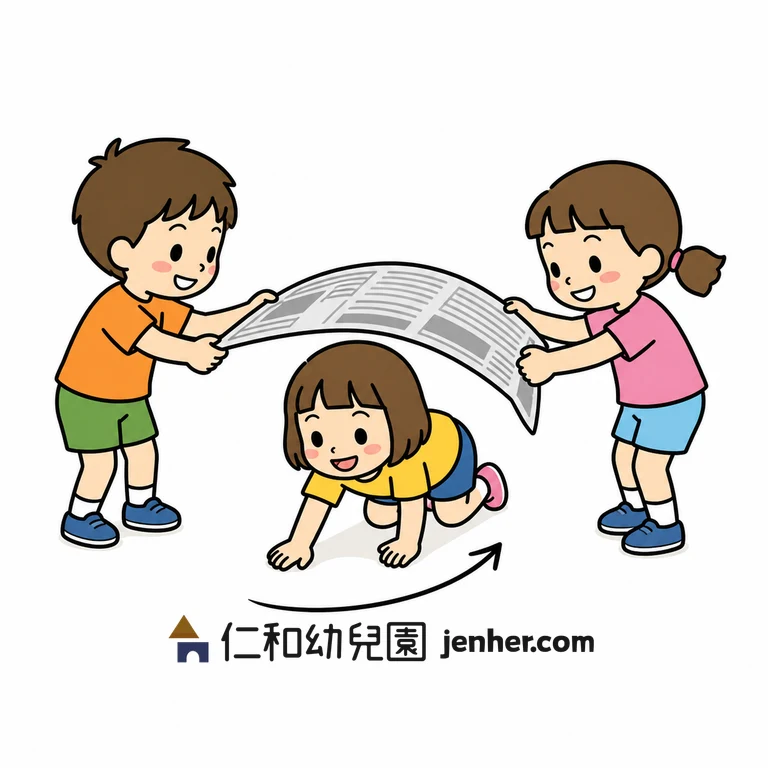
Activity 23-3: Two-Person Paper Arch

Two-Person Paper Arch

Two children hold a large paper sheet as a light arch while a partner walks or crouches underneath and exits into open space.

Teacher Notes: Setup, Safety & Variations
Equipment: A large paper sheet or soft fabric arch; the prop must be easy to release.
Setup: Set a one-way entry and exit. Holders stand at the sides, and one traveler moves through at a time.
Safety: Keep the arch light and never lower it onto a child. Replace paper with a soft play tunnel if holders cannot keep it steady.
Make It Easier: Walk beside the arch or pass under an educator-held fabric tunnel.
Make It Harder: Use a controlled bear crawl while keeping the exit open.
Teacher Cue: "Holders stay still, one traveler at a time, and the exit stays open."
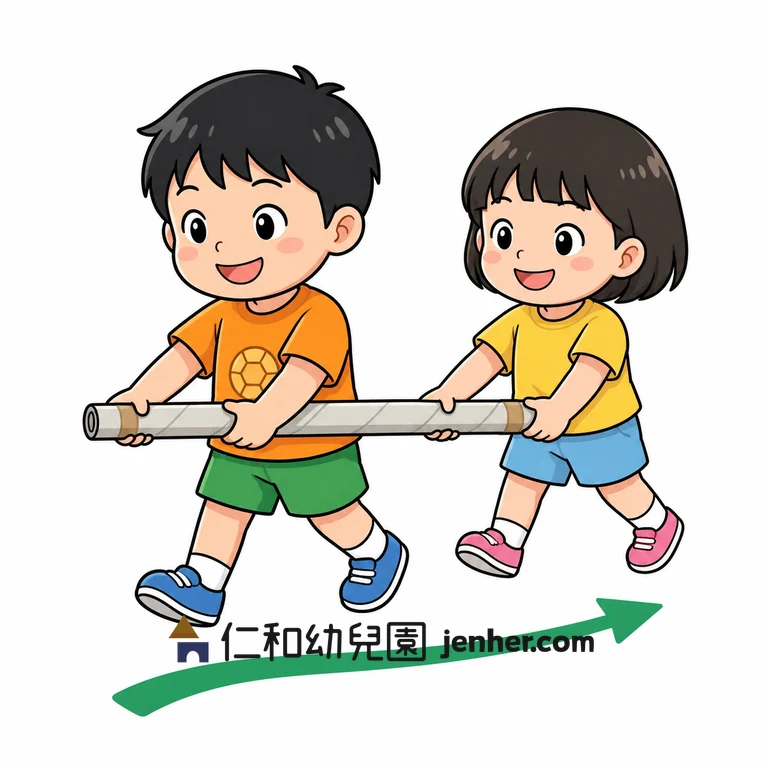
Activity 23-4: Paper Train Walk

Paper Train Walk

Hold a loosely rolled paper tube like a train prop and walk in a line, keeping generous space and placing the tube down before turning.

Teacher Notes: Setup, Safety & Variations
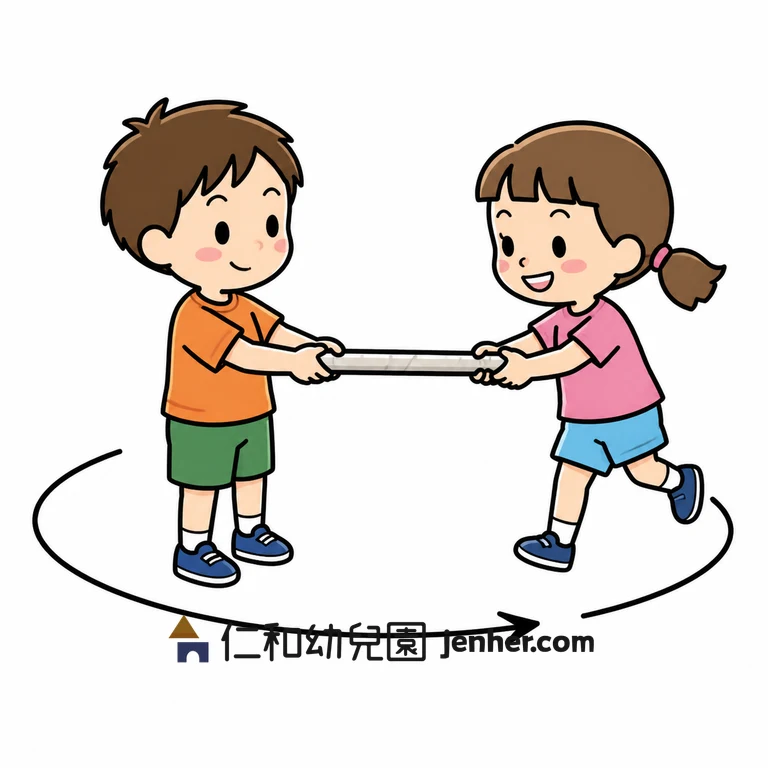
Equipment: One blunt, loosely rolled paper tube per child or a shared educator-held train prop.
Setup: Use a wide one-way route with a clear stop point. Children travel behind floor markers rather than touching one another.
Safety: Keep the tube below shoulder level and away from faces. No swinging, pushing, or close following; place props down before any turn.
Make It Easier: March in place while holding the paper tube low.
Make It Harder: Stop at two stations and change from march to slow walk on a cue.
Teacher Cue: "Train space, tube low, walking feet, and stop at the station."
Activity 23-5: Paper-Bar Circle Steps

Paper-Bar Circle Steps

Two partners hold a light paper tube and side-step around a wide floor marker, practicing shared direction without spinning or using fixed equipment.

Teacher Notes: Setup, Safety & Variations
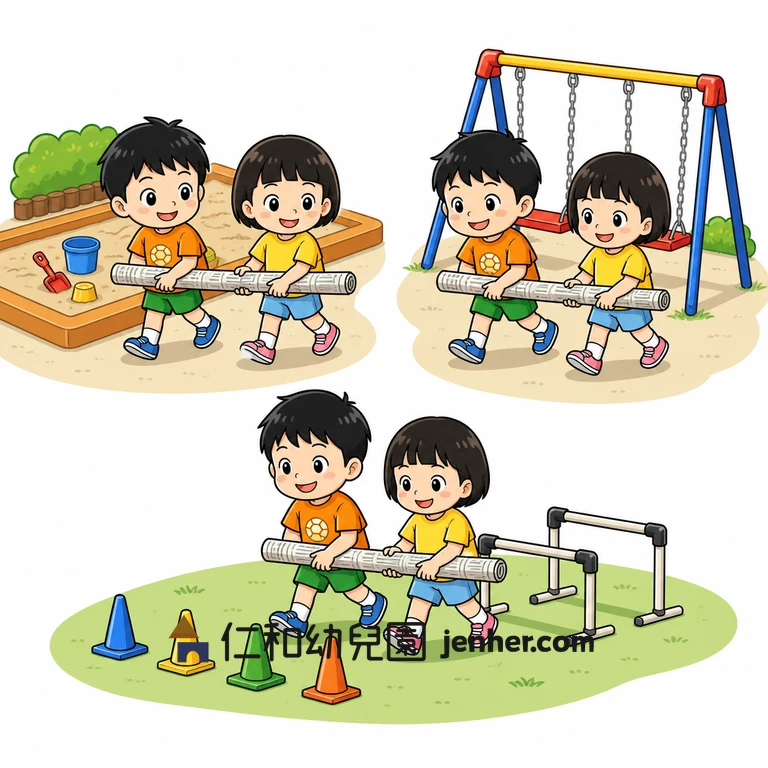
Equipment: A loosely rolled paper tube and a floor marker; no fixed bar is required.
Setup: Give each pair a separate wide circle and start with slow walking before side steps.
Safety: Keep the tube below shoulder level. Do not pull a partner around a pivot, spin quickly, or swing the paper near faces.
Make It Easier: Walk a short arc with the tube, then stop.
Make It Harder: Reverse direction on a clear cue while keeping the same slow pace.
Teacher Cue: "Wide circle, side-step together, tube low, and no spinning."
Activity 23-6: Paper Prop Circuit Walk

Paper Prop Circuit Walk

Carry one light paper prop through a marked circuit with walking stations, then return it to a collection point before the next turn.

Teacher Notes: Setup, Safety & Variations
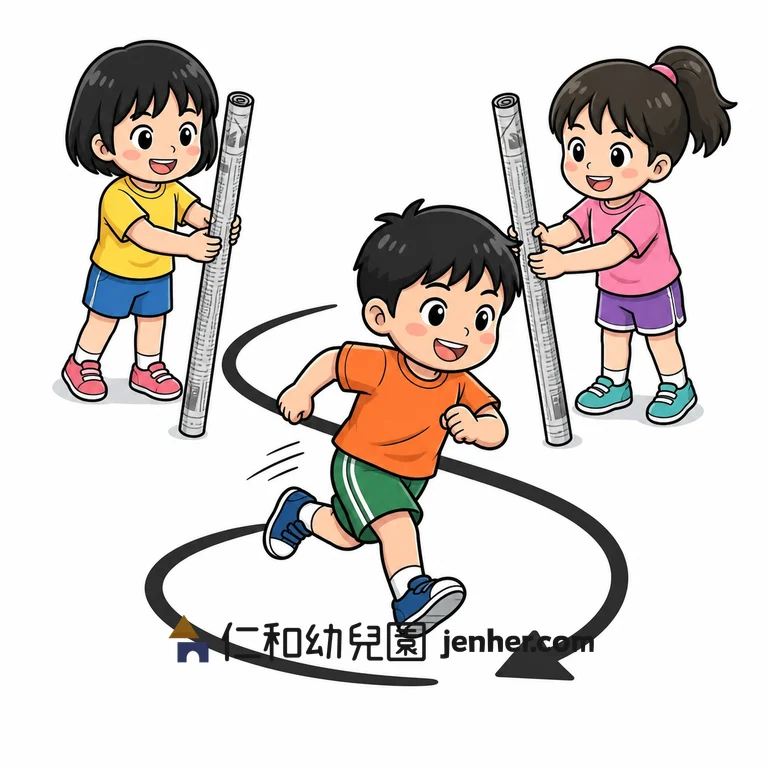
Equipment: Light paper props, cones, and floor markers for a designated circuit; no loose prop near active playground equipment.
Setup: Set the circuit away from swings, slides, and other active equipment. Use a clear start, stop, and return point.
Safety: Walk and carry one prop at a time. Keep the route separated from installed equipment, never carry paper through an active play zone, and stop if the pathway is crowded.
Make It Easier: Walk between two markers and return directly.
Make It Harder: Pause at three stations to perform a simple action before continuing.
Teacher Cue: "Follow the marked route, carry lightly, and keep away from active equipment."
Activity 23-7: Paper-Pole Slalom

Paper-Pole Slalom

Place cones in a wide slalom and invite children to walk around them while carrying a blunt, loosely rolled paper tube below shoulder level.

Teacher Notes: Setup, Safety & Variations
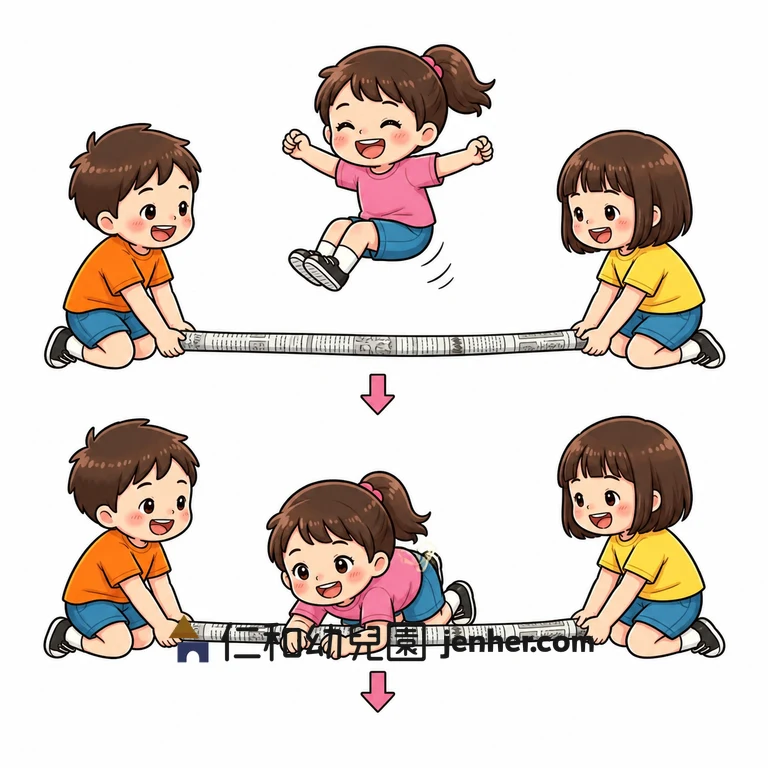
Equipment: Soft cones or floor markers and a blunt paper tube; no rigid poles.
Setup: Use a wide lane with a clear exit and generous space between markers. Start with walking.
Safety: Keep the paper tube low and pointed toward the floor, never toward a person. No running or contact; set the tube down before leaving the lane.
Make It Easier: Walk in a straight line between two markers without a prop.
Make It Harder: Walk a wider S-path and stop at the final cone before returning.
Teacher Cue: "Tube low, wide turns, eyes on the path, and walking feet."
Activity 23-8: High-and-Low Paper Bar Path

High-and-Low Paper Bar Path

An educator holds a soft paper tube or sheet at a low, adjustable level. Children choose to step over it or crawl under it one at a time.

Teacher Notes: Setup, Safety & Variations
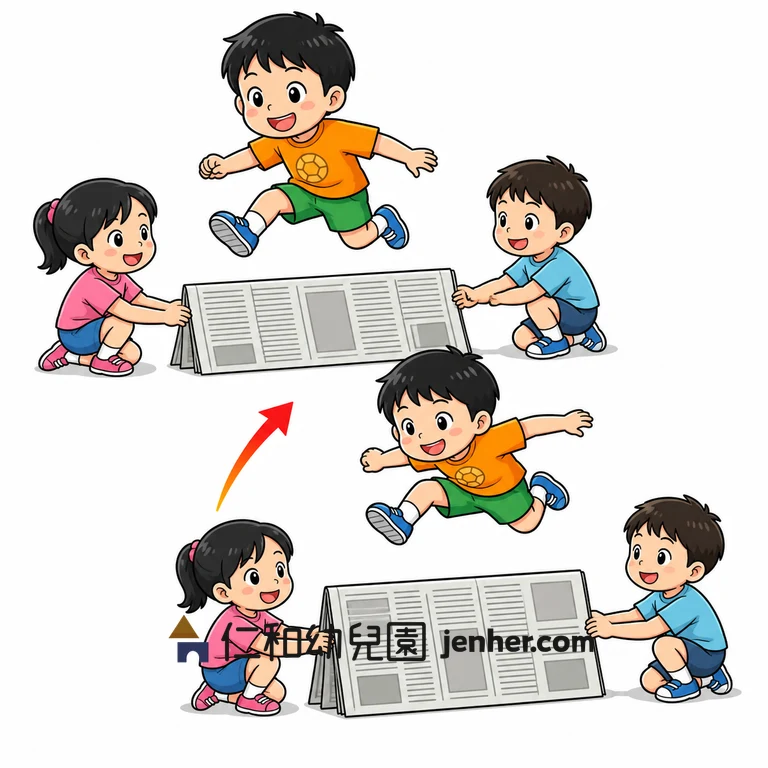
Equipment: A soft paper tube or sheet and a firm mat; a foam obstacle is an alternative.
Setup: The educator holds the prop at floor level and keeps a broad entry and exit. Children choose the step-over or crawl-under route.
Safety: The prop is never rigid or fixed. Release it immediately if touched, and do not ask children to jump high or crawl under an unstable obstacle.
Make It Easier: Step over a flat paper line or crawl through a soft play tunnel.
Make It Harder: Choose high or low at two separate stations while maintaining a slow pace.
Teacher Cue: "Choose high or low, move slowly, and keep the exit open."
Activity 23-9: Adjustable Paper Hurdle

Adjustable Paper Hurdle

Use a flat or softly folded paper marker as a low visual hurdle. The educator adjusts the challenge through spacing and offers a step-over before any jump.

Teacher Notes: Setup, Safety & Variations
Equipment: Flat paper markers or soft foam strips and a firm mat; no universal height or rigid hurdle.
Setup: Use one-way lanes and a clear landing area. Increase spacing only when the child shows control and interest.
Safety: Do not turn paper into a fixed high obstacle or promise a universal jump height. Step over when needed and remove the marker if it slides.
Make It Easier: Walk over a flat line on the floor.
Make It Harder: Choose between two low markers and pause after landing at each one.
Teacher Cue: "Step first, land softly, and choose the challenge your body can control."
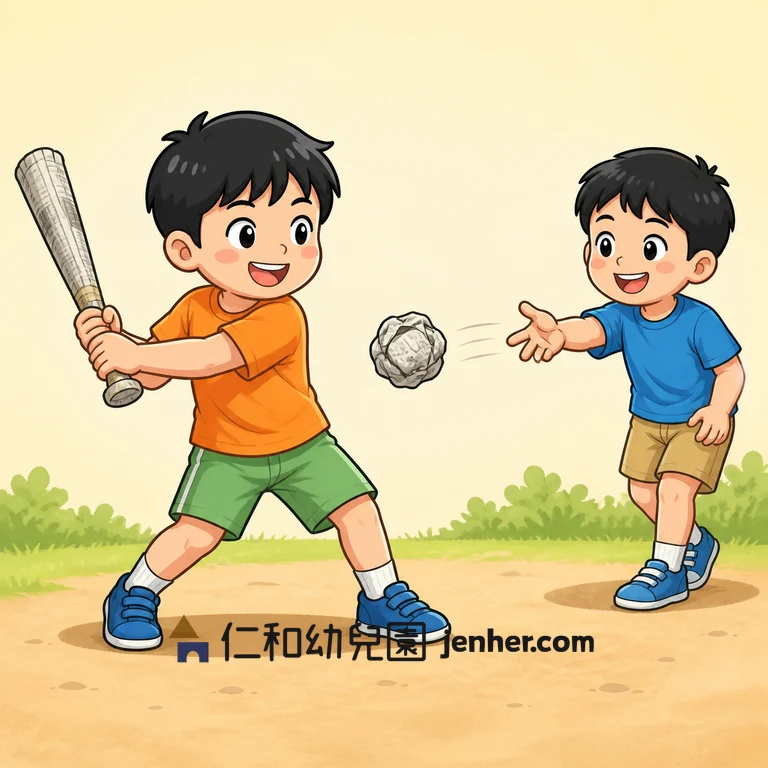
Activity 23-10: Paper Bat Tee Tap

Paper Bat Tee Tap

Place a soft ball on a low floor tee or stable spot and invite a gentle tap with a loosely rolled paper bat toward an open target.

Teacher Notes: Setup, Safety & Variations
Equipment: A loosely rolled paper bat, a soft ball, a low stable tee or floor spot, and a wide lane.
Setup: The educator controls the ball and stands to the side. Waiting children stay behind a line outside the swing path.
Safety: Use a gentle tap, not a full swing. Keep the bat below shoulder level when carrying it and retrieve only after the educator signals.
Make It Easier: Push the ball from the tee with an open hand.
Make It Harder: Tap toward one of two broad floor targets without pitching the ball toward anyone.
Teacher Cue: "Eyes on the ball, small tap, bat stays low, and wait to retrieve."
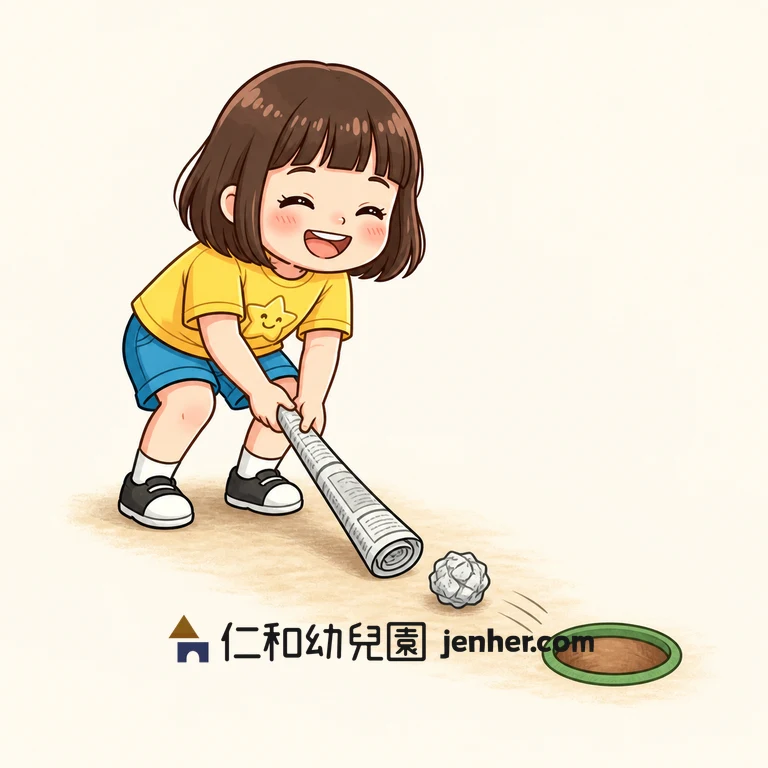
Activity 23-11: Newspaper Putter

Newspaper Putter

Roll a paper ball toward an open cardboard target with a loosely rolled newspaper club, using a gentle push along the floor.

Teacher Notes: Setup, Safety & Variations
Equipment: A loosely rolled paper club, soft paper balls, a cardboard target, and a marked start line.
Setup: Use a flat, dry putting lane. Children wait behind the line until the ball stops and the educator signals retrieval.
Safety: The club stays below waist level and is used to push, not swing. Use soft targets and balls; never put a target in front of a person.
Make It Easier: Roll the ball by hand toward a large floor spot.
Make It Harder: Choose a near or far target while keeping the push slow and controlled.
Teacher Cue: "Club low, ball slow, and push toward the open target."
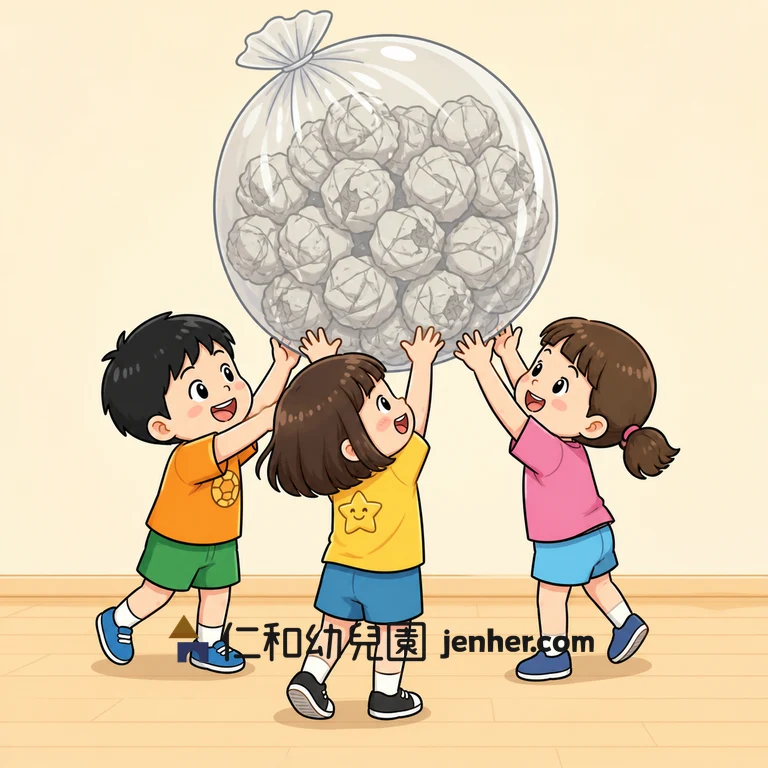
Activity 23-12: Fabric Ball-Bag Lift

Fabric Ball-Bag Lift

The source shows a large plastic bag filled with paper balls pushed into the air. For early childhood safety, replace plastic bag enclosures with a lightweight open cloth bag or basket holding soft paper balls.

Teacher Notes: Setup, Safety & Variations
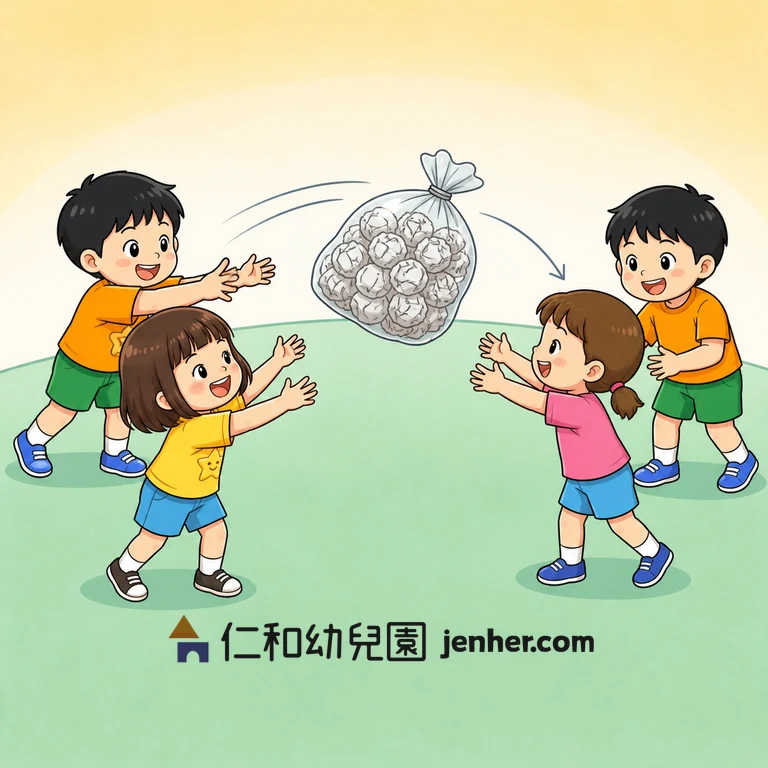
Equipment: A lightweight open cloth bag or basket and soft paper balls; never use an enclosing plastic bag.
Setup: Use a short lift from floor to low waist level with an educator directing the start and stop. Keep fingers clear of pinch points.
Safety: The replacement is an open, breathable cloth bag or basket, not a plastic bag enclosure. Use only a light load, keep the bag open, and set it down if anyone loses control.
Make It Easier: Place paper balls into the basket one at a time without lifting it.
Make It Harder: Lift together to a low marker, pause, and lower on the educator's count.
Teacher Cue: "Open basket, light load, lift together, and lower slowly."
Activity 23-13: Group Fabric-Ball Pass

Group Fabric-Ball Pass

The source shows a large plastic bag ball passed around a circle. For safety, replace plastic bag enclosures with an open cloth basket or soft fabric ball passed from hand to hand.

Teacher Notes: Setup, Safety & Variations
Equipment: A lightweight open cloth bag or basket and a small number of soft paper balls.
Setup: Use a wide circle with space between children. The educator sets the direction and asks the group to pause before changing direction.
Safety: Use an open cloth bag or basket instead of a plastic bag. Pass by hand, keep the load light, and place the basket down if it tips or a child is uncomfortable.
Make It Easier: Pass one soft paper ball hand to hand without a container.
Make It Harder: Change direction on a clear cue while keeping the basket low and controlled.
Teacher Cue: "Hands pass, basket stays open, slow circle, and pause on the cue."
Frequently Asked Questions

Newspaper Play in Preschool — Teacher FAQ

Practical guidance on paper handling, classroom organization, prop boundaries, and inclusive gross motor play.

What newspaper activities work well in a preschool classroom?
Start with flat-paper pathways, paper-ball rolling or tossing, gentle carrying, creative folding, and walking or crawling prompts. The collection includes both quiet table or mat work and active lanes, so the educator can match the activity to the room, weather, and children's current control.
How do I make paper play manageable for a large group?
Use short one-way lanes, individual floor spots, and a visible collection bin. Run a few stations at once, keep retrieval behind an educator cue, and use walking rather than racing whenever paper or bodies could drift into another lane.
What should I do with torn newspaper and printed paper?
Use clean paper, remove staples and sharp torn edges, keep pieces large enough to supervise, and wash hands after handling printed paper. Collect scraps in a tray and recycle them as part of the closing routine.
Can children wear newspaper props?
Only as a loose, adult-prepared, immediately breakaway prop with the face and breathing space clear. The cards replace head clamps, tight body wraps, closed bags, and paper loops with hand-held or floor-level alternatives. Children may always choose not to wear a prop.
How are Chapters 6 and 23 organized on this page?
Chapter 6 contains 58 activities and Chapter 23 contains 13. They share one English route because live US search intent and the material overlap are stronger for a single newspaper-play resource; the chapter headings and activity IDs remain separate for source traceability.
ADVERTISEMENT