ECE Teacher Reflection & Observation · Chapter 19

Preschool Gross Motor Observation Guide: 6 Natural Movement Prompts for Classroom Planning

An informal, play-based observation guide adapted from Chapter 19 of the Jenher collection. Provides early childhood educators with practical prompts to notice jumping, balance walking, ball tracking, bar hanging, batting, and foot dexterity during familiar classroom routines.

ADVERTISEMENT
Educator Observation Notice: This guide is an informal classroom observation and reflection resource adapted from the historical Jenher physical education archive. It is not a standardized assessment, developmental screening instrument, diagnostic tool, or pass/fail test. Use these prompts to notice and document what children do during familiar movement experiences and to inform supportive classroom play.

Principles for Play-Based Movement Observation

Key practices for observing gross motor engagement constructively in early childhood settings:

Observe in Familiar Play

Notice children during natural gym or outdoor play rather than creating an artificial, stressful testing environment.

Look for Individual Growth

Compare a child's movement primarily with their own past attempts across repeated opportunities, not against peers.

Document Supportive Strategies

Record the adaptations, adult cues, or equipment variations that help each child participate comfortably.

Inform Classroom Planning

Use observations to design playful movement stations, obstacle courses, and small-group games tailored to class interests.

Chapter 19

Gross Motor Observation Prompts (6 Items)

Click any card to view setup, step guidance, safety notes, archival scoring context, and reflective teacher prompts.
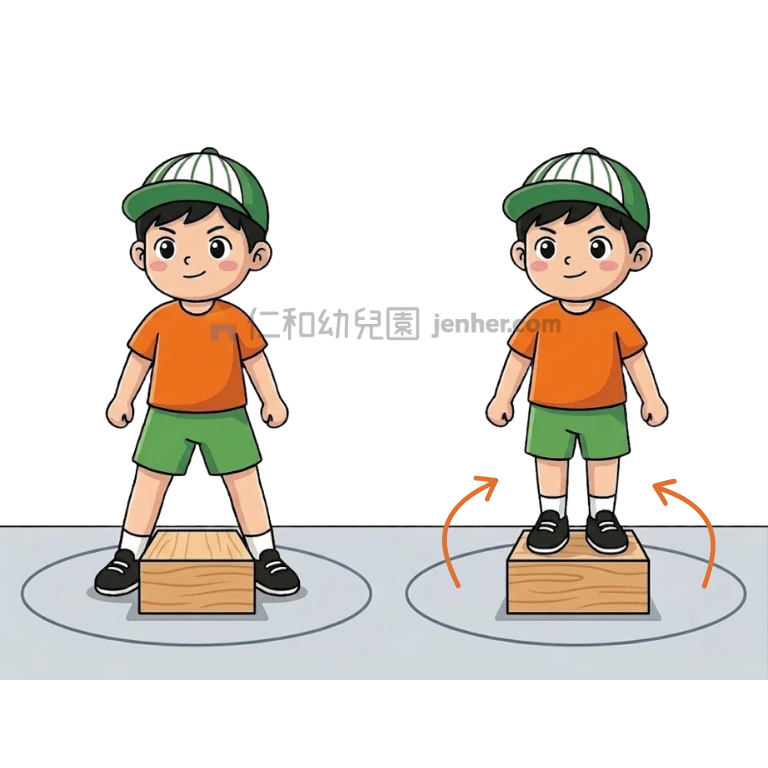
Observation 19-1: Two-Foot Rebound Jumping on Low Step

Two-Foot Rebound Jumping on Low Step

Observe how a child jumps down from a low, stable step or board with both feet landing together softly, and returns with a smooth two-foot jump.

Teacher Notes: Setup, Safety & Variations
Aim: Observe lower-body power, two-foot coordination, and landing softness during continuous jumping play.
Equipment: A stable low aerobic step, sturdy wooden block, or low mat boundary.
Setup: Flat, nonslip surface with clear landing clearance all around.
Steps: Invite the child to step or jump onto the low platform, jump down with both feet landing simultaneously, and repeat a few times at their own comfortable rhythm.
Safety: Ensure the platform is stable and cannot slide or tip. Keep knees comfortably bent on landing and allow stepping down whenever preferred.
Make It Easier: Step down with one foot first before bringing the second foot down.
Make It Harder: Invite the child to pause in a balanced freeze after each jump landing.
Teacher Cue: "Bend knees, jump together, and land like soft kitten paws."
Archive Context The historical source uses a 6-repetition target and a 10/6/3 numeric scoring scale. In this ECE adaptation, treat that as archival context; observe individual landing control and knee cushioning over repeated play opportunities rather than assigning points.
Observation Prompts Does the child initiate the jump with two feet? Do knees bend smoothly upon landing? Does the child maintain balance without reaching for support?
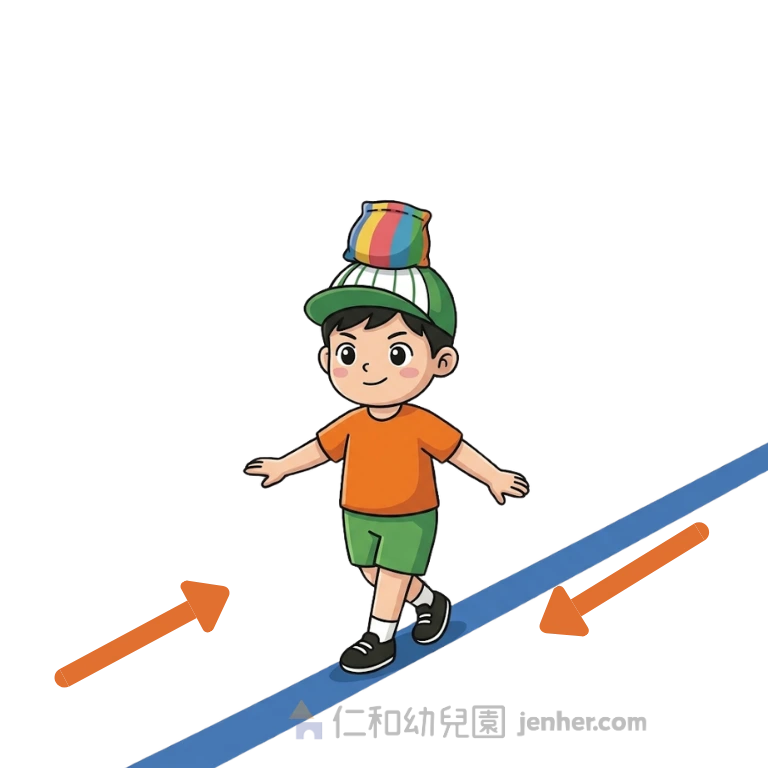
Observation 19-2: Forward and Backward Line Walk Balancing an Object

Forward and Backward Line Walk Balancing an Object

Observe how a child walks along a straight floor line while balancing a lightweight soft object (such as a beanbag or paper plate) on the head, both forward and backward.

Teacher Notes: Setup, Safety & Variations
Aim: Observe postural control, dynamic equilibrium, and spatial awareness during straight-line travel.
Equipment: A straight floor tape line and a soft beanbag or textured paper plate.
Setup: Open classroom floor or gym corridor clear of obstacles.
Steps: Place the soft object comfortably on the child's head, walk forward along the tape line, pause at the end, and take slow steps backward to the start.
Safety: Use soft lightweight objects only. Allow the child to catch the object or let it fall without penalty.
Make It Easier: Walk along the line with arms extended outward for balance, without an object on the head.
Make It Harder: Take slower, deliberate heel-to-toe steps along the line.
Teacher Cue: "Eyes forward, head tall like a giraffe, slow steady steps."
Archive Context The historical source assigns a 2-meter line with a 10/6/3 scoring rubric based on pauses or object drops. For classroom practice, notice how the child adjusts posture and head position over time rather than penalizing stops.
Observation Prompts Does the child keep head and neck upright? How does the child adjust when balance shifts? Can the child take backward steps while maintaining alignment?
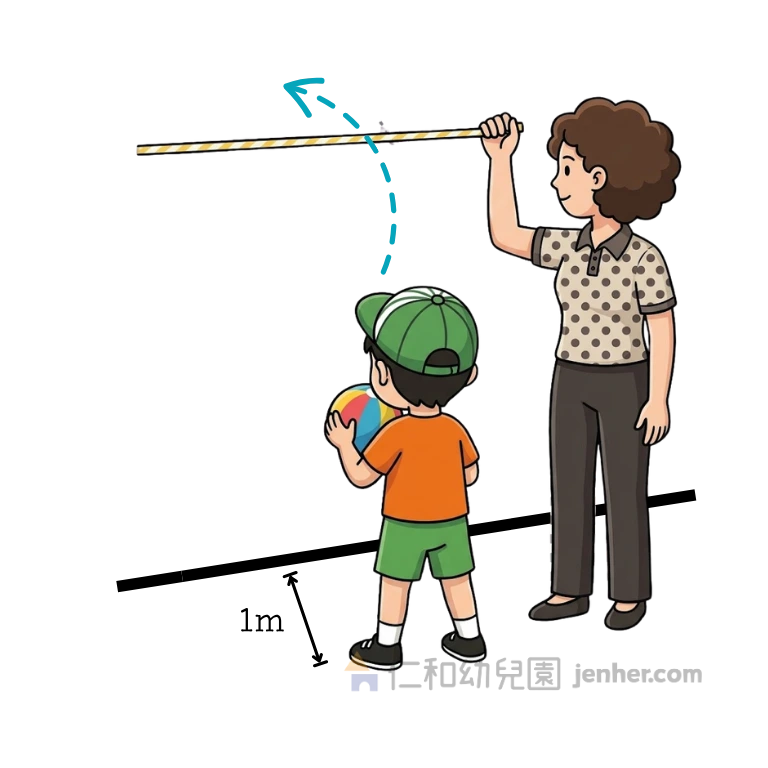
Observation 19-3: Tossing Ball Over Line & Tracking to Catch

Tossing Ball Over Line & Tracking to Catch

Observe how a child tosses a soft lightweight ball over a low horizontal boundary line, tracks its trajectory, and moves to catch or retrieve it.

Teacher Notes: Setup, Safety & Variations
Aim: Observe visual tracking, motor anticipation, and two-hand receiving during dynamic ball play.
Equipment: A soft lightweight foam ball and a ribbon or rope suspended at comfortable chest/head height.
Setup: Spacious indoor area with clear floor space on both sides of the ribbon.
Steps: Stand behind the line, toss the soft ball over the ribbon, move forward underneath or beside the line, and catch or collect the ball with two hands.
Safety: Use soft foam balls. Keep the suspended ribbon loose so it releases immediately if brushed.
Make It Easier: Catch the ball after one or two floor bounces, or roll it under the ribbon to a friend.
Make It Harder: Try tossing from a slightly further starting spot while keeping the throw gentle.
Teacher Cue: "Toss up and over, watch the ball fall, soft hands catch."
Archive Context The original source evaluated children using a 12/8/5/2 point scale based on whether the catch occurred before or after a bounce. In this adaptation, catching after a bounce is recognized as a supportive developmental step, not a lower score.
Observation Prompts Does the child adjust body position to meet the descending ball? Are hands cupped with relaxed fingers? Does the child anticipate the landing spot?
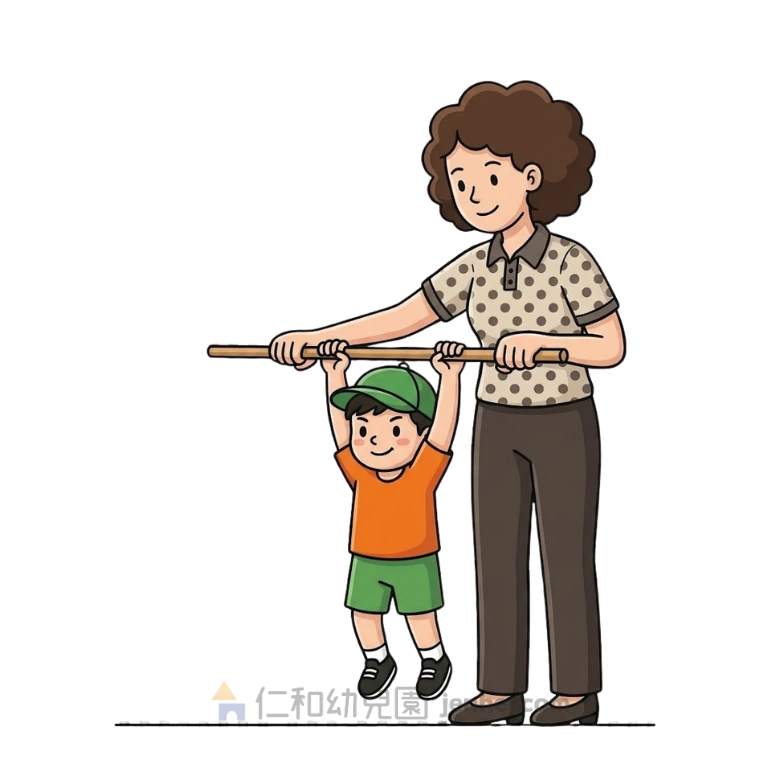
Observation 19-4: Supported Two-Hand Bar Hang

Supported Two-Hand Bar Hang

Observe how a child grips an approved, stable horizontal bar or dowel with both hands and holds their body weight in a brief supported hang under close educator supervision.

Teacher Notes: Setup, Safety & Variations
Aim: Observe upper-body hanging comfort, symmetrical grip strength, and intentional dismount control.
Equipment: An approved, inspected horizontal bar with impact-absorbing safety matting beneath.
Setup: Dedicated apparatus area with direct, trained adult supervision.
Steps: Grip the bar securely with both hands, gently lift the feet off the floor with educator support, hold for a comfortable brief duration, and land on soft bent knees.
Safety: Professional apparatus and landing mats only. End the hang before grip fatigue, fear, or strain. Never require a set duration.
Make It Easier: Keep toes resting lightly on the safety mat or block while practicing the grip.
Make It Harder: Explore changing between overhand and underhand grip while standing on the floor.
Teacher Cue: "Thumbs around the bar, strong shoulders, land on soft knees."
Archive Context The historical archive scored hangs on a 30s/15s/10s/5s timetable (5–12 points). For preschool safety, timed endurance tests are replaced with observing grip engagement and ensuring a calm, child-controlled dismount.
Observation Prompts Are both hands wrapped securely around the bar? Does the child engage the shoulder girdle? Does the child release calmly on cue with balanced foot placement?
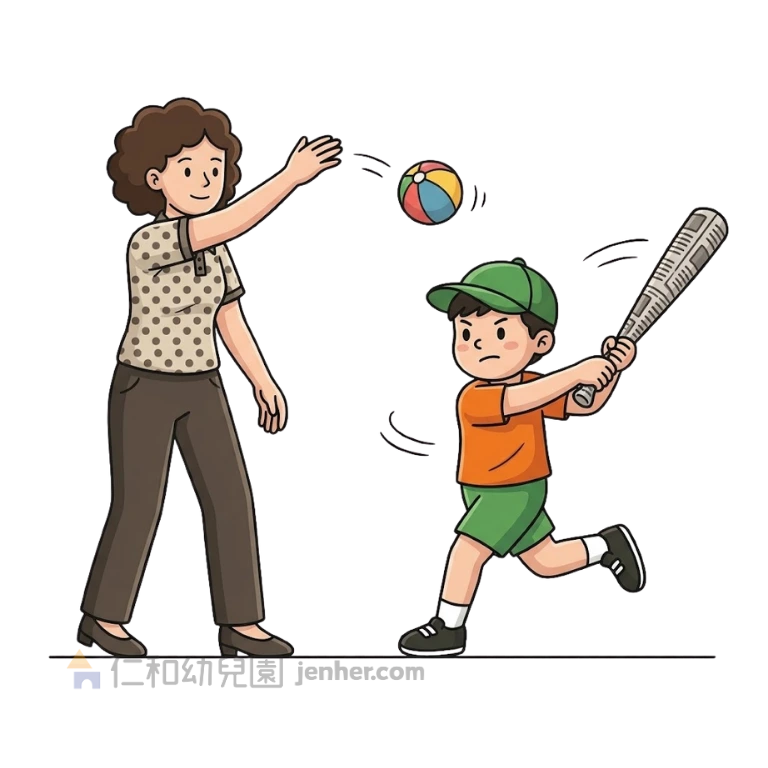
Observation 19-5: Striking a Balloon with Rolled Paper Bat

Striking a Balloon with Rolled Paper Bat

Observe how a child tracks a gently tossed balloon and uses a lightweight rolled newspaper bat to strike it forward or upward.

Teacher Notes: Setup, Safety & Variations
Aim: Observe implement holding, swing coordination, and visual tracking on a slow-moving aerial object.
Equipment: A rolled paper tube/bat and an inflated balloon.
Setup: Draft-free indoor area with generous clearance from walls and other children.
Steps: Hold the lightweight paper bat with one or two hands, watch the educator gently float a balloon toward the striking zone, and swing to make contact.
Safety: Ensure ample spacing between children. Use lightweight paper props and balloons only.
Make It Easier: Strike a stationary balloon suspended from a string or tap a balloon with open hands.
Make It Harder: Try striking the balloon upward twice in a row before it touches the ground.
Teacher Cue: "Eyes on the balloon, ready hands, gentle tap."
Archive Context The historical source scored hits out of 5 attempts (10/6/4 points). In this adaptation, focus on how the child grips the implement, aligns the body, and tracks the object rather than tallying successful hits.
Observation Prompts Does the child track the balloon from release to contact? How does the child hold the implement? Is the swing smooth and controlled?
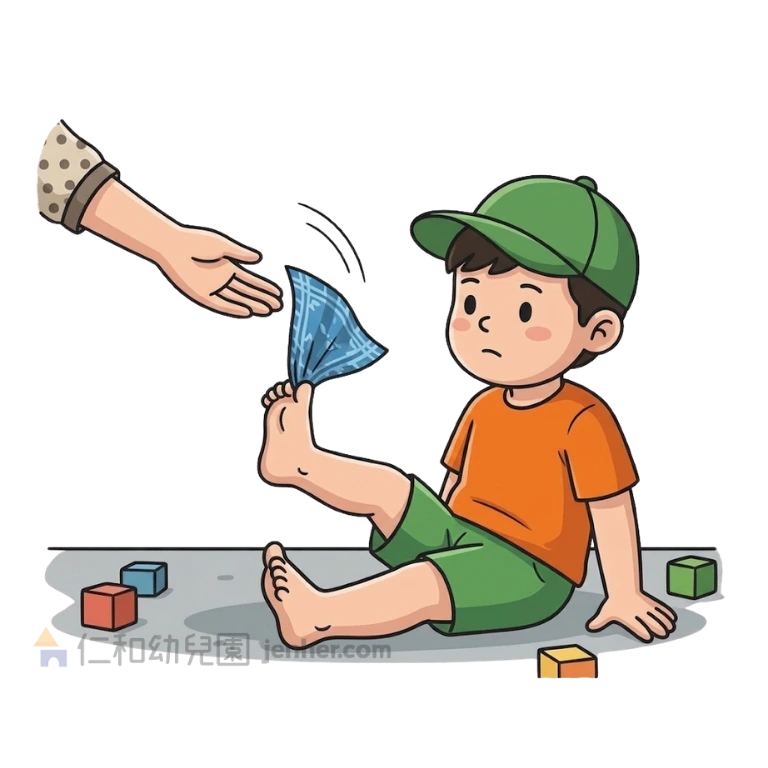
Observation 19-6: Toe-Dexterity Scarf Pick-Up

Toe-Dexterity Scarf Pick-Up

Observe how a child uses bare toes to grasp, lift, and transfer a lightweight soft scarf or cloth from the floor while seated or standing in balance.

Teacher Notes: Setup, Safety & Variations
Aim: Observe intrinsic foot muscle control, toe gripping coordination, and bilateral lower-limb dexterity.
Equipment: Lightweight silk scarves, bandanas, or soft cotton cloths.
Setup: Clean, warm floor or soft foam mat suitable for bare feet.
Steps: Sit comfortably on a chair or mat, use the toes of one foot to scrunch and grasp the cloth, lift it off the ground, and place it into a target or adult's hand. Repeat with the other foot.
Safety: Ensure clean, splinter-free surfaces. Keep the activity seated if standing balance is challenging.
Make It Easier: Scrunch the scarf along the floor with the toes without lifting it into the air.
Make It Harder: Try picking up the scarf while standing on one foot with light hand support on a chair.
Teacher Cue: "Curl your toes like little fingers, squeeze the scarf, and lift."
Archive Context The original source evaluated children on a 10/8/6/4 point scale across 4 attempts per foot, contributing to an overall score and age-norm ranking. For modern ECE, focus on qualitative foot mobility and bilateral exploration.
Observation Prompts Does the child actively curl and flex the toes? Are movements comparable on both left and right sides? Does the child maintain trunk stability while lifting the foot?
Frequently Asked Questions

Preschool Gross Motor Observation FAQ

Practical information regarding observational use, non-diagnostic framing, and curriculum integration.

Is this observation guide a standardized assessment or developmental test?
No. This guide is an informal educator reflection and observation tool adapted from the historical Jenher archive. It is not a standardized test, norm-referenced assessment, diagnostic instrument, or developmental screening tool. It is designed to help teachers notice how children engage with familiar gross motor tasks over time.
How should early childhood educators use these observation items?
Embed these activities into natural classroom routines, movement stations, or outdoor free play. Observe children over multiple opportunities in familiar settings, noting individual strategies, balance adjustments, and support needs rather than assigning pass/fail scores.
Why does this guide avoid points, scoring rubrics, and age-norm conversions?
The historical archive includes numeric point formulas and age-based scoring, but it does not document validation for clinical, diagnostic, developmental-screening, or norm-referenced use. This English adaptation therefore uses qualitative observation prompts instead of scoring.
What should educators do if they observe persistent motor participation challenges?
Remember that motor skills develop across broad, variable timelines influenced by confidence, practice, and physical growth. If an educator or family has ongoing questions about a child's gross motor access or coordination, follow your program's established family-communication guidelines and early intervention referral procedures.
How do these observation prompts align with early childhood learning standards?
These items offer practical opportunities to observe competencies highlighted in early childhood frameworks, such as Head Start ELOF Perceptual, Motor, and Physical Development (P-PMP 1 & P-PMP 2), supporting individualized curriculum planning and positive physical play experiences.
ADVERTISEMENT